The Royal Air Force carried out Operation Chastise, known ever since as the Dambusters raid, on the night of 16-17 May 1943. It was a low-level attack by 617 Squadron against three dams in Germany’s Ruhr valley: the Möhne, Eder and Sorpe. These dams supported a major industrial region through water supply, hydroelectric power and control of inland waterways.
The operation formed part of RAF Bomber Command’s effort in 1943 to disrupt German war production. Rather than a massed high-altitude raid, it involved a small number of modified Avro Lancasters carrying a weapon devised by Dr Barnes Wallis. The Upkeep mine was designed to skip over water, pass above torpedo nets and detonate against dam walls at depth. Its use required night operations at low altitude, with strict speed and release parameters.
The raid breached two of the three dams and flooded the Möhne and Eder valleys, but 53 of the 133 aircrew who took part were killed, and the damage to German industry proved short-lived.
Why did the RAF target the Ruhr dams?
The Möhne, Eder and Sorpe dams supplied water, hydroelectric power and canal levels to the Ruhr, the heart of German armaments production. British planners judged that breaching them could disrupt transport and industry in a way conventional bombing could not.
By early 1943, the Ruhr valley was a central area of German armaments production. The region contained steelworks, coal mines, chemical plants and factories dependent on water supply and electrical power.
The Möhne, Eder and Sorpe dams regulated river levels, fed canals and inland waterways, supplied drinking water, and powered hydroelectric stations that supported nearby industries.
British planners assessed that disruption to this water network could affect transport, industrial processes and production.
The dams presented structural and defensive challenges. The Möhne and Eder were masonry gravity dams. The Sorpe was an earth embankment with a central concrete core. Anti-aircraft guns defended all three, and torpedo nets protected the reservoirs. Conventional bombing methods lacked the required accuracy and effect.
How did the bouncing bomb work?
Dr Barnes Wallis developed a method based on a rotating weapon designed to skip across water. Initial experiments involved small-scale tests examining the effect of backspin on water impact. The concept was adapted for fixed targets such as dams.
The resulting Upkeep mine was carried beneath a Lancaster and rotated backwards at approximately 500 revolutions per minute before release. Trials established three critical conditions: an approach speed of around 240 miles per hour, a release altitude of just 60 feet, and sufficient backspin to ensure the mine made contact with the dam wall before sinking.
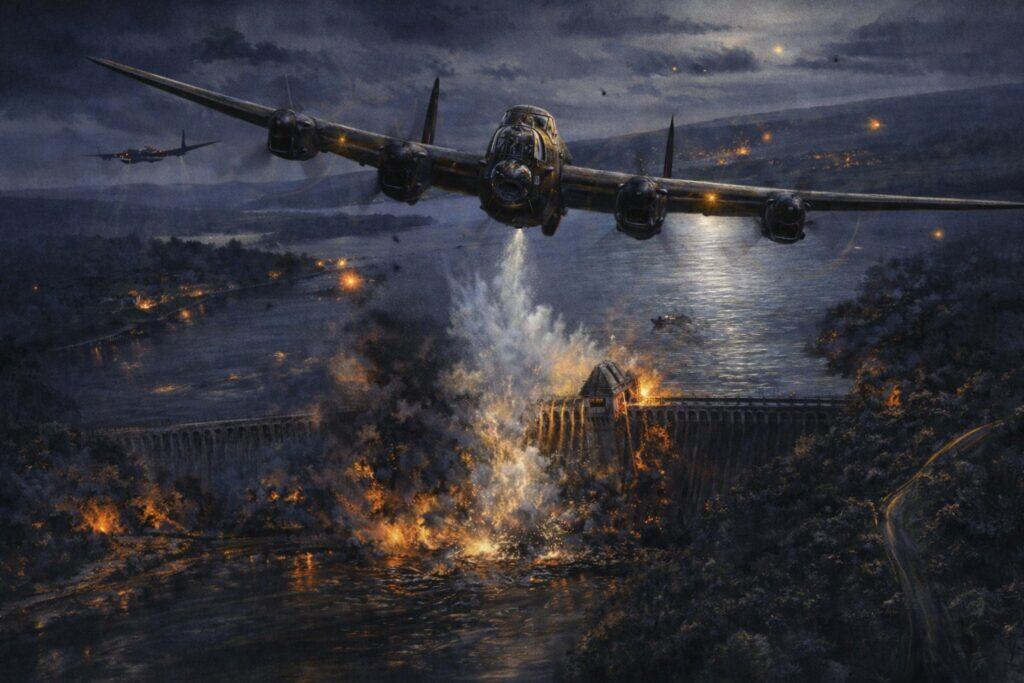
Under these conditions, the mine would bounce across the water, pass over defences and strike the dam. Backspin would carry it down the wall to a depth of about 30 feet, where a hydrostatic fuse initiated detonation.
Who were the Dambusters?
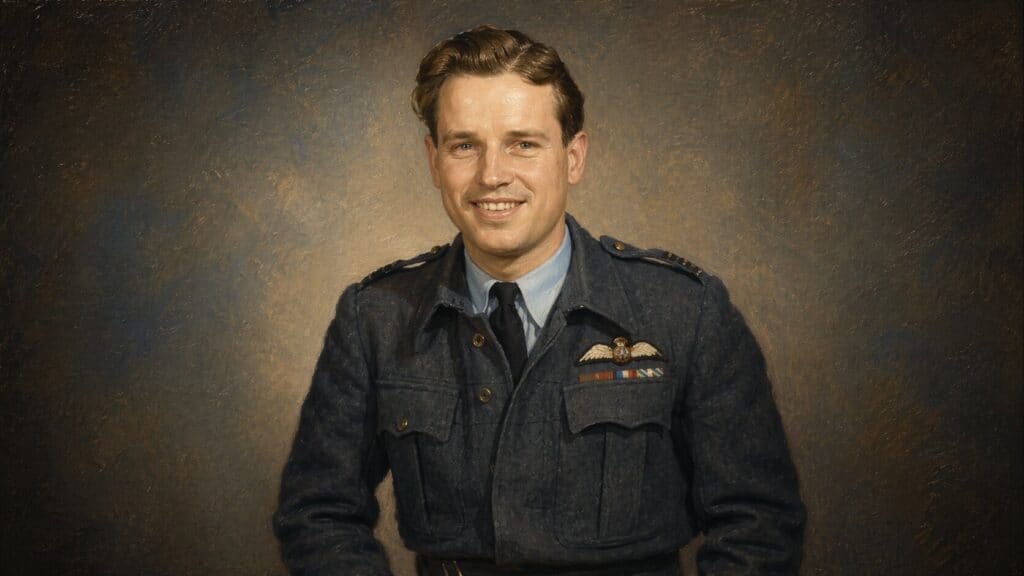
The Dambusters were No. 617 Squadron, formed at RAF Scampton in late March 1943 under Wing Commander Guy Gibson. Its 133 aircrew came from the RAF and from Commonwealth and allied air forces, and many already had operational experience.
RAF Bomber Command formed a unit to deliver the weapon under operational conditions. In late March 1943, a new squadron was established at RAF Scampton in Lincolnshire. It became No. 617 Squadron under the command of Wing Commander Guy Gibson.
The squadron comprised 133 aircrew drawn from the RAF and allied air forces, including personnel from Britain and Commonwealth countries. Many had operational experience. Operational security was maintained, with only a limited number of personnel informed of the targets.
The Avro Lancaster was selected and modified for the role. Bomb bay doors were removed and a mounting installed beneath the fuselage, with a mechanism to rotate the weapon. Some equipment was removed to reduce weight. An optical system using two downward-pointing spotlights enabled crews to maintain the required altitude.
Training concentrated on the core skills of low-level night flying, precise navigation, and refined attack procedures to ensure operational readiness.
The crews practised over reservoirs in Britain and conducted repeated low-altitude exercises. By mid-May 1943, the squadron was prepared for operations.
What happened on the night of 16 to 17 May 1943?
Nineteen modified Lancasters left RAF Scampton in three waves and flew low across the North Sea, the Netherlands and Germany. The Möhne and Eder dams were breached, the Sorpe was damaged but held, and eight aircraft did not return.
On the evening of 16 May 1943, nineteen modified Lancasters departed RAF Scampton in three waves. Moonlight aided navigation but increased exposure. The aircraft flew at low altitude across the North Sea, the Netherlands and western Germany.
The route was fraught with dangers, including high-voltage cables strung across the path, unpredictable terrain variation, and intense anti-aircraft fire. Two aircraft struck cables and were lost before even reaching their targets, while others were destroyed by enemy fire.
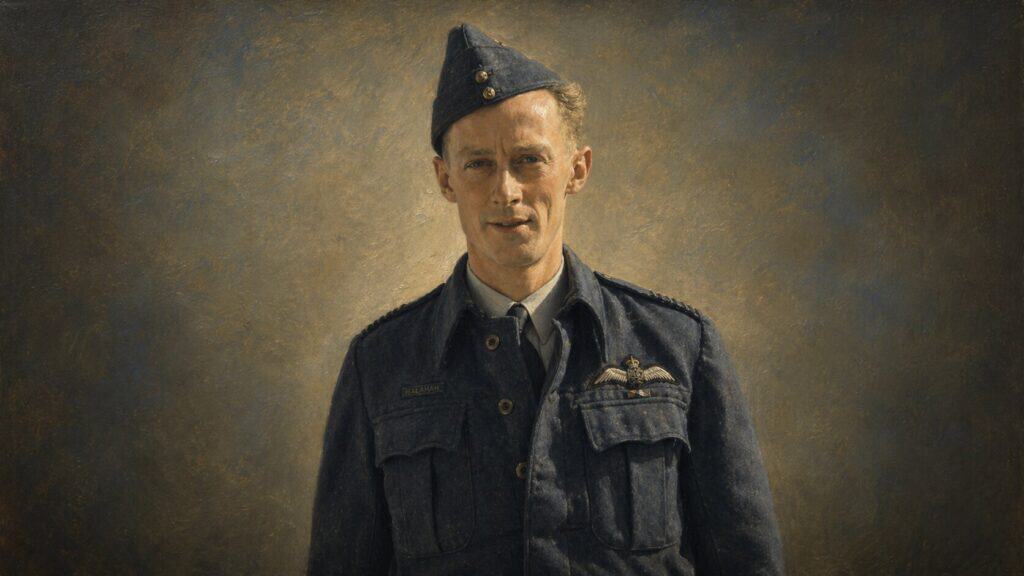
The first wave attacked the Möhne dam. After multiple attack runs, a mine released by Pilot Officer David Maltby caused a breach, resulting in flooding downstream.
Aircraft then proceeded to the Eder dam, where terrain required repeated approaches. A mine released by Flight Lieutenant Les Knight breached the structure.
The Sorpe dam was attacked later and sustained damage, but was not breached.
Eight of the nineteen aircraft were lost.
How many people died in the Dambusters raid?
Of the 133 aircrew who took part, 53 were killed and three were captured. On the ground, estimates range from about 1,200 to more than 1,600 dead, many of them forced labourers and prisoners of war, with the worst losses at Neheim below the Möhne.
Breaches in the Möhne and Eder dams released an estimated 330 million tonnes of water. Flooding destroyed infrastructure, including bridges, roads and railways, and affected industrial facilities. Two power stations were destroyed.
Fatality estimates range from approximately 1,200 to more than 1,600 people, many of them forced labourers and prisoners of war. German figures at the time recorded 1,294 dead, 749 of them foreign prisoners of war and forced labourers. The worst-hit town was Neheim, below the Möhne, where more than 800 people died, among them at least 493 Soviet women held as forced labourers.
RAF losses included eight aircraft. Eleven returned. Fifty-three aircrew were killed and three captured. Of the 133 participants, 48 survived the war.
Did the Dambusters raid work?
Only in part. The floods destroyed bridges, railways and two power stations, but German engineers restored water and power quickly and rebuilt the dams within months, so the disruption to industry was short-lived.
German authorities undertook repairs following the attack. Temporary measures restored elements of water control and power generation, and reconstruction of the dams was completed within several months. Industrial disruption occurred but was short-lived.
Resources were allocated to repair work and to strengthen infrastructure protection. Statements by Air Chief Marshal Sir Arthur Harris reflected the wider strategic bombing policy in place at the time.
The Upkeep weapon was not used again operationally. Operation Chastise remained a one-off: a weapon built for a single kind of target, used once.
Propaganda Value And Recognition Of 617 Squadron
The operation influenced public morale in Britain. Official communications emphasised the conduct of the attack and the damage caused. The term “Dambusters” entered general usage.
Guy Gibson was awarded the Victoria Cross. Thirty-three other members of No. 617 Squadron received decorations. The squadron later undertook further precision operations.
The 1955 film The Dam Busters contributed to public awareness of the raid.