
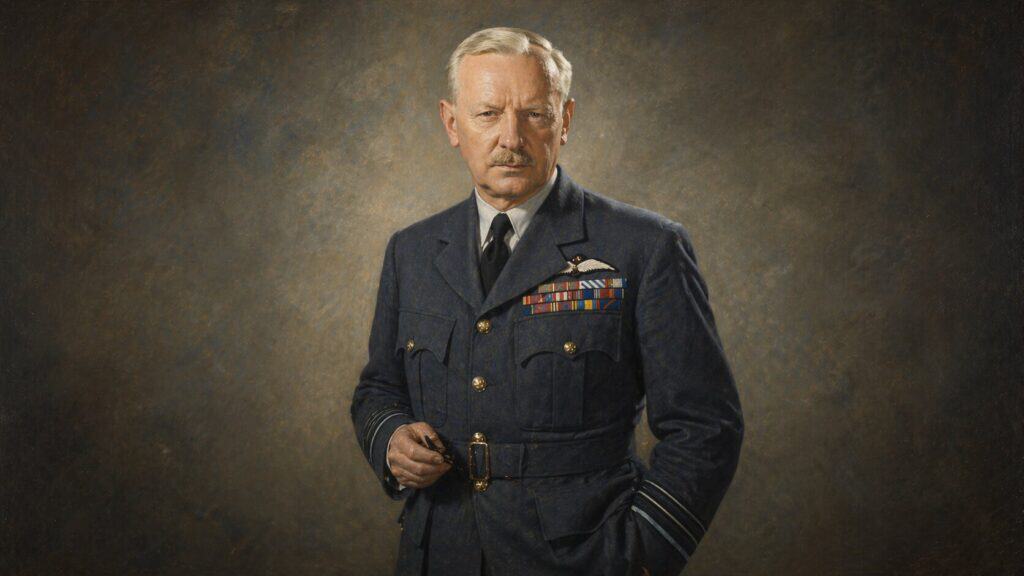

German Airship Raid Fails as Zeppelin L70 Is Destroyed
On 5 August 1918, a Zeppelin raid failed and RAF aircraft destroyed L70, killing German naval airship chief…
5 August 2026 · 3 min readOn This Day, 1988: Sheila Scott died on 20 October 1988, leaving a legacy of solo world flights, polar exploration and record-breaking…
Read the entry →The RFC and RNAS forged air power over the Western Front, the Middle East and the North Sea. The Royal Air Force itself was born on 1 April 1918 — the world's first independent air arm, with just seven months of war remaining.
The Royal Flying Corps and the Royal Naval Air Service went to war in 1914 as embryonic organisations, flying fragile aircraft with no clear doctrine and little understanding of what air power might achieve. Within four years they had developed every discipline that would define military aviation for a century: strategic bombing, air superiority, close support, reconnaissance, anti-submarine patrol.
On 1 April 1918, with seven months of war remaining, the RFC and RNAS were merged to form the Royal Air Force — the world's first independent air arm. The new service inherited 22,000 aircraft and nearly 300,000 personnel, and immediately began fighting for its own survival against those who believed air power should be subordinated to the older services.
"The aeroplane is useless for the purposes of war." — Field Marshal Haig, 1914
The cost had been severe. The life expectancy of a pilot on the Western Front in 1917 was measured in weeks. Aircraft technology advanced so rapidly that an aircraft could be obsolete within months of entering service. Yet from this crucible emerged the pilots, the doctrine and the institutional culture that would carry the RAF through the next two decades.
On 5 August 1918, a Zeppelin raid failed and RAF aircraft destroyed L70, killing German naval airship chief…
5 August 2026 · 3 min readOn 12 March 1917, James McCudden received the Military Cross, recognising a pilot whose skill and discipline made…
12 March 2026 · 3 min readOn 13 January 1917, Captain C. F. Collet made the first parachute jump by a British service flyer…
13 January 2026 · 3 min readRAF history, delivered weekly. New long reads, On This Day entries and archive updates. Free, always.