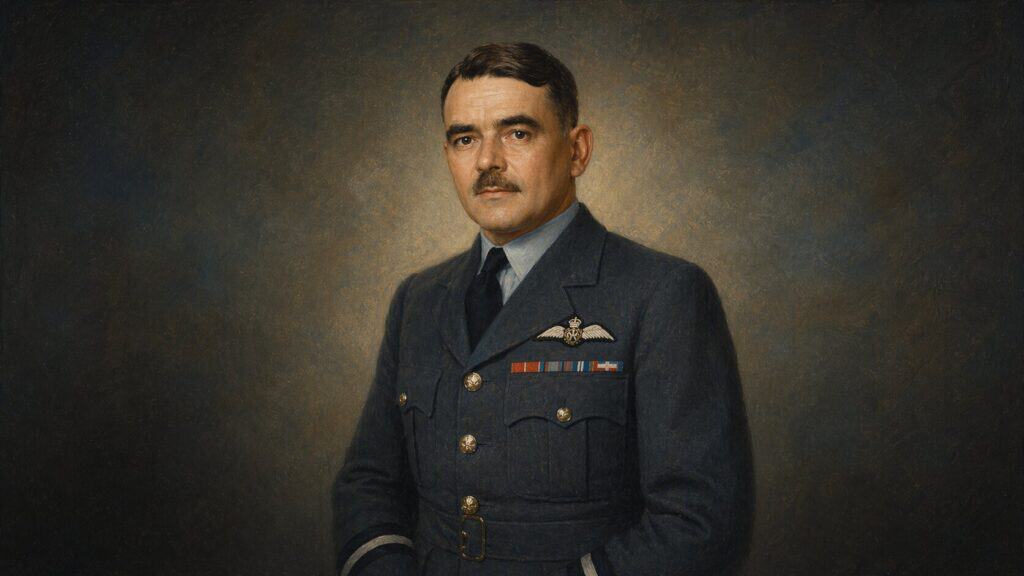


Fighter Command Receives Its First Spitfire, 1937
On 24 September 1937, Fighter Command received its first production Spitfire, marking a key step in RAF modernisation.
24 September 2026 · 4 min readOn This Day, 1988: Sheila Scott died on 20 October 1988, leaving a legacy of solo world flights, polar exploration and record-breaking…
Read the entry →The newly-formed RAF fought for its survival against those who wished to dissolve it. Colonial policing, record-breaking long-distance flights and the dawn of the monoplane era defined two decades of quiet but decisive transformation.
The interwar years were defined by two simultaneous struggles: the RAF's fight for institutional survival, and its search for a role that would justify that survival. Hugh Trenchard, the service's first Chief of the Air Staff, became the apostle of strategic bombing — the doctrine that air power could win wars independently, without the need for armies or navies. It was a controversial theory, but it kept the RAF alive.
Across the empire, the RAF policed vast territories at a fraction of the cost of ground forces. In Iraq, India and the Northwest Frontier, air control became the RAF's primary peacetime function — controversial in its methods, but effective in demonstrating the service's utility to a Treasury determined to cut defence spending.
"Air power is the most difficult of all forms of military force to measure, or even to express in precise terms." — Winston Churchill
Meanwhile, technology transformed. The biplane gave way to the monoplane. The wooden-and-canvas construction of the Great War was replaced by stressed-metal structures. By the late 1930s, the Hurricane and Spitfire were entering service, and Bomber Command was building the force that would eventually strike Germany. The RAF that went to war in 1939 was barely recognisable from the one that had been formed in 1918.
On 24 September 1937, Fighter Command received its first production Spitfire, marking a key step in RAF modernisation.
24 September 2026 · 4 min readOn 9 March 1925, the RAF opened Pink’s War in South Waziristan, an early test of inter-war air…
9 March 2026 · 3 min readOn 27 March 1927, the Armstrong Whitworth Siskin IIIA entered RAF service, becoming the Service’s first all-metal fighter…
27 March 2026 · 3 min readRAF history, delivered weekly. New long reads, On This Day entries and archive updates. Free, always.