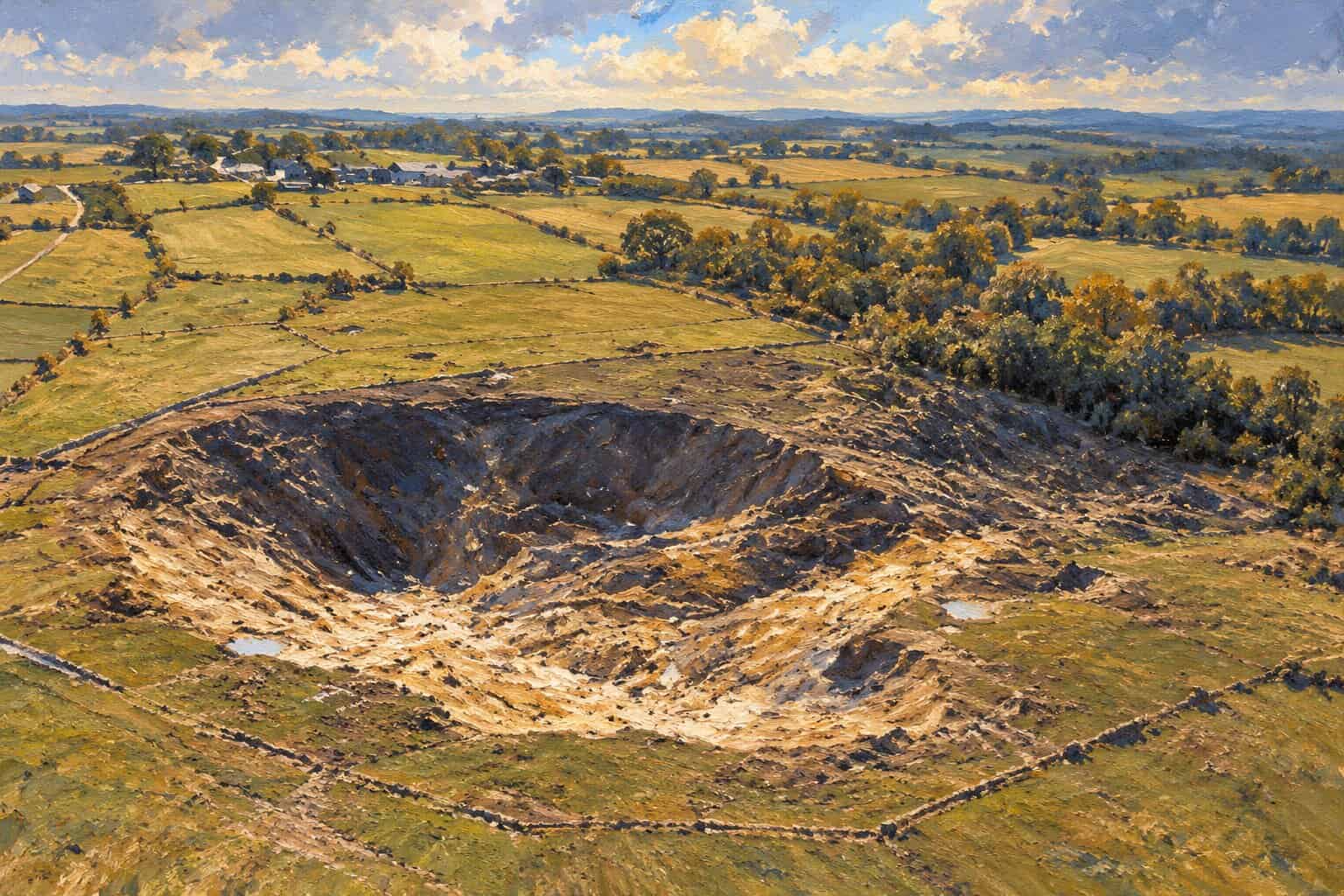
On 27 November 1944, a catastrophic explosion tore through part of the underground ammunition depot at RAF Fauld in Staffordshire. The blast devastated the surrounding countryside near Hanbury and Burton-on-Trent, destroyed homes and workplaces, and killed about 70 people. The precise death toll remains uncertain. An enormous crater marked the site of one of Britain's largest non-nuclear explosions.
Fauld formed part of the ground organisation supplying the RAF's wartime operations. Its disaster brought the hazards of storing and handling large quantities of ammunition into the neighbouring civilian community, where blast damage and flooding compounded the destruction underground.
Bomb storage beneath the hillside
No. 21 Maintenance Unit occupied former gypsum mine workings at Fauld. Tunnels beneath the hillside provided extensive storage space for the bombs and other ammunition required by the RAF. High-explosive and incendiary bombs were among the stocks held there.
The depot comprised separate underground sections approached by tunnels from different directions. This arrangement became important during the disaster: the section affected by the explosion was widely separated from the main storage area. The destruction was concentrated enough for surviving parts of the establishment to continue issuing bombs afterwards.
Destruction above and below ground
The explosion occurred late in the morning. Its force broke through the ground above the store, throwing debris across the surrounding area and opening the crater subsequently known as Hanbury Crater. Nearby farm buildings were destroyed or severely damaged, while flying debris reached the village of Hanbury.
The destruction of a reservoir extended the disaster into neighbouring industrial premises. Water and sludge overwhelmed the nearby gypsum and plaster works, causing heavy loss of life among people working outside the RAF depot. Families living above and around the underground complex lost homes as well as relatives and colleagues.
Casualty reports developed as rescue and recovery work proceeded. Early figures distinguished between people confirmed dead and others who remained missing and were presumed killed. Later accounts commonly put the overall loss at about 70 lives, encompassing victims within the depot and in the surrounding community. The violence of the explosion left lasting uncertainty over the final total.
Rescue, relief and continued supply
RAF authorities organised assistance with the Regional Commissioner. British soldiers and airmen, American soldiers, Civil Defence personnel and the National Fire Service joined efforts to rescue the injured. The response also involved immediate help for bereaved families and people whose homes had been damaged.
Less than 4,000 tons of bombs were reported lost in the explosion. The main depot and administrative buildings escaped significant damage, allowing bomb issues to meet operational requirements to continue.
A court of inquiry was established to investigate the disaster. Officials had been sent to provide financial assistance, and the parliamentary discussion addressed compensation for civilian deaths and property losses. These measures placed relief for the neighbouring community alongside the RAF's continuing supply responsibilities.
Investigation and the surviving crater
The inquiry identified the probable initiating event as an attempt to remove an exploder pocket, part of a bomb's detonation mechanism, with a brass chisel. This remains a probable explanation rather than a certain reconstruction of the final moments before the explosion.
The disaster exposed the potentially extensive consequences of an ammunition-handling failure within a large store. At Fauld, those consequences crossed the depot boundary into farms, homes and industry. The surviving crater and memorials preserve the physical extent of the destruction and the names of people whose lives were bound together by the events of that November morning.