The Avro Lancaster became Bomber Command’s principal heavy bomber through a combination of carrying capacity, adaptable design and large-scale production. Entering operations in 1942, it gave the RAF an aircraft whose spacious bomb bay could accommodate both varied conventional loads and increasingly large specialist weapons. Its effectiveness developed alongside the navigation aids, target-marking organisation and ground support needed to sustain the bomber offensive.
The Lancaster’s place in the campaign depended on this combination of aircraft and organisation. Payload established what a bomber could deliver; trained crews, serviceable aircraft and accurate target identification determined how that capacity could be employed. The Handley Page Halifax continued to carry a substantial share of the offensive throughout the Lancaster’s expansion.
From Manchester To Lancaster
The Lancaster emerged from Avro’s efforts to overcome the difficulties of the twin-engined Manchester. Roy Chadwick and his design team replaced the Manchester’s two Rolls-Royce Vulture engines with four Merlins, producing the aircraft whose prototype first flew in January 1941. The change provided the basis for a heavy bomber capable of meeting the demands of sustained operational service.
The Lancaster’s operational entry with 44 Squadron came on the night of 3/4 March 1942, during a mine-laying operation in the Heligoland Bight. That beginning placed it within an established command already engaged in a prolonged offensive. Its subsequent importance arose from the expansion of Lancaster-equipped units and the exploitation of its design over the remaining years of the European war.
Payload And Bomb-Bay Flexibility
A long, unobstructed bomb bay was one of the Lancaster’s most useful features. Bomb-bay dimensions governed the size and arrangement of weapons an aircraft could carry, alongside the weight its structure and engines could support. The Lancaster offered room for large individual bombs as well as combinations suited to different bombing tasks.
The 4,000 lb high-capacity bomb, commonly called the ‘cookie’, provides a representative example of a large weapon accommodated by the aircraft. Its value lay partly in the freedom the bay gave planners to assemble loads for particular targets. Conventional bombing remained the main employment of the force, making flexibility across repeated operations a central service requirement.
Specialist adaptations pushed this flexibility much further. Modified Lancasters could carry the 22,000 lb Grand Slam, requiring a specialised configuration and extensive changes to reduce aircraft weight and accommodate the weapon. Grand Slam therefore demonstrates the adaptability of the basic airframe rather than the normal carrying capacity of an operational Lancaster.
Range and bomb load formed a linked operational calculation. Fuel for the outward flight, return journey and necessary reserves competed with weapon weight within the aircraft’s permissible loading. Route, target distance and configuration therefore affected the load available for an individual mission. A maximum bomb-load figure alone gives an incomplete measure of the Lancaster’s usefulness across Bomber Command’s operations.
Production And Operational Scale
The industrial organisation behind the Lancaster enabled its adoption on a large scale. A total of 7,377 aircraft were built by six major companies at ten factories on two continents. This distributed production system supported the growth of the force while replacement aircraft were required to meet continuing losses.
Operational employment eventually matched that production scale. RAF Museum figures credit Lancasters with some 156,000 sorties and more than 608,000 tons of bombs delivered during the war. Those totals help explain the aircraft’s prominence within Bomber Command, but they were achieved as part of a wider heavy-bomber force rather than by the Lancaster alone.
Concentrating a large part of the heavy-bomber force on one capable type also meant sustaining the personnel and equipment associated with it. Lancaster operations required seven-man aircrews, ground servicing, engine and airframe work, armament preparation and the supply of fuel and spares. Production totals represented one part of that commitment. Aircraft had to be prepared for each operation, and surviving machines inspected and returned to service.
The Halifax remained a major contributor. Between 1941 and 1945 it flew more than 75,000 bombing sorties, according to the RAF Museum. Lancaster predominance developed within a mixed force whose aircraft, crews and stations collectively sustained the offensive. The continued contribution of the Halifax is essential to understanding the scale of that effort.
Navigation And Target Marking
The Lancaster entered service during a period of technical and organisational change in Bomber Command. Gee electronic navigation equipment entered operational use in March 1942. It assisted crews in establishing their position, addressing a fundamental difficulty of long night flights over occupied Europe.
Finding the intended target and concentrating the attack required further development. The Pathfinder Force was formed in August 1942 under Acting Air Commodore Donald Bennett as a specialised force tasked with finding and marking targets for the main bomber force. It became No. 8 Group in January 1943. Target marking provided the main force with a means of directing its bombing during the attack.
These developments made aircraft performance part of a wider operational system. A Lancaster’s carrying capacity could contribute effectively when crews reached the target area and identified the intended aiming point. Navigation, marking and the organisation of successive attacks shaped the results achieved by the growing bomber force. Weather, visibility and enemy defences continued to affect operations.
The Cost Of Sustained Operations
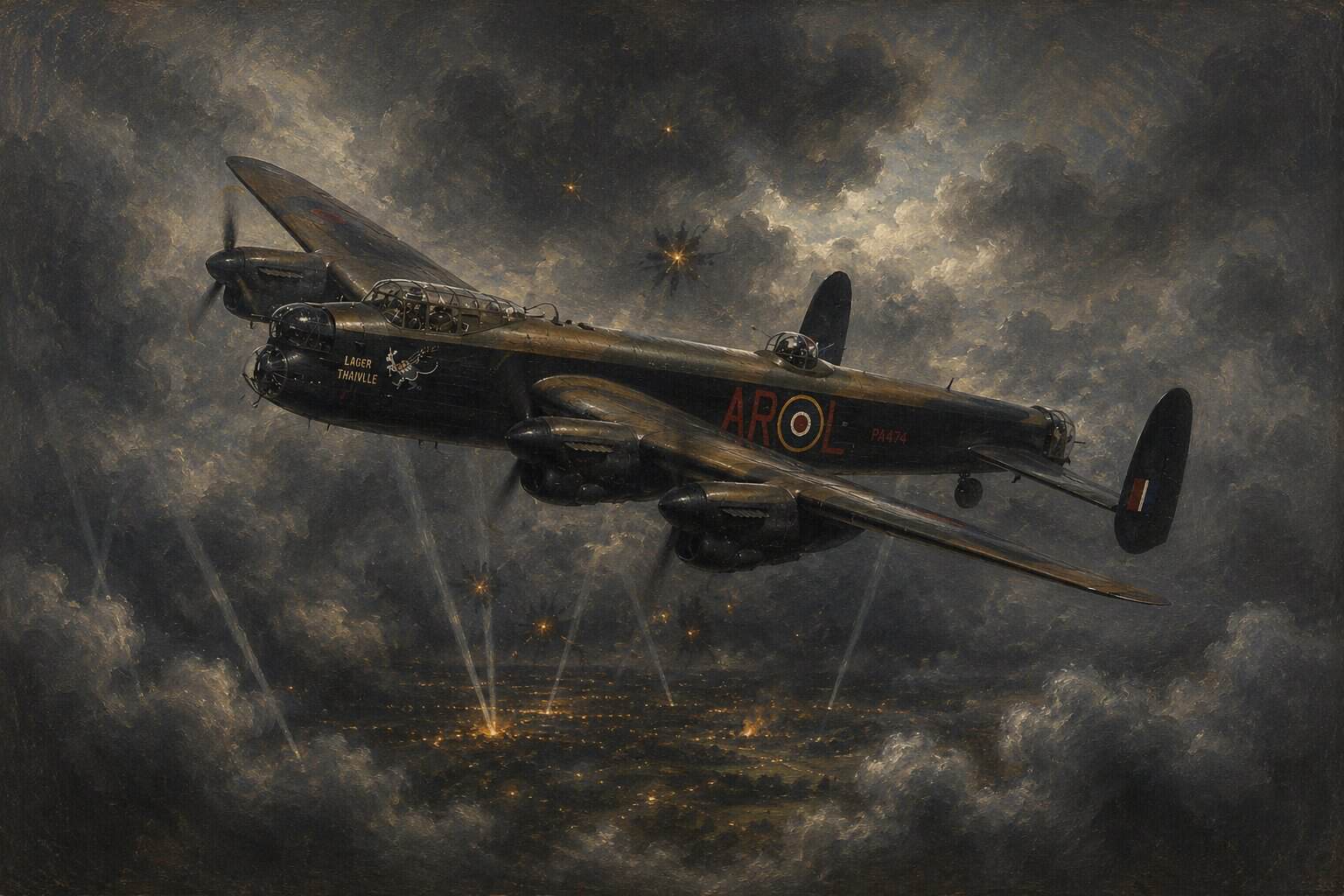
Lancaster crews faced night fighters, anti-aircraft fire and the hazards of long flights in darkness and difficult weather. Aircraft losses imposed a continuing demand for trained replacements and new machines. The RAF Museum records that Lancasters completed an average of twenty-one missions before being lost, a measure of the danger underlying the type’s extensive employment.
The bombing offensive also caused extensive civilian death and urban destruction. Assessing the Lancaster’s military contribution requires attention to the targets attacked, the accuracy achieved and the human consequences of strategic bombing. Technical capability and aggregate bomb tonnage describe aspects of the campaign; its effects require a broader assessment.
By the final years of the war, the Lancaster combined the payload flexibility and industrial support needed for Bomber Command’s principal heavy-bomber role. Its operational position rested on repeated employment by trained crews within an increasingly developed navigation and target-marking system. That combination explains its central place in the command while retaining the contributions of other aircraft and the substantial costs of sustaining the offensive.