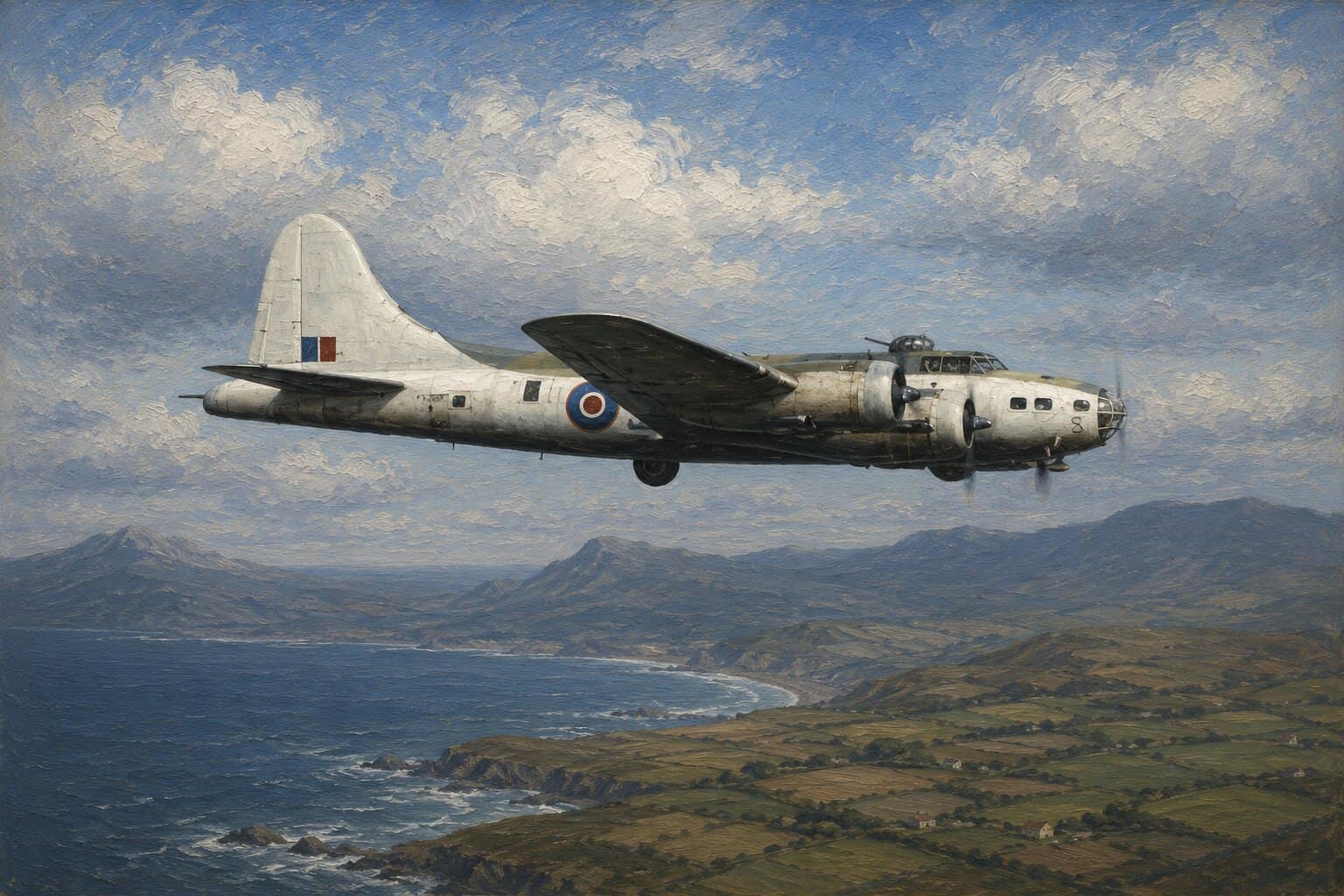
Britain’s maritime defence in the Second World War depended on far more than the Royal Navy alone. The RAF contributed to the protection of convoys, the surveillance of coastal waters and the wider battle against maritime threats from the air and sea. Its role was often less dramatic than a major fleet action, but it was essential to the security of shipping routes on which Britain’s survival depended.
Background
As an island power, Britain was vulnerable to interruption of trade, fuel imports and military supply. Enemy submarines, surface raiders, minelaying and air attack all threatened the narrow seas and the Western Approaches. The RAF therefore had to provide an air component to maritime defence close to home, not only by attacking the enemy directly but also by helping the wider defence system to see, track and respond.
Coastal Patrol And Reconnaissance
Aircraft operating over sea routes gave Britain a reach that ships alone could not provide. Coastal patrols could search broad areas quickly, report suspicious movement and help direct naval forces towards potential threats. Reconnaissance also mattered in a defensive sense: convoys needed warning of hostile aircraft, naval units required information about sea conditions ahead, and coastal commands needed a reliable picture of what was moving through nearby waters.
That work demanded endurance, regularity and coordination rather than spectacle. Maritime air operations were shaped by weather, visibility and the limits of early detection. Even so, persistent patrols complicated the task for enemy forces by reducing the freedom they had to approach British waters or attack exposed shipping.
Convoy Protection And Strike Support
RAF aircraft also helped protect convoys by contesting hostile reconnaissance, shadowing surface threats and attacking targets of opportunity. Air cover could never guarantee safety across every route, yet it forced the enemy to reckon with observation and interference from above. In narrow waters and near the coast, this contribution was especially important because the combination of naval escort, shore organisation and aircraft created a denser defensive network.
Where enemy shipping, E-boats, submarines on the surface or minelaying operations threatened the approaches to Britain, air power offered a means of rapid reaction. Aircraft could also assist in rescue, communication and emergency response after an attack. These were practical functions, but they formed part of the same maritime-defence picture as more familiar combat operations.
Significance
The RAF’s contribution to Britain’s maritime defence lay in reach, responsiveness and information. Extending observation across sea lanes and coasts made convoy protection more effective and reduced the burden on surface forces acting alone. In RAF terms, maritime defence also demonstrated how air power served national survival outside the better-known battles of fighters over land or bombers over Europe.
The result was not a separate naval war fought from the air, but a cooperative system in which aircraft, ships and shore commands supported one another. That integrated effort helped Britain defend its home waters and sustain the movement of men, food and materiel on which the wider war depended.