On This Day, 1918: By 30 September 1918, Allied air power was helping breach the Hindenburg Line through reconnaissance, artillery support and…
Read the entry →Consolidated Catalina
Consolidated Aircraft Corporation
Explore the Consolidated Catalina, the RAF flying boat that found Bismarck, hunted U-boats, and served across the Atlantic and Indian Ocean.
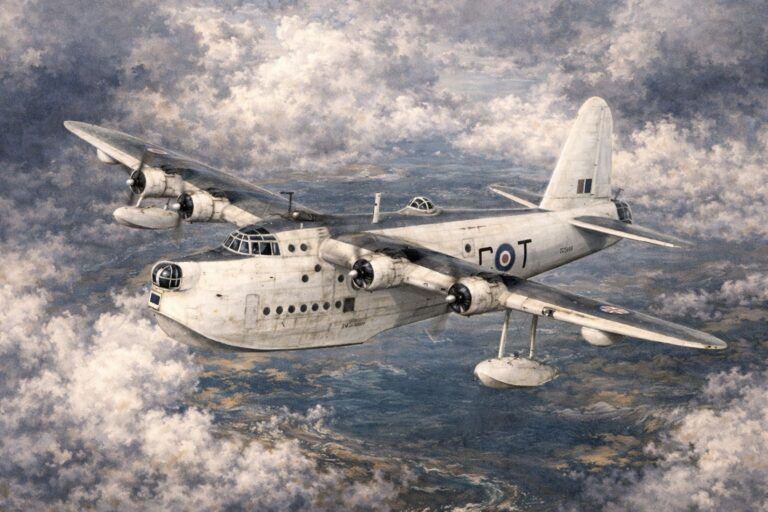
The Consolidated Catalina entered RAF service in early 1941 as a long-range flying boat built for the kind of work Coastal Command valued most: covering immense stretches of ocean that land-based aircraft could not yet patrol effectively. Slow by fighter standards but exceptionally enduring, it gave the RAF a maritime aircraft capable of searching for enemy surface raiders, escorting convoys, attacking U-boats, and rescuing airmen and sailors far from shore. Its wartime record stretched from the hunt for Bismarck to anti-submarine patrols in the Battle of the Atlantic and on to Indian Ocean operations.
From American Patrol Bomber To RAF Flying Boat
Designed by Consolidated as the Model 28, the Catalina originated in the United States as a patrol bomber intended to combine long-range capability with the ability to operate from sheltered waters. Its parasol wing, retractable wingtip floats and broad hull gave it an ungainly appearance on the water, but those same features made it a practical and durable aircraft for maritime reconnaissance. The design first flew on 21 March 1935, and Britain placed an order before the United States Navy had even adopted Catalina as the official name.
That early British interest mattered. The RAF needed aircraft that could search huge sea areas for commerce raiders and submarines, and the Catalina offered precisely that combination of endurance, visibility and payload. Early RAF machines entered service with 209 Squadron and 240 Squadron, and from the beginning, the type was associated with patient, unglamorous, but strategically important work over grey water rather than headline-grabbing dogfights.
Coastal Command And The Atlantic War
The Catalina quickly proved its worth in Operation Rheinübung, the sortie that sent Bismarck into the Atlantic in May 1941. After the battleship had temporarily slipped contact, a Catalina from 209 Squadron flying from Castle Archdale found her again on 26 May, allowing the Royal Navy to close in. Catalinas from 240 Squadron then helped maintain the shadowing effort. It was one of the clearest demonstrations of how an aircraft with modest speed but great range could influence a major naval action.
That same endurance made the Catalina highly valuable in the wider Battle of the Atlantic. RAF crews used the type for convoy escort, anti-submarine patrols, reconnaissance and air-sea rescue. The aircraft could remain on station for long periods, search broad ocean areas, and carry bombs or depth charges against submarines forced to the surface. By mid-war, some RAF Catalinas also operated with radar and Leigh Light support, extending their usefulness in the anti-submarine campaign.
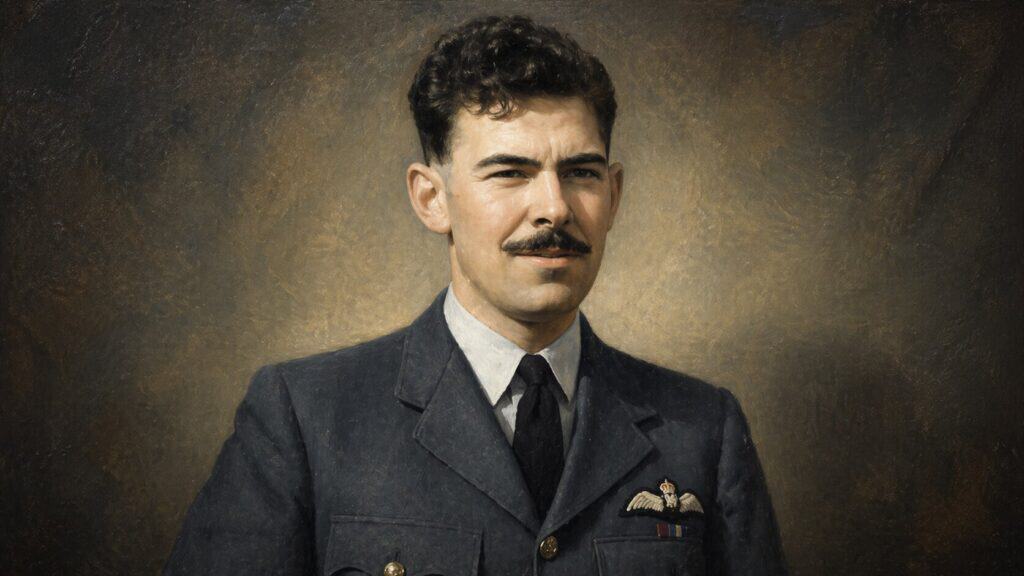
Catalina crews earned a formidable reputation for persistence. In July 1944, Flying Officer John Alexander Cruickshank won the Victoria Cross after pressing home an attack on a U-boat off Norway despite severe wounds and heavy defensive fire. Near the end of the war, a Catalina of 210 Squadron made Coastal Command's last U-boat claim on 7 May 1945. Such episodes captured the type at its best: not dramatic in appearance, but dangerous, reliable and constantly present where sea control depended on long-range air power.
Beyond Home Waters
Although closely associated with Atlantic service, the Catalina was just as useful on distant stations. 205 Squadron operated the type in Singapore, Ceylon and the wider Indian Ocean theatre, where long-range and water-based operations were especially valuable. Catalinas flew convoy escort and anti-submarine patrols there too, but they also undertook transport, rescue and special duties that would have been far more difficult for shorter-range aircraft.
In the eastern theatre, the Catalina's flexibility mattered as much as its endurance. It could work from remote anchorages, cover maritime approaches, and support the wider Allied effort across waters where bases were sparse and distances immense. The type therefore became more than a Coastal Command curiosity; it was one of the RAF's most useful maritime aircraft wherever geography rewarded patience, reach and adaptability.
Endurance, Utility And Legacy
The Consolidated Catalina never relied on speed or glamour. Its importance lay in its ability to remain where it was needed longer than most contemporaries, carrying useful weapons while still retaining the capacity to search, shadow, and rescue. For the RAF, that made it one of the defining maritime aircraft of the war years.
By the post-war period, the flying boat's advantages were narrowing as radar, airfield infrastructure, and newer land-based maritime aircraft improved. Even so, the Catalina had already secured its place. It had helped find Bismarck, fought the U-boat war, served overseas across the Indian Ocean, and shown how much strategic value could be extracted from endurance and sound operational employment alone.
| Dimensions | |
| Wingspan | 104 ft 0 in (31.70 m) |
| Length | 63 ft 10 in (19.46 m) |
| Height | 20 ft 1 in (6.12 m) |
| Wing area | 1,400 sq ft (130.1 m²) |
| Weights | |
| Empty weight | 20,910 lb (9,485 kg) |
| Max takeoff weight | 35,420 lb (16,066 kg) |
| Max bomb load | 4,000 lb (1,814 kg) |
| Performance | |
| Maximum speed | 196 mph (315 km/h) |
| Cruise speed | 125 mph (201 km/h) |
| Service ceiling | 15,800 ft (4,816 m) |
| Range | 2,520 mi (4,056 km) |
| Powerplant | |
| Engines | 2 × Pratt & Whitney R-1830 Twin Wasp radial engines |
| Power | 1,200 hp (895 kW) each |
| Armament | |
| Guns | 2–3 × .303 in machine guns; up to 4,000 lb (1,814 kg) of bombs, depth charges, or torpedoes |
| Bombs / weapons | 4,000 lb (1,814 kg) |
David Hornell Wins the Victoria Cross in Anti-Submarine Attack
Flight Lieutenant David Hornell sank U-1225 on 24 June 1944, then fought to save his crew…
24 June 2026 · 3 minCruickshank VC Attack on U-347 Sinks U-Boat in 1944
On 17 July 1944, Flt Lt John Alexander Cruickshank pressed home a Catalina attack on U-347…
17 July 2026 · 3 minRCAF Sinks U-754: Canada’s First Confirmed U-boat Kill
On 31 July 1942, the RCAF destroyed U-754 off the Canadian coast, securing its first confirmed…
31 July 2026 · 3 min