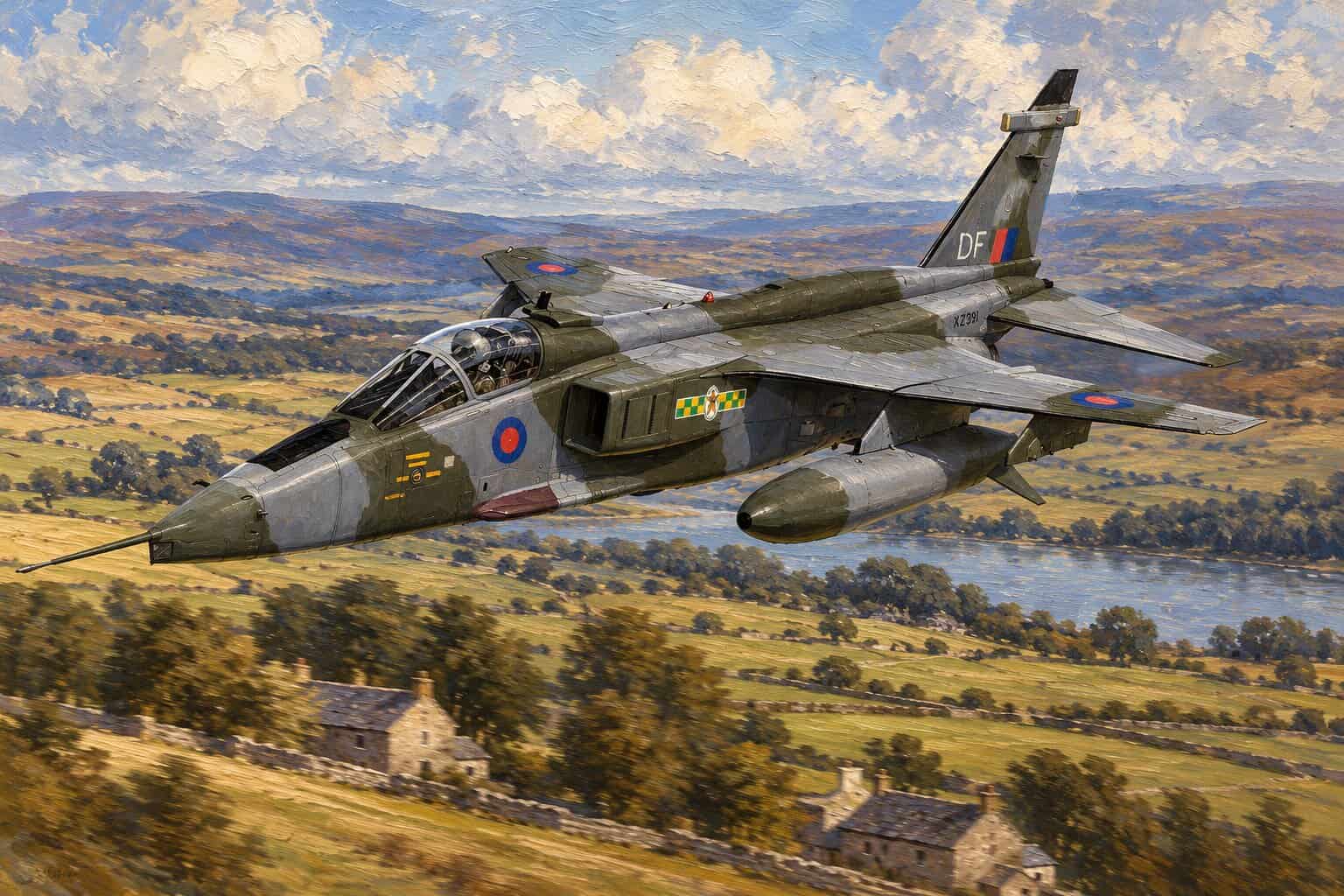
On 16 November 1999, plans were announced for British Aerospace to upgrade all 122 Rolls-Royce/Turbomeca Adour engines powering the RAF's 62-strong SEPECAT Jaguar fleet. The programme would introduce the uprated Adour Mk 106, providing additional thrust as part of the aircraft's late-service modernisation.
The SEPECAT Jaguar had entered RAF service in 1973. By the end of the 1990s, its service career encompassed Cold War strike planning, combat in the Gulf and deployments connected with Iraq and the former Yugoslavia. Engine improvement addressed a practical requirement within that continuing workload.
More power for an established aircraft
The Jaguar's airframe and Adour engines were products of Anglo-French collaboration. Rolls-Royce and Turbomeca developed the powerplant together, while British and French manufacturers shared responsibility for the aircraft. Successive improvements allowed the RAF to adapt the original design as equipment and operational demands changed.
Power had long been an important consideration in Jaguar operations. The aircraft carried weapons, fuel and reconnaissance equipment in roles that placed substantial demands on performance. Higher temperatures added to the importance of available thrust during overseas deployments. Improving the engines offered a means of strengthening the performance of aircraft already supported by experienced crews and an established maintenance system.
The later Adour Mk 106 developed the capability of the Mk 104 installation. Its intended benefits included increased thrust and improved reliability and availability. These objectives linked aircraft performance with the sustained effort required to keep a deployable force serviceable.
From development to flight testing
The November milestone belonged to a programme already moving through technical development. In June 1999, contemporary aviation reporting described the Mk 106's successful completion of altitude testing at Saclay in France. That work brought the engine closer to qualification and production, providing an earlier stage in the sequence leading towards aircraft integration.
Flight testing in an RAF Jaguar followed in June 2000. The announcement on 16 November established the scale of the programme: all 122 engines serving the RAF's 62-aircraft Jaguar fleet were to be upgraded, with aircraft integration and flight testing to follow.
The practical outcome developed over the following years as the uprated engine became part of the Jaguar's later service configuration. Propulsion improvement therefore formed a continuing process of development, testing and incorporation into the fleet.
Part of the Jaguar's final modernisation
The engine programme accompanied substantial changes to the Jaguar's operational equipment. Late-service upgrades included improved cockpit displays, navigation equipment and reconnaissance systems, alongside the use of the TIALD laser targeting pod. Together, these changes developed the aircraft's ability to find, identify and engage targets and to gather tactical information.
The GR3 and GR3A era placed these improvements within a familiar airframe. Better equipment increased what crews could accomplish, while engine development addressed the power and serviceability required to support those tasks. The two strands served the same operational purpose.
RAF Jaguar service continued until 2007. The engine upgrade's significance lay in this final period of employment: it committed engineering effort to sustaining a strike and reconnaissance capability through the aircraft's remaining years. The November 1999 milestone belongs to that practical history of adapting an established fleet to changing operational demands.