On This Day, 1918: By 30 September 1918, Allied air power was helping breach the Hindenburg Line through reconnaissance, artillery support and…
Read the entry →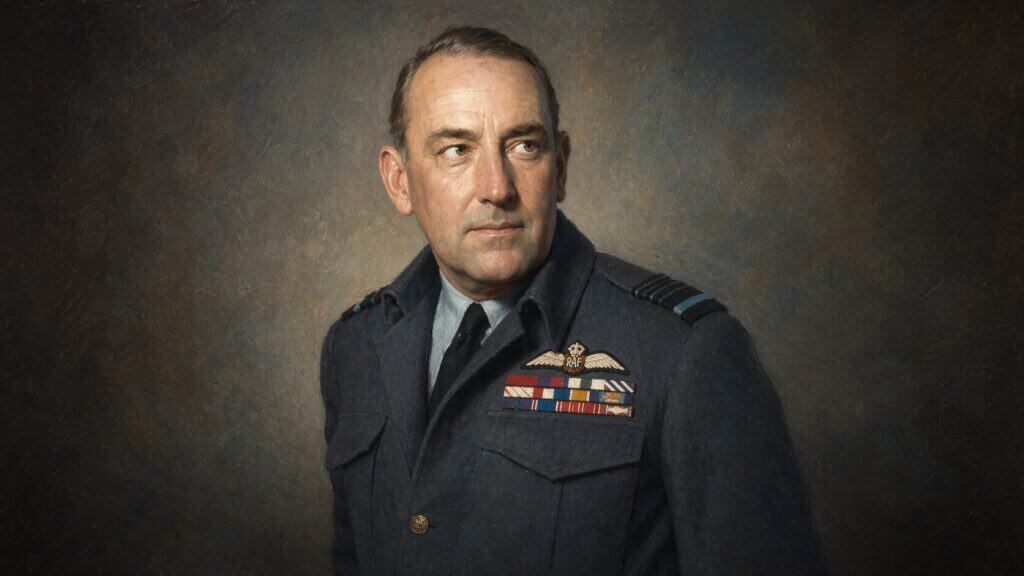
Air Marshal
Arthur Coningham
Air Marshal Arthur Coningham was a key RAF commander in the development of tactical air power during the Second World War. He is most closely associated with North Africa, Allied air-land cooperation and the wider evolution of modern operational air support.
Air Marshal Arthur Coningham occupies an important place in RAF history not because he is as widely known to the general public as Dowding or Harris, but because he helped shape the practical doctrine of tactical air power in the Second World War. His reputation rests especially on the North African campaign, where his methods of air-ground cooperation became highly influential in Allied operations. In that sense, Coningham’s contribution was doctrinal, operational and organisational rather than symbolic.
He matters because his career helps explain how air power was adapted to the needs of mobile land warfare. His importance lies in the relationship between aircraft, command structure and battlefield effect. In modern terms, he helped show that air superiority, interdiction, and close support worked best when treated as parts of a single integrated system.
Early life and service
Arthur Coningham was born at Brisbane in Queensland on 19 January 1895. He served in the First World War, moving from the army into the Royal Flying Corps and establishing himself as an able and experienced officer. Like many senior RAF commanders of the Second World War, he belonged to the generation whose professional formation lay in the First World War and the interwar Royal Air Force.
This background was important. Coningham brought to later command a blend of combat flying experience and staff understanding that made him well-suited to complex operational leadership. He was neither a purely administrative officer nor simply a public hero figure. His strengths lie in command and method.
North Africa and tactical air power
Coningham’s name is most strongly linked with the desert war. In North Africa, the demands of long distances, rapid movement, and shifting front lines made rigid or fragmented air control ineffective. Coningham became associated with a system that emphasised centralised control of air assets, close cooperation with the army, and the use of air power for a range of interconnected purposes rather than piecemeal support.
The value of this approach lies in flexibility. Instead of tying aircraft narrowly to individual army formations, air power could be directed where it would have the greatest operational effect. That meant striking communications, attacking transport, disrupting enemy movement, protecting friendly forces and maintaining the wider air situation necessary for success on the ground.
The Desert Air Force model
In popular summary, Coningham is often linked with the emergence of the Desert Air Force style of operations. The important point is not the label alone, but the underlying principle: air power should be organised to shape the battlefield as a whole. This gave his work influence beyond North Africa itself.
His methods helped establish a framework later relevant to Allied campaigns in the Mediterranean and north-west Europe. In practical terms, Coningham contributed to the growing recognition that tactical air forces were not simply flying artillery for the army, but operational instruments whose effect depended on command flexibility, intelligence and concentration.
Wider wartime importance
Coningham’s wartime significance therefore extends beyond a single theatre. He was one of the RAF figures whose thinking helped the Allies turn air superiority into operational advantage on land. In this respect, he belongs among the important architects of Allied combined-arms success rather than among the better-known public faces of RAF history.
His career also illustrates the breadth of RAF command in the war. The service was not defined only by Fighter Command in 1940 or Bomber Command over Germany. It also had to master the operational support of large ground campaigns, and Coningham was one of the officers most closely associated with that achievement.
Death and remembrance
After the war, Coningham remained a senior figure, but his life ended abruptly in 1948 when the civil airliner Star Tiger disappeared over the North Atlantic. The circumstances of his death have contributed to the aura surrounding his name, though they do not define his historical importance.
He is remembered less through mass public memory than through military and air-power history, where his influence is clearer. In that literature, he appears as one of the key RAF commanders in the practical development of tactical air doctrine.
Historical significance
Arthur Coningham’s historical significance lies in his contribution to the effective integration of air power with land operations. He helped show that command structure, flexibility and concentration mattered as much as bravery or technical capability in producing battlefield effect.
For RAF history, that makes him a major operational thinker as well as a wartime commander. His legacy survives in the broader Allied understanding of tactical air power, especially as developed in North Africa and carried forward into later campaigns.
| Dates | Role | Unit | Aircraft |
|---|---|---|---|
| 1914–1918 | Army officer and later Royal Flying Corps pilot | Western Front service in the First World War | |
| Interwar period | Royal Air Force officer | Staff and command appointments | |
| 1941–1943 | Senior air commander in the Middle East and North Africa | Air support and tactical air power development | |
| 1943–1944 | Commander associated with Allied tactical air operations in the Mediterranean and north-west Europe | Preparation for major Allied operations |
Arthur Coningham is remembered chiefly as one of the most important RAF commanders in the development of modern tactical air power. His work in the desert war helped demonstrate how closely controlled air support, interdiction and air superiority could be integrated with land operations.
His significance in RAF history lies in method as much as command rank. Coningham helped establish a more flexible and operationally responsive model of air-ground cooperation, one that influenced Allied campaigning in North Africa, the Mediterranean and later north-west Europe.
The RAF in the Desert Air War and North African Campaign
How the RAF fought and adapted in the desert air war, where North African conditions helped…
30 April 2026 · 3 minStrategic Bombing Offensive Effectively Begins in 1940
On this day in 1940, Bomber Command sent ninety-nine bombers against Ruhr targets, effectively opening the…
15 May 2026 · 3 minRAF and the Battle for Norway, 1940: Strategic Failure
A long read on how range, weather and weak basing limited RAF operations in Norway during…
18 June 2026 · 15 min