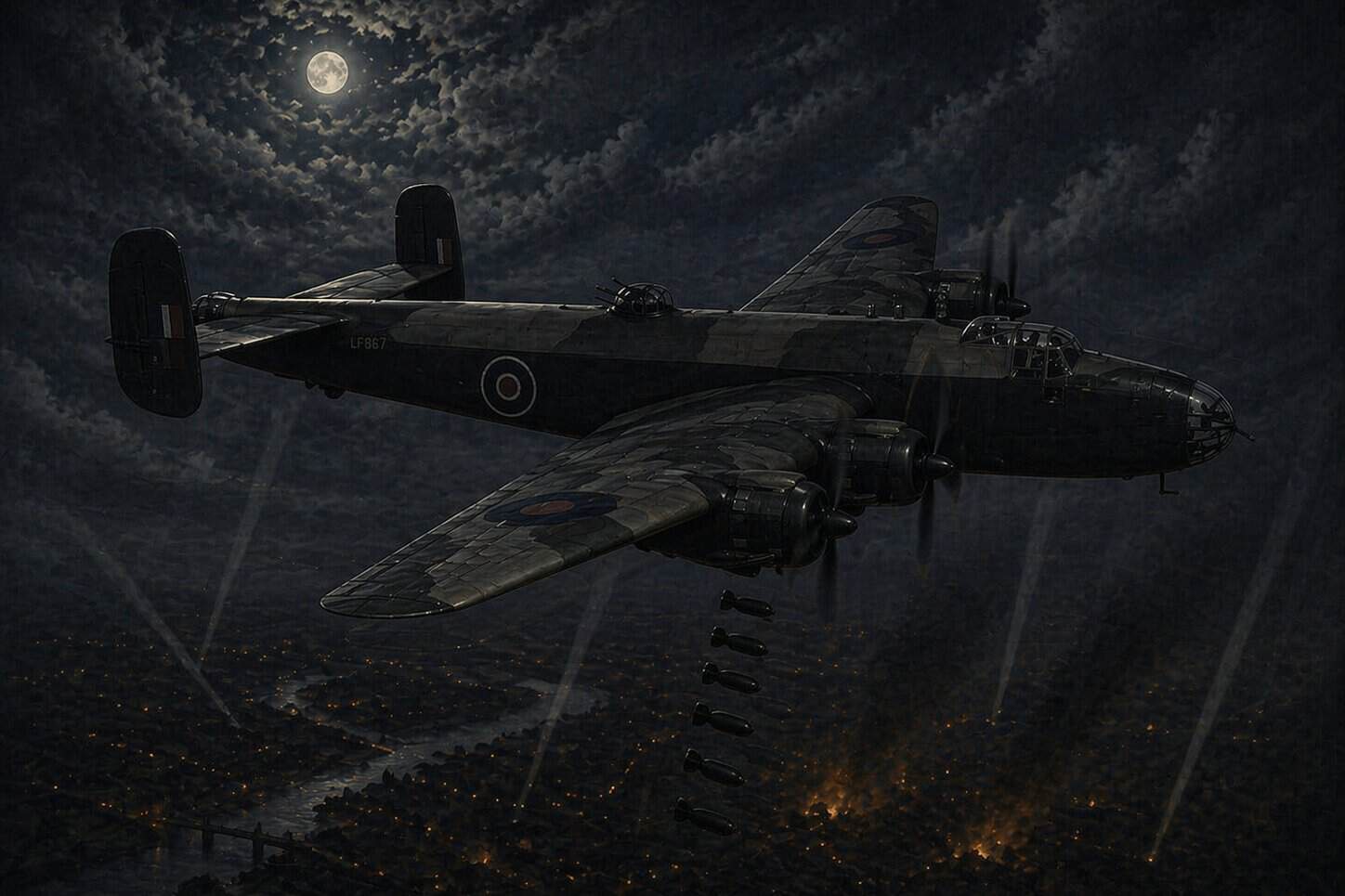
RAF strategic bombing entered a new phase when Bomber Command moved from the highly visible mass raid on Cologne to the sustained attacks of the Battle of the Ruhr. The change was not simply one of scale. It reflected a broader attempt to turn offensive air power into a continuous campaign against German industry, communications, and morale, while extending the RAF's operational reach.
Background
During 1942, Bomber Command sought ways to demonstrate pressure on Germany despite continuing limits in bomber numbers, navigation and night accuracy. The Cologne raid showed that a very large force could be assembled for a concentrated attack and that such an operation carried political and psychological value as well as military effect. It also revealed enduring weaknesses. Much still depended on weather, navigation and the ability of crews to identify and strike a target area after dark.
The arrival of Arthur Harris at Bomber Command gave this offensive a more forceful institutional direction. The aim was no longer merely to prove that a large raid could be mounted. It was to sustain pressure against Germany with repeated attacks that might wear down industrial output, strain air defences and demonstrate that the RAF could carry the war deep into enemy territory.
From Cologne To The Ruhr
From that point, Bomber Command moved from exceptional demonstration raids towards a more sustained assault on the Ruhr, Germany’s principal industrial region. The offensive drew on growing numbers of heavy bombers, notably the Short Stirling, Handley Page Halifax and, increasingly, the Avro Lancaster. Against a dense concentration of factories, rail centres, canals and urban infrastructure, the RAF aimed to impose cumulative disruption rather than rely on one spectacular attack to decide the issue.
As the campaign developed, organisation mattered as much as aircraft numbers. Routeing, bomber-stream discipline, serviceability and coordination across stations all became more important as raids increased in size and frequency. The offensive also exposed the central problem of night bombing: consistently finding and striking the intended target. That difficulty helped drive improvements in navigation and target-marking, developments later closely associated with the Pathfinder Force.
Results and Limits
The results were real but uneven. Repeated attacks forced Germany to divert defensive efforts towards the Ruhr, damaged industrial districts, and placed heavy strain on transport, housing, and municipal services. Yet the offensive did not produce neat or consistent outcomes. Accuracy remained variable, weather often intervened, and claims for decisive industrial paralysis were difficult to sustain from raid to raid. Bomber Command also paid heavily in aircraft and trained crews, a cost that shaped every assessment of the campaign.
Cologne had demonstrated what concentration could achieve in a single headline operation. The Ruhr offensive revealed the harder reality of a prolonged campaign: success depended on repetition, organisation and endurance as much as on raw scale. It was an escalation, but also an education in the limits of bomber power when intelligence, marking and bombing accuracy remained imperfect.
Significance
In RAF terms, the passage from Cologne to the Ruhr marked Bomber Command’s transition from episodic large raids to a more sustained operational system. It demanded stronger command methods, larger serviceable heavy-bomber forces, and better support for maintenance, training, and navigation. It also strengthened the claim of the strategic offensive upon RAF resources and planning, making the bomber war an increasingly central part of Britain’s wider air strategy.
The campaign mattered not only for the damage inflicted on Germany but for what it did to the Service itself. It accelerated the move towards heavier bombers, more specialised supporting methods and a conception of air warfare in which pressure was maintained over time rather than expressed only in isolated blows.
Wider Context
The strategic bombing offensive remained contested throughout the war, both in its effectiveness and in the human and material price it demanded. Even so, the move from Cologne to the Ruhr showed that the RAF had committed itself to an industrial war of attrition from the air. That commitment formed part of the wider Allied effort to stretch German defences, complicate production and maintain pressure before the return to the continent.
Seen in that context, the escalation was neither a simple triumph nor a failure. It was a formative stage in the development of Bomber Command’s wartime method: larger forces, wider reach, heavier aircraft and increasingly systematic attempts to turn air power into sustained strategic effect.