RAF Fighter Power Beyond 1940: From Spitfire to Deterrence
How RAF fighter power grew beyond the Battle of Britain, from wartime sweeps and Malta to NATO in Germany, Phantoms in the Falklands, Harriers in Belize and Typhoon QRA today.
On This Day, 2023: On 9 November 2023, the RAF reported the Dutch-led recovery of Lancaster ED603 from the IJsselmeer, with aircrew…
Read the entry →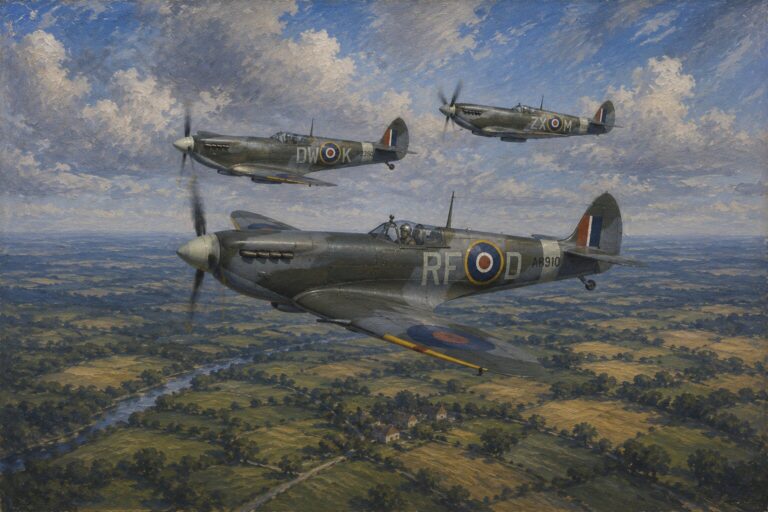
How RAF fighter power grew beyond the Battle of Britain, from wartime sweeps and Malta to NATO in Germany, Phantoms in the Falklands, Harriers in Belize and Typhoon QRA today.
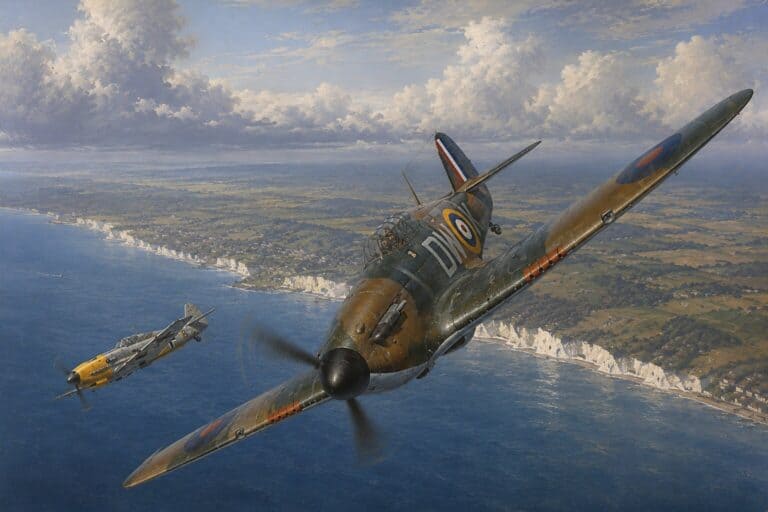
On 18 August 1940, the Hardest Day of the Battle of Britain brought heavy RAF and Luftwaffe losses as attacks hit airfields and radar.
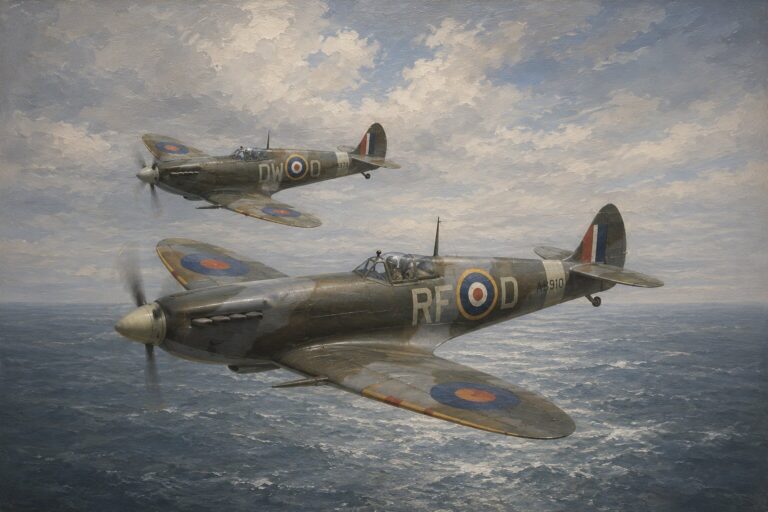
On 17 August 1942, fresh Spitfires flew from HMS Furious to Malta, strengthening the island’s air defence at a critical stage of the siege.

The Bomber Command attack on Turin and Milan on 16 August 1940 hit key Italian industry and showed Britain could carry the air war beyond Germany.
On 15 August 1942, Bomber Command formed the Pathfinder Force under D.C.T. Bennett to mark targets and improve RAF night bombing accuracy.
On 14 August 1945, Japan accepted surrender terms, ending the Pacific war in practice and closing a vast chapter of RAF service in Asia.
On 13 August 1912, Hugh Trenchard joined the Central Flying School, a formative step on the road to shaping Britain’s independent air arm.
On 12 August 1914, the Royal Flying Corps began moving to France with the BEF, opening Britain’s first sustained overseas air deployment.
How the Malta convoys kept the RAF’s island base fighting in 1941 and 1942, from Harpoon and Vigorous to Operation Pedestal and the tanker Ohio, and how RAF fighters covered them.
On 11 August 1990, RAF Jaguar GR1As left the UK for Thumrait as Britain built the early air deployment that became Operation Granby.