The Air Ministry Between the Wars and Britain’s Air Strategy
How the Air Ministry tried to shape British air strategy between the wars, balancing doctrine, empire, economy and rearmament before 1939.
On This Day, 2023: On 9 November 2023, the RAF reported the Dutch-led recovery of Lancaster ED603 from the IJsselmeer, with aircrew…
Read the entry →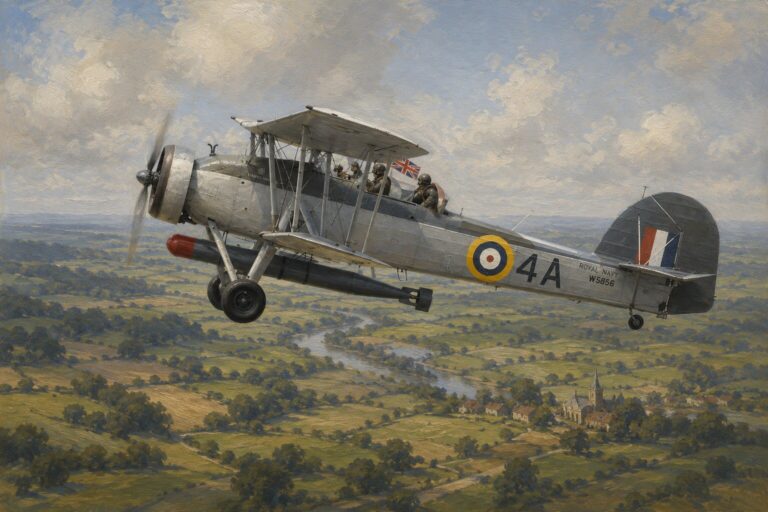
How the Air Ministry tried to shape British air strategy between the wars, balancing doctrine, empire, economy and rearmament before 1939.

On 3 September 1939, London heard its first air-raid alarm of the war, showing how quickly Britain entered a state of nervous wartime readiness.
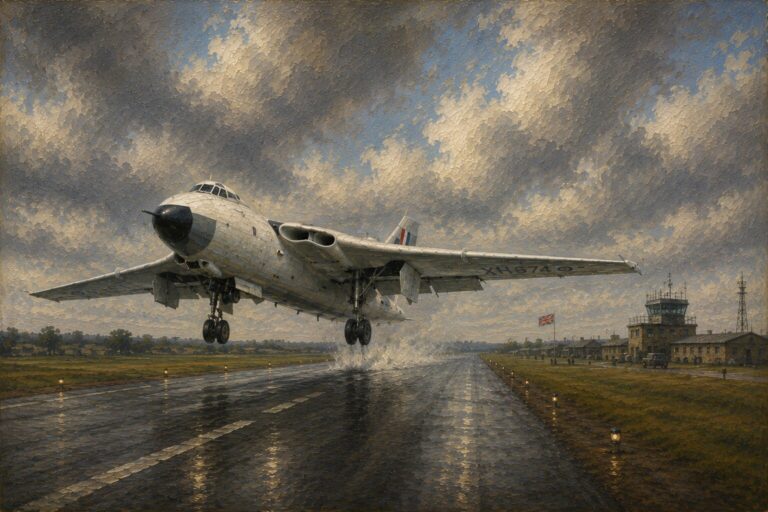
On 2 September 1956, a Vickers Valiant flew direct from Maine to RAF Marham, proving the range and credibility expected of Britain’s V-bomber force.

How the Battle of the Heligoland Bight on 18 December 1939 cost Bomber Command 15 of 22 Wellingtons and ended its faith in unescorted daylight bombing.
On 1 September 1939, Germany invaded Poland and opened the European war that would soon place the RAF at the centre of Britain’s strategic response.
On 31 August 1953, Operation Cyclone began in Malaya, showing how the RAF was adapting helicopters and air power to counter-insurgency warfare.
By 30 August 1940, No. 303 (Polish) Squadron was nearing operational service and stood on the edge of its extraordinary Battle of Britain record.
On 29 August 1955, an English Electric Canberra reached nearly 66,000 feet, reinforcing the aircraft’s reputation as one of the RAF’s most capable early jets.
On 28 August 1952, Flying Officer M. O. Berg was shot down in a Meteor and captured, becoming the RAF’s only Korean War prisoner.
On 27 August 1941, Hudsons of No. 269 Squadron forced U-570 to surrender south of Iceland, an extraordinary RAF success at sea.