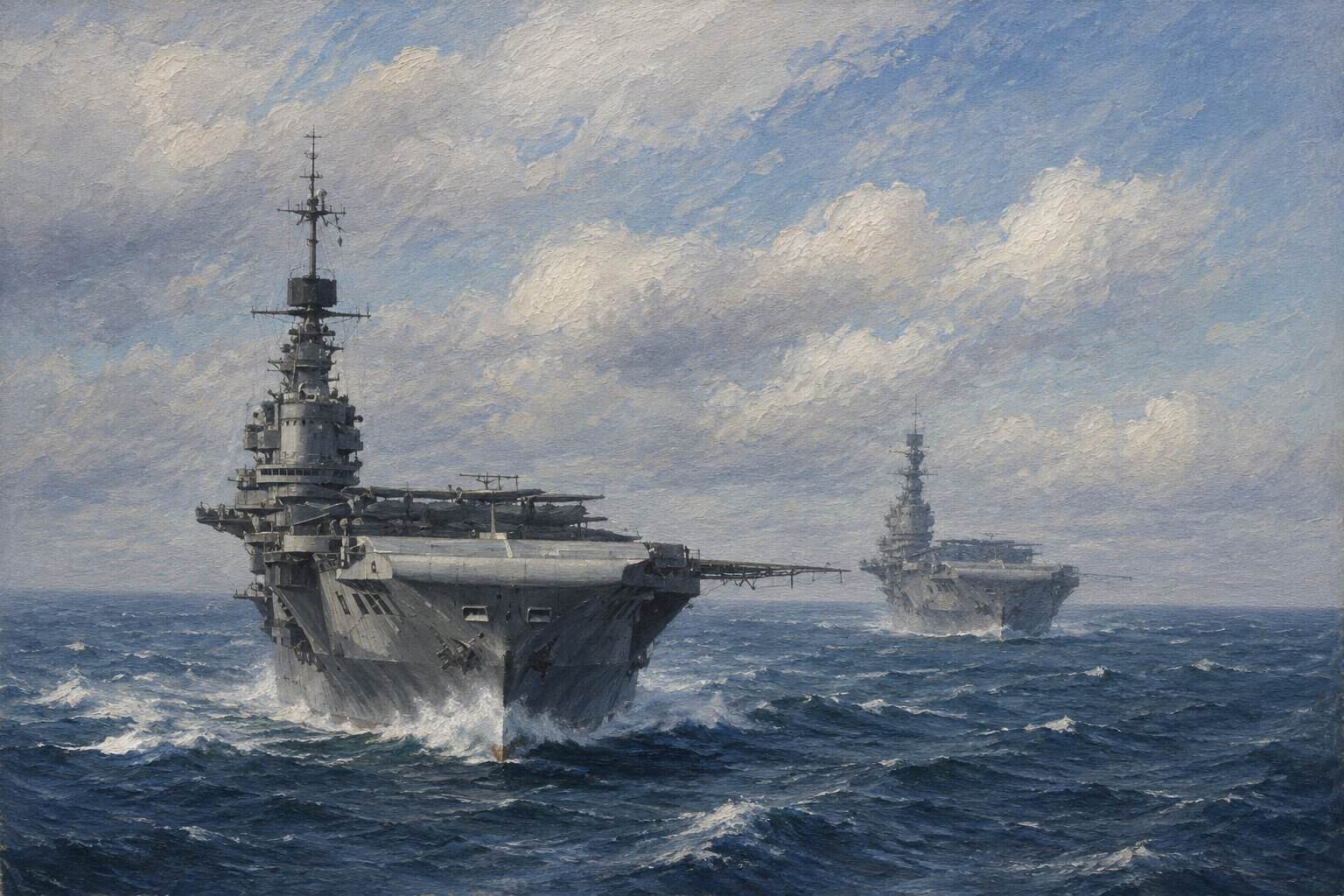
Malta’s RAF squadrons could only fight as long as ships brought in fuel, bombs, ammunition, spare parts and food. Fighters could be flown in from carriers, but everything else came by convoy, and the great Malta convoys of 1941 and 1942, above all Operation Pedestal in August 1942, decided whether the island survived as an air base.
Why did Malta depend on convoys?
Malta produced little of its own food and none of its fuel, so its garrison, its 250,000 people and its airfields all depended on supplies brought by sea from Gibraltar in the west or Alexandria in the east. Aviation fuel was the RAF’s tightest limit: without it, fighters could not defend the island and strike aircraft could not attack Axis shipping.
By the summer of 1942 the island was close to running out of both fuel and food, and the governor set a date after which it would have to surrender (RAF Benevolent Fund).
Why were the Malta convoys so dangerous?
Convoys had to pass within range of German and Italian airfields in Sicily, Sardinia and North Africa, as well as submarines, E-boats, minefields and the Italian fleet. Merchant ships were attacked from the air almost continuously on the last stages of the voyage.
The danger was clear from early 1941, when Luftwaffe dive-bombers badly damaged the carrier Illustrious while covering the convoys of Operation Excess.
What happened to the convoys of 1942?
In 1942 several convoys failed or were destroyed. In June two convoys sailed at once from east and west: the eastern one, Vigorous, turned back under air and naval attack, and only two of the six merchant ships of the western one, Harpoon, reached Malta.
With so little getting through, the island’s survival came down to the next attempt in August.
What was Operation Pedestal?
Operation Pedestal was the convoy of 14 merchant ships, heavily escorted by carriers, battleships and cruisers, that sailed from Gibraltar on 10 August 1942. Only five merchant ships survived the German and Italian attacks, the last being the damaged tanker Ohio, towed into Valletta on 15 August with the fuel Malta needed most (WW2 Today).
The supplies it delivered kept Malta in the war through the autumn.
How did the RAF protect the convoys?
As convoys came within range, Malta’s own Spitfires and long-range Beaufighters flew cover over them, breaking up air attacks on the final approach to the island. Malta’s strike aircraft and reconnaissance flights also watched and attacked the Italian fleet and the airfields from which raids were launched.
Fighter cover from Malta reduced the air attacks on Pedestal’s last day, helping the surviving ships get in.
How did the convoys and air reinforcement work together?
Convoys and fighter deliveries depended on each other: fighters flown in from carriers protected the harbour and the arriving ships, while the convoys brought the fuel and ammunition the fighters needed. The fighter deliveries are covered in the Chronicle’s article on reinforcing Malta by air.
Once both were flowing, Malta’s Beauforts, Wellingtons and Beaufighters could resume attacks on the Axis convoys to Libya, starving Rommel’s army of fuel before and after El Alamein.
When did the siege of Malta end?
After the victory at El Alamein and the Torch landings, the Allies held the North African coast, and a convoy from Alexandria reached Malta in November 1942 with air cover all the way. From then on supplies arrived regularly, and Malta became a base for the invasion of Sicily in 1943.
The wider campaign is told in the Chronicle’s article on RAF Malta operations, 1940 to 1943.