On This Day, 1988: Sheila Scott died on 20 October 1988, leaving a legacy of solo world flights, polar exploration and record-breaking…
Read the entry →Formation Interwar Articles
In-depth articles, analysis and long reads from The RAF Chronicle.
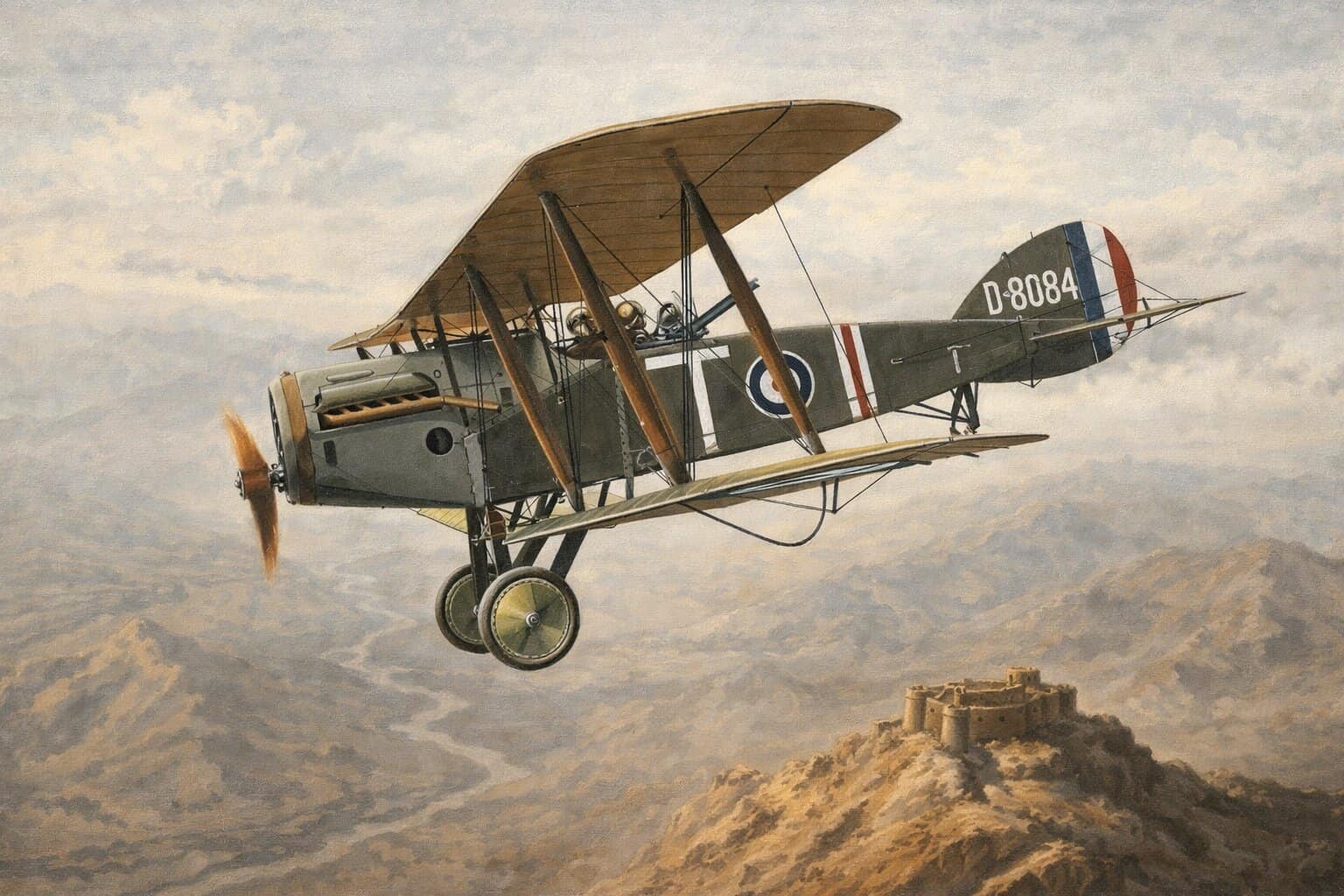
Pink’s War and RAF Air Control on the North-West Frontier
Formation & Interwar
Pink’s War showed how the RAF used air power on the North-West Frontier in 1925, and why imperial air control promised economy but revealed clear limits.
Read the article →RAF and the Decline of Flying Boats: Why a Maritime Era Ended
From Southampton cruises to Sunderland patrols, Berlin and Korea, explore why RAF flying boats gave way to land-based…
Inspection Flying Boat Flight Departs Felixstowe in 1928
On 28 September 1928, an RAF inspection flying boat flight left Felixstowe for Malta, Egypt and Iraq, reflecting…
Fighter Command Receives Its First Spitfire, 1937
On 24 September 1937, Fighter Command received its first production Spitfire, marking a key step in RAF modernisation.
38 Squadron Activated at RAF Mildenhall During Rearmament
On 16 September 1935, 38 Squadron was activated at RAF Mildenhall, reflecting the wider rebuilding of bomber strength…
RFC Monoplane Ban Shapes Early Military Aviation Policy
On 12 September 1912, the War Office banned RFC pilots from flying monoplanes, showing how safety and institutional…
The Air Ministry Between the Wars and Britain’s Air Strategy
How the Air Ministry tried to shape British air strategy between the wars, balancing doctrine, empire, economy and…
Hugh Trenchard Joins the Central Flying School, 1912
On 13 August 1912, Hugh Trenchard joined the Central Flying School, a formative step on the road to…
RAF and Royal Navy Strike Kronstadt in North Russia
On 30 July 1919, RAF aircraft from HMS Vindictive joined a British strike on Kronstadt, hitting the Bolshevik…
The King’s Flight Is Formed for Royal Air Travel in 1936
On 21 July 1936, the RAF officially formed the King’s Flight, creating a dedicated air transport unit for…
RAF Creates Bomber, Fighter and Coastal Commands in 1936
On 14 July 1936, the RAF replaced Air Defence of Great Britain with Bomber, Fighter and Coastal Commands,…
Beauchamp-Proctor VC Killed in RAF Flying Accident in 1921
The death of Andrew Beauchamp-Proctor VC showed that flying remained dangerous even after the First World War had…
British Government Forms the Air Committee for Coordination
The creation of the Air Committee marked an early attempt to coordinate British military aviation as air power…