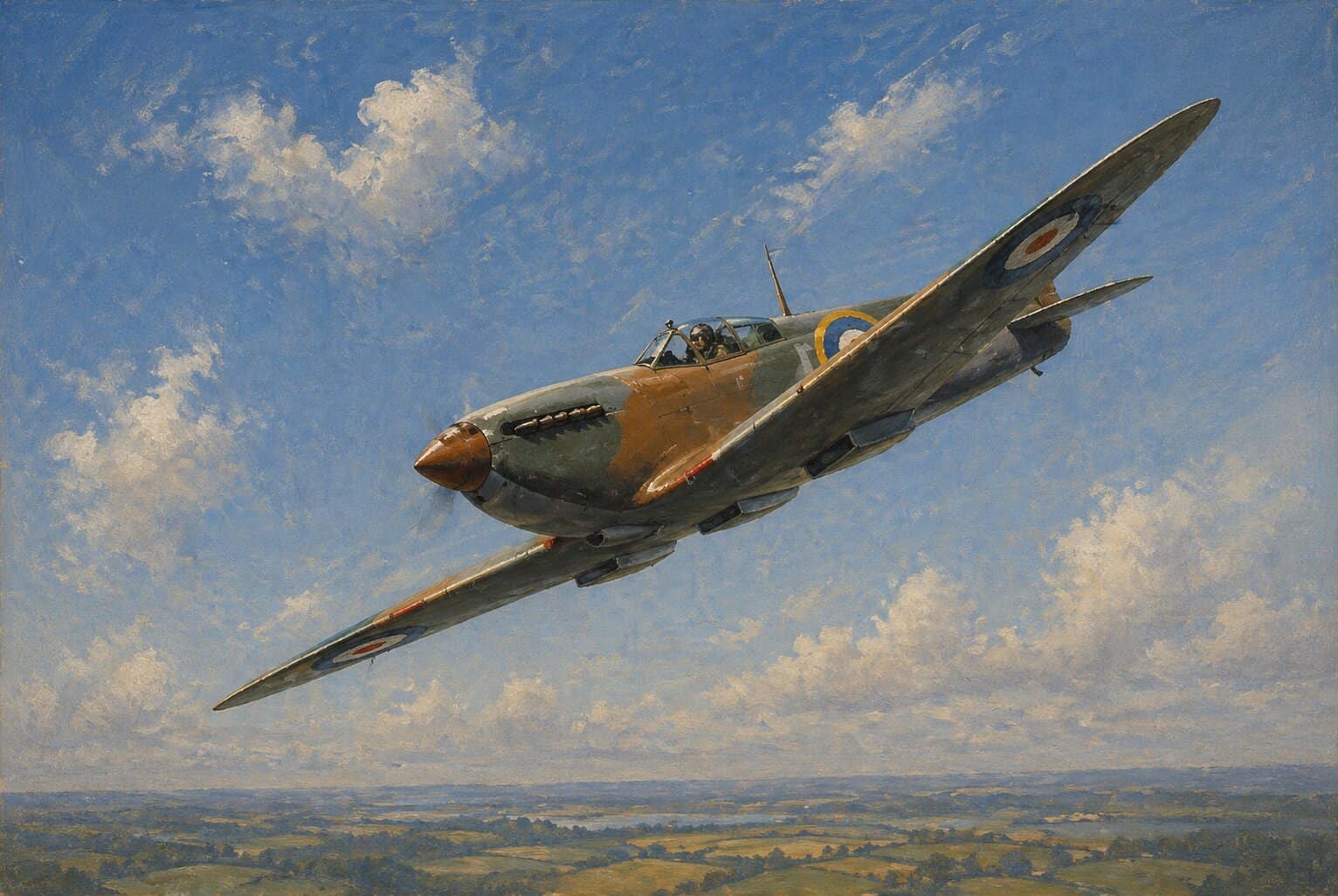
On 20 May 1939, the final Empire Air Day was staged across sixty RAF stations and eighteen other airfields, attracting about one million visitors. Coming only months before the outbreak of the Second World War, the event marked the end of one of the RAF’s most visible peacetime public showcases.
Empire Air Day was more than a flying entertainment. It was a national and imperial display of the Royal Air Force at a time when public confidence, recruitment, technical prestige and political messaging all mattered. In the late 1930s, with the international situation growing increasingly tense, such an event carried significance well beyond spectacle.
Showing the RAF to the Public
The purpose of Empire Air Day was to open RAF stations and associated airfields to a mass audience, allowing the public to see aircraft, equipment, flying displays and demonstrations of modern air power. It helped familiarise civilians with the service at a time when aviation still held strong popular fascination and when the RAF wished to present itself as modern, capable and nationally important.
That mattered especially in 1939. Britain was rearming, the threat from Nazi Germany was plain, and the RAF’s public image had become part of the broader atmosphere of national preparation. To gather such large crowds on a single day showed the level of interest air power could command.
The scale of the event is itself revealing. Participation by so many stations and airfields reflected a service eager to project reach and professionalism. Empire Air Day linked the RAF’s home presence with a wider imperial identity, presenting British air power as both national shield and imperial instrument.
A Peacetime Tradition Nearing Its End
What gives the final Empire Air Day its particular poignancy is timing. Held in May 1939, it took place at the edge of war. Within a few months, the RAF would no longer be presenting itself primarily through organised public displays. Instead, it would be entering a full wartime footing in which operational readiness, mobilisation and defence took precedence over ceremonial openness.
Seen in retrospect, the day therefore marks the close of a peacetime chapter. It belongs to the final months of a Britain still able to stage large-scale public aviation events, even as Europe moved towards crisis.
This does not make Empire Air Day trivial or merely nostalgic. On the contrary, it illustrates how the RAF sought to build public understanding and support before war came. Air power in the twentieth century depended not only on aircraft and crews, but also on national commitment, industrial confidence and popular engagement.
End of a Tradition
The last Empire Air Day on 20 May 1939 stands as a reminder of the RAF’s public face in the final months before war transformed the service. It brought together technology, ceremony and mass public interest at a moment when the RAF was becoming central to Britain’s sense of security.
Seen in retrospect, the final Empire Air Day was both an exhibition and a farewell. It captured the RAF at the last moment when air power could still be presented as a public spectacle before war made it a matter of national survival.