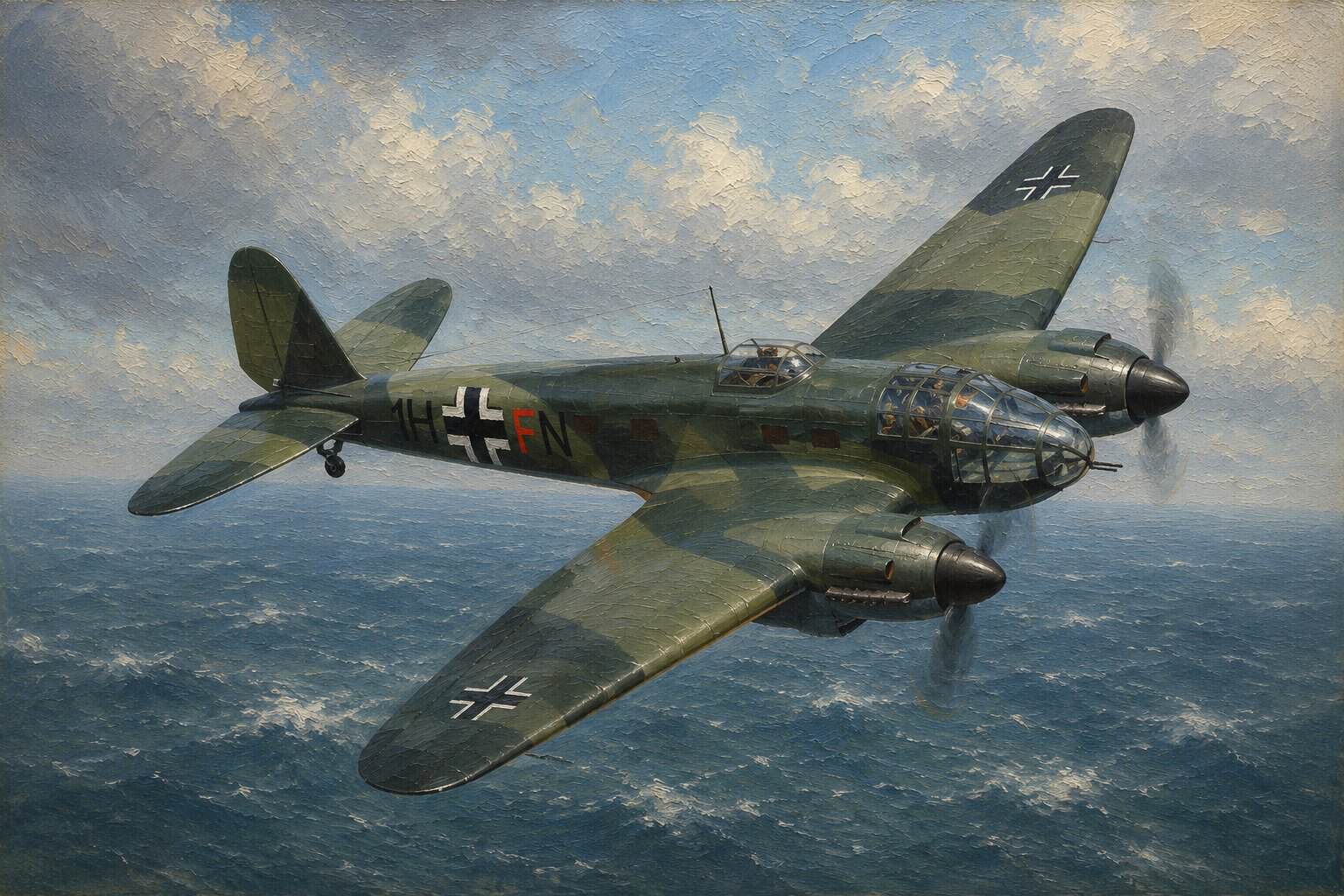
On 5 September 1940, “Bromide” radio counter-measure transmitters were used operationally against German navigation beams. The event is widely treated as the effective beginning of British electronic warfare. At first glance, the moment might appear technical and obscure beside the more visible drama of fighters, bombers and raids. In reality, it marked the entry of the air war into a contest of science, deception and counter-measure in which victory would depend not only on aircraft and aircrew, but on control of information and signals.
The hidden side of the air war
By 1940, the struggle between Britain and Germany was already pushing combat into increasingly complex forms. Aircraft could reach farther and more accurately when supported by radio navigation systems, which raised an immediate question: if beams could guide bombers, could they also be detected, distorted, or denied? Bromide was part of Britain’s answer.
Its operational use demonstrated that the RAF and the wider British scientific effort were beginning to contest the enemy not only in the sky but in the electromagnetic environment that supported aerial attack. This mattered because the bomber offensive, whether German or British, depended heavily on finding targets in darkness, poor weather, and at long range. Navigation aids therefore became instruments of war in their own right.
Why Bromide mattered
The significance of Bromide lies less in one single night’s effect than in the precedent it established. Once radio countermeasures entered practical use, the air war became a continuing cycle of measure and countermeasure. One side would create an aid, the other would seek to disrupt it, and each innovation would force adaptation. The struggle was no longer simply one of engines, guns and pilot skill. It also involved laboratories, monitoring stations, technical intelligence and rapid operational application.
For Britain, that development was especially important in 1940. The threat from German air attack was immediate, and anything that could reduce enemy accuracy or complicate Luftwaffe methods had real defensive value. Bromide represented a move from passive endurance towards active interference with the systems that made bombing effective.
Science and warfare joined together
This moment also illustrates the broader relationship between science and RAF operations. Wartime success increasingly depended on specialists whose work might never be visible to the public. Engineers, physicists and signal experts were helping shape the conditions of combat just as surely as pilots were. The practical use of Bromide therefore marks the start of a broader wartime pattern in which technical innovation and operational necessity became inseparable.
That would have consequences far beyond 1940. British electronic warfare expanded into radar deception, navigation interference and a host of related techniques that became central to the wider air campaign. Bromide belongs at the beginning of that story because it showed that signals warfare could move from theory into operational method.
Significance
The operational use of Bromide on 5 September 1940 matters because it marks the point at which British resistance to air attack clearly entered the electronic domain. It was an early but important demonstration that the RAF’s war would be fought not only by visible aircraft in visible battles, but by invisible contest over beams, frequencies and guidance systems. In RAF history, the episode stands as a foundational moment in the development of British electronic warfare, where ingenuity and interference became weapons in their own right.