On This Day, 1956: On 11 October 1956, a Valiant of No. 49 Squadron dropped a live Blue Danube atomic bomb at…
Read the entry →
20 Squadron
Facta non verba — Deeds, not words
How 20 Squadron evolved from early frontier and wartime service into later support and specialist roles in the modern RAF.
A long-lived RAF squadron associated in modern memory with helicopter and support roles rather than the classic fighter or bomber narrative.
No. 20 Squadron has served the Royal Flying Corps and Royal Air Force in strikingly different forms since 1915. Its history encompasses air combat over the Western Front, army cooperation on India’s North-West Frontier, close support in Burma, Cold War strike aircraft, Harrier training and the preparation of modern air command-and-control specialists. The squadron’s identity has survived several disbandments and reformations, but its duties have changed with the RAF’s operational needs. Its story is best understood through the aircraft it flew, the campaigns in which it served and the skills it developed for the wider service.
Formation and the First World War
No. 20 Squadron was formed at Netheravon on 1 September 1915 as a Royal Flying Corps unit. It deployed to France in January 1916 and became heavily engaged in fighting over the Western Front. Flying two-seat aircraft, notably the Royal Aircraft Factory F.E.2b and later the Bristol F.2 Fighter, it combined reconnaissance and offensive fighting at a time when control of the air was increasingly important to operations on the ground.
The squadron built an exceptional combat record. Its First World War claims exceeded 460 enemy aircraft destroyed, although such contemporary victory totals must be understood in the context of the period’s reporting and confirmation practices. The Bristol F.2 Fighter became closely associated with the unit’s later wartime operations, demonstrating that a two-seat machine could fight effectively when flown aggressively and supported by a capable observer and gunner.
The squadron’s history also includes Sergeant Thomas Mottershead, awarded a posthumous Victoria Cross for his actions in January 1917. After his aircraft was set on fire in combat, he managed to bring it down despite severe burns, helping his observer survive. His courage reflects the risks borne by the RFC’s two-seat crews, whose duties placed them under attack while carrying out essential reconnaissance and combat missions.
India and Army Cooperation
After the First World War, No. 20 Squadron’s role changed from aerial fighting in France to supporting British forces in India. Its service on the North-West Frontier involved reconnaissance, communications and operations in difficult terrain, where aircraft offered commanders reach and information that ground units could not easily obtain.
The inter-war squadron operated several army-cooperation types, including the Bristol F.2 Fighter and Westland Wapiti. Its duties were broader than bombing or fighting alone. During the 1929 Kabul airlift, for example, aircraft from the squadron supported communications by wireless as the RAF helped evacuate civilians from Afghanistan. Such tasks illustrate the practical value of military aviation in an environment where roads, weather and geography complicated conventional movement.
This frontier experience gave the squadron a long association with cooperation between air and ground forces. That specialism would remain relevant when war returned to Asia in 1941.
The Second World War and Burma
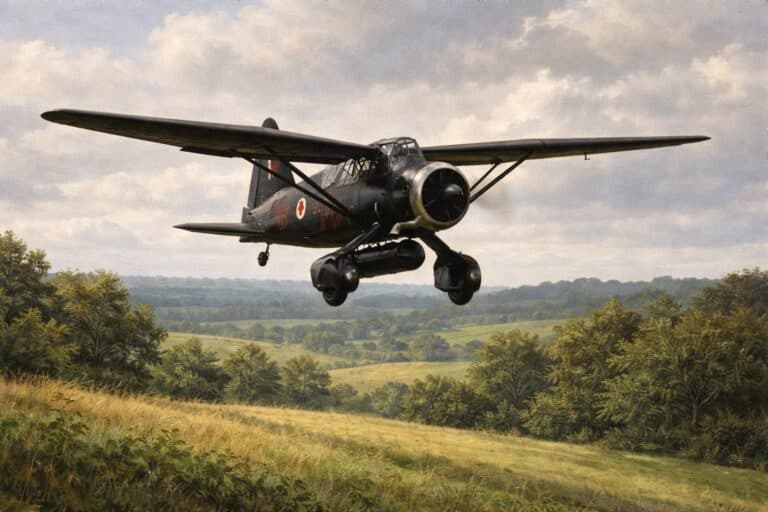
At the outbreak of the Second World War, No. 20 Squadron was serving in India with the Westland Lysander, an aircraft designed for observation and army-cooperation work. The Japanese advance transformed its operating environment. Reconnaissance and support missions increasingly had to be undertaken against an enemy with substantial air and ground strength, exposing the limitations of lightly armed cooperation aircraft in contested skies.
The squadron subsequently converted to Hawker Hurricanes and became involved in close-support operations during the Burma campaign. Cannon-armed Hurricane variants offered a more powerful means of attacking ground targets, while later rocket-equipped aircraft increased the weapons available to support advancing Allied troops. Operating in the demanding conditions of South-East Asia, crews had to identify targets, coordinate with ground formations and work from airfields affected by weather, supply constraints and the movement of the front.
No. 20 Squadron’s contribution should be seen within the larger Allied air effort supporting the Fourteenth Army. Air transport, reconnaissance, fighter cover and ground attack worked together to sustain the campaign. The squadron’s shift from Lysanders to Hurricanes was a response to those changing operational demands, rather than a simple progression to a newer aircraft.
Post-war Service and the Cold War
The squadron’s post-war history included changes of station, aircraft and status as the RAF adjusted to commitments in Europe and the Far East. Jet aircraft transformed the speed and reach of tactical air power. No. 20 Squadron operated the Hawker Hunter before moving into later generations of strike and ground-attack aircraft.
During the Cold War, the squadron became associated with RAF Germany and the requirements of NATO’s central front. It flew the Hawker Siddeley Harrier, whose short take-off and vertical-landing capability allowed dispersed operations away from conventional runways. That concept mattered in a conflict where major airfields might have been attacked early. The squadron later operated the SEPECAT Jaguar and Panavia Tornado, reflecting the RAF’s changing approach to low-level attack, battlefield interdiction and strike operations.
In 1991, No. 20 Squadron’s Tornado era brought involvement in Operation Granby, Britain’s contribution to the coalition campaign against Iraq following the invasion of Kuwait. The Gulf War placed demands on crews trained for European operations but required to operate in a different theatre, with new threats, targets and coalition procedures. It was a further example of the squadron adapting established tactical skills to a changed operational setting.
Harrier Training at RAF Wittering
In 1992, the squadron’s identity was assigned to the Harrier Operational Conversion Unit at RAF Wittering. This was an important change of emphasis: instead of serving principally as a front-line combat squadron, No. 20 (Reserve) Squadron trained pilots to operate the Harrier safely and effectively before joining operational units.
The Harrier demanded particular expertise in conventional flight, short take-offs, vertical landings and the management of engine thrust during transition between flight regimes. Conversion training also covered weapons employment, tactics and the practical demands of operating a combat aircraft from varied locations. Although less visible than combat deployments, this work directly supported the readiness and effectiveness of the RAF’s front-line Harrier force.
No. 20 (Reserve) Squadron disbanded on 31 March 2010 as the Harrier force was reorganised. The disbandment ended this phase of the squadron’s history; it did not erase the experience or the training contribution associated with its numberplate.
Reformation at RAF Boulmer
No. 20 Squadron was re-established at RAF Boulmer on 1 June 2021 in a role quite different from its earlier flying duties. Its modern work centres on training personnel for air surveillance, weapons control and tactical air command and control.
These specialists help create and interpret the recognised air picture, identify and track aircraft, and support the direction of air operations. Their work connects surveillance information with decisions made by controllers and commanders. In modern air defence, effective command and control depends on skilled people as well as sensors, aircraft and communications networks.
The squadron’s current role therefore represents a genuine change in function. It is not a flying unit operating the helicopters or transport aircraft sometimes associated with RAF support work. Instead, it contributes to the training pipeline for personnel who enable air operations across the force.
Historical Significance
No. 20 Squadron’s history is unusually broad. On the Western Front, its two-seat crews fought for information and control of the air. In India, it developed the practical arts of reconnaissance, communications and army cooperation. In Burma, it adapted to close support in a demanding land campaign. During the Cold War and Gulf War, it operated tactical strike aircraft, before passing into Harrier conversion training and, most recently, air command-and-control instruction.
There were breaks in its service, and each new role arose from the RAF’s circumstances at the time. The continuity lies in the squadron identity and the accumulated record attached to it, rather than in a single uninterrupted operational mission. From Bristol Fighters to radar and weapons-control training, No. 20 Squadron illustrates how the RAF has preserved historic squadron identities while assigning them new responsibilities.
Western Front 1914–1918
Somme 1916
Arras 1917
Ypres 1917
Somme 1918
Lys 1918
Hindenburg Line
Mahsud 1919–1920
Waziristan 1919–1925
Mohmand 1927
North-West Frontier 1930–1931
Mohmand 1933
North-West Frontier 1935–1939
North Burma 1943–1944
Arakan 1943–1944
Manipur 1944
Burma 1944–1945
Gulf 1991
Western Front operations in the First World War
North Burma and Arakan campaign service, 1943–1945
Gulf War service, 1991
Acting Flight Sergeant Thomas Mottershead VC of 20 Squadron was posthumously awarded the Victoria Cross after sustaining fatal injuries in combat in January 1917.
| Period | Station | Notes |
|---|---|---|
| 1915 | Netheravon | Squadron formed. |
| 1916–1919 | France | F.E.2b and Bristol Fighter service on the Western Front. |
| 1919–1941 | Risalpur | Long North-West Frontier army-co-operation period. |
| 1942–1945 | Ceylon and Burma | Blenheim and Hurricane operations in the Far East. |
| 1945–1947 | India and Siam | Spitfire and Tempest service before disbandment. |
| 1949–1951 | Llanbedr | Anti-aircraft co-operation reformation. |
| 1952–1992 | Germany, Cyprus, Hong Kong and Singapore stations | Post-war fighter, transport and support-helicopter phases. |
| 2021–present | RAF Boulmer | Control and Reporting Centre training role. |
| Name | Dates | Notes |
|---|---|---|
| C W Wilson | 1 September 1915 | First commanding officer on the squadron’s formation in the First World War. |
| John C Russell | 26 April 1919 | Commanded in the immediate post-war period and later became an air commodore. |
| Basil E Embry | 16 November 1937 | Led the squadron in the late inter-war period and later rose to air chief marshal. |
| Roger C Mead | 3 October 1938 | Commanded on the eve of the Second World War as the squadron moved into wartime service. |
| F F Lambert | 1 April 1942 | Led the squadron during active wartime operations in the Burma theatre. |
| Michael A D'Arcy | 30 June 1958 | Commanded in the post-war period and later became an air commodore. |


Harrier T10 Delivered to the Royal Air Force
On 30 January 1995, the first Harrier T10 was delivered to the Royal Air Force, strengthening…
30 January 2026 · 3 minThomas Mottershead VC: The Burning FE2d, 7 January 1917
On 7 January 1917, Sergeant Thomas Mottershead of No. 20 Squadron was awarded the Victoria Cross…
7 January 2026 · 4 minRAF Transport Command: From Wartime Airlift to Global Mobility
How RAF Transport Command grew from wartime airlift into a global force supporting overseas operations, reinforcement…
18 April 2026 · 5 min