On This Day, 1944: On 27 November 1944, the RAF Fauld explosion devastated an underground bomb store and nearby workplaces, killing about…
Read the entry →Air Marshal
John René Whitley
Profile of Air Marshal Sir John René Whitley, Bomber Command leader, wartime escapee, and senior post-war Royal Air Force commander.
Air Marshal Sir John René Whitley combined operational command in Bomber Command with senior post-war leadership of the Royal Air Force. His wartime record included a remarkable escape from occupied Europe after the loss of a Halifax bomber, while his later appointments extended to Air Member for Personnel and Inspector-General of the RAF.
Who was John René Whitley?
Sir John René Whitley, born on 7 September 1905, was an RAF officer who commanded 149 Squadron and RAF Linton-on-Ouse, escaped through occupied France in 1943 after being shot down, and led No. 4 Group at the end of the war. He rose to Air Marshal, served as Air Member for Personnel and Inspector-General of the RAF, and died on 26 December 1997 (Air of Authority).
John René Whitley was born on 7 September 1905. He spent part of his early life in Chile, where his father worked as an engineer on railway construction, and after his mother’s death, he lived in France with his grandparents. That international upbringing gave him a strong command of French and a familiarity with continental life that would prove unusually valuable during the war.
He entered the Royal Air Force on a short-service commission in 1926. Early in his flying career, he survived a serious accident while travelling as a passenger in a Vickers Virginia at Worthy Down. He moved to the rear gunner’s position before the crash and was the sole survivor after the aircraft struck a station building. He remained in the service, secured a permanent commission in 1931, and developed into a capable and trusted officer of the inter-war RAF.
What did John Whitley do before the war?
Whitley joined the RAF on a short-service commission in 1926, survived a Vickers Virginia crash at Worthy Down as its only survivor, and served in India, where he won the Air Force Cross for relief flying after the Quetta earthquake of 1935. By the late 1930s he was a flight commander with 38 Squadron.
Whitley’s early postings reflected the broad demands placed upon professional RAF officers in the years before the Second World War. He trained at No. 2 Flying Training School, served with 7 Squadron, attended the Central Flying School instructors’ course in 1929, and later held responsibilities with 101 Squadron. His record then took him to India, where he served with the Aircraft Park and eventually commanded the Bomber-Transport Flight at Lahore.
That Indian period brought one of the first distinctions of his career. During the relief effort after the Quetta earthquake in 1935, he flew extensively in difficult conditions, transporting personnel and stores between Lahore, Quetta and Karachi. The work earned him the Air Force Cross, gazetted on 1 February 1937. Contemporary recommendation papers emphasised both the scale of his flying and the steadiness of his example. By the late 1930s, he had become flight commander of 38 Squadron and briefly commanded RAF Hendon.
What did John Whitley do in Bomber Command?
Whitley took command of 149 Squadron’s Wellingtons at Mildenhall in May 1940 and became station commander at RAF Linton-on-Ouse in May 1941. After his escape in 1943 he commanded Driffield and Lissett, then No. 43 Base, and in February 1945 took over No. 4 Group.
At the opening of the war, Whitley served with 24 Squadron, a unit whose transport and communication work included important VIP flights. Later accounts associate him with flights involving figures such as Neville Chamberlain and Winston Churchill. In May 1940, he took command of 149 Squadron, then flying Vickers Wellingtons from Mildenhall. This placed him directly in Bomber Command’s expanding offensive at a moment when the RAF was still adapting pre-war structures to wartime realities.
His command of 149 Squadron was followed by a staff period in Bomber Command’s operations organisation and then by appointment as station commander at RAF Linton-on-Ouse in May 1941. Whitley was an operational flyer who moved steadily into the command and administrative machinery on which Bomber Command depended. He combined first-hand flying experience with the wider responsibilities of station and group leadership.
How did John Whitley escape from occupied France?
Shot down over France on 10 to 11 April 1943 while flying as a station commander with a 76 Squadron Halifax, Whitley evaded capture and was passed along the Comet escape line, crossing the Pyrenees into Spain on 10 May 1943. His fluent French helped, and he was awarded the DSO that July (Aircrew Remembered).
Whitley is most widely remembered for the night of 10 to 11 April 1943. Although station commanders were not normally expected to fly on operations, he joined a raid against Frankfurt aboard No. 76 Squadron’s Handley Page Halifax II JB871, coded MP-V. The aircraft was attacked by a German night fighter and lost near Hirson in northern France. Whitley parachuted to safety and avoided capture. Later accounts state that he habitually carried a small escape kit and civilian essentials when flying, anticipating exactly such a contingency.
The escape that followed became one of the defining episodes of his career. With the help of civilians and organisers of the Comet escape line, who risked arrest and execution to shelter and guide Allied airmen, he moved through occupied territory, used his fluent French and altered his appearance. He crossed the Pyrenees into Spain on 10 May 1943 and eventually returned to Britain. The episode demonstrated both Whitley’s resourcefulness and the essential contribution of the escape network. His Distinguished Service Order was gazetted on 9 July 1943.
After returning to duty, he resumed command responsibilities rather than retreating into staff work alone. He commanded RAF Driffield and then RAF Lissett, before becoming Air Officer Commanding No. 43 Base in 1944. On 12 February 1945, he took command of No. 4 Group, one of Bomber Command’s principal heavy-bomber groups. In May 1945, as the war in Europe ended and Bomber Command reorganised, he moved to No. 8 Group, associated with the Path Finder Force.
What did John Whitley do after the war?
After the war Whitley served in South East Asia, at the Air Ministry and in Germany, commanded No. 1 Group from 1953 and set a London to Nicosia record in a Canberra. He was Air Member for Personnel from 1957 and Inspector-General from 1959, retiring in 1962.
Whitley’s post-war service confirmed that he had become one of the RAF’s senior professional commanders. He served with Air Command South East Asia and RAF India, commanded RAF Karachi, and became Director of Organisation (Establishments) at the Air Ministry in 1947. After attending the Imperial Defence College, he served in Germany as Air Officer Administration at Headquarters BAFO and 2nd Tactical Air Force.
In 1953, he became Air Officer Commanding No. 1 Group. During this period, he remained closely associated with flying and with the RAF’s transition into the jet age. He established a London-to-Nicosia flight record in an English Electric Canberra, departing from Scampton and covering approximately 2,000 miles in 4 hours 13 minutes during wider demonstration and long-range touring activity. Senior office followed: he became Air Member for Personnel in 1957 and Inspector-General of the RAF in 1959. He retired in 1962 with the rank of Air Marshal and later served as Controller of the RAF Benevolent Fund until 1968. Sir John Whitley died on 26 December 1997.
Why is John Whitley important in RAF history?
Whitley’s career ran from inter-war India through Bomber Command command and a famous escape to the Air Council of the Cold War RAF. His escape also shows the debt RAF airmen owed to the civilians of the Comet line.
He belonged to the generation of inter-war officers who carried the service from imperial policing and long-distance communications into total war, then helped manage its post-war reconstruction. His career spanned squadron command, station command, group command, staff work, and Air Council office, making him a representative figure in the professional leadership culture of the mid-century RAF.
Yet he is also remembered for a more personal reason. The 1943 escape from occupied Europe gave his record a dramatic episode that has endured in recollection far beyond routine senior appointments. The wider shape of his career is larger than that single incident. He was a Bomber Command commander, an able organiser, and a senior RAF officer whose service linked pre-war flying, wartime command and the early Cold War air force.
| Dates | Role | Unit | Aircraft |
|---|---|---|---|
| 1926–1931 | Pilot and flying instructor appointments | No. 2 FTS, 7 Squadron, CFS, 101 Squadron | |
| 1932–1937 | Staff and command duties in India | Aircraft Park, India; Bomber-Transport Flight, Lahore | |
| 1937–1940 | Flight commander and station command duties | 38 Squadron, RAF Hendon, 24 Squadron | |
| 1940 | Officer Commanding | 149 Squadron | Vickers Wellington |
| 1940–1941 | Operations staff | Headquarters Bomber Command | |
| 1941–1943 | Station Commander | RAF Linton-on-Ouse | |
| 1943 | Evaded capture after being shot down on operations | Occupied Europe to Spain | Handley Page Halifax |
| 1943–1944 | Station Commander | RAF Driffield; RAF Lissett | |
| 1944–1945 | Air Officer Commanding | No. 43 Base | |
| 1945 | Air Officer Commanding | No. 4 Group | |
| 1945–1946 | Air Officer Commanding | No. 8 Group | |
| 1946–1947 | Senior staff and command appointments | HQ Air Command South East Asia; RAF India; RAF Karachi | |
| 1947–1951 | Director of Organisation and higher studies | Air Ministry; Imperial Defence College | |
| 1951–1953 | Air Officer Administration | Headquarters BAFO and 2nd Tactical Air Force | |
| 1953–1956 | Air Officer Commanding | No. 1 Group | English Electric Canberra |
| 1957–1959 | Air Member for Personnel | Air Council | |
| 1959–1962 | Inspector-General of the RAF | Royal Air Force |
Whitley is remembered both as a capable Bomber Command commander and as one of the RAF’s more notable wartime escapees. His reputation rests not on a single celebrated raid but on a broad command career that stretched from squadron and station leadership to group command, personnel policy and inspection at the highest level of the post-war service.
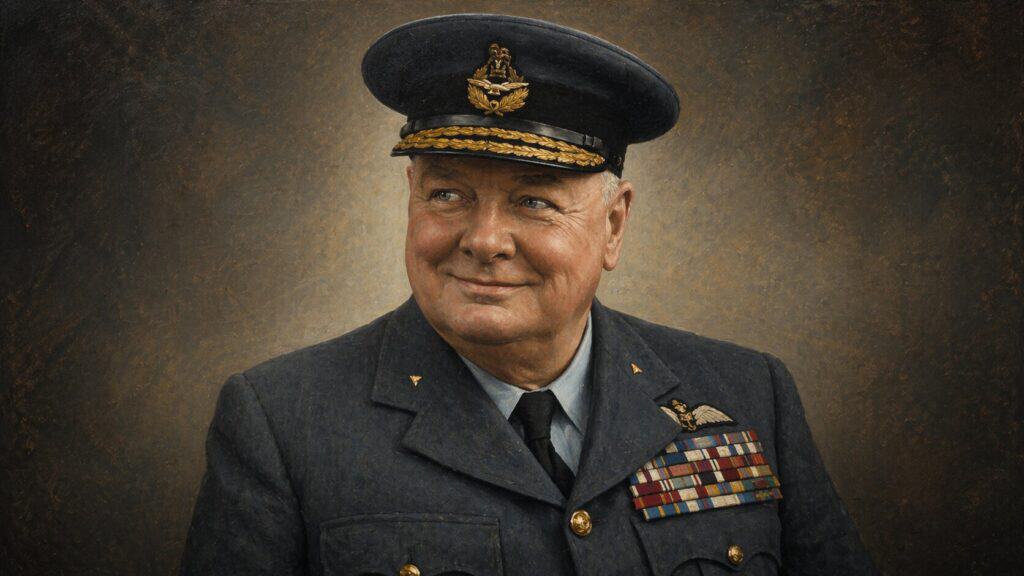
Canberra Cyprus Run Showed RAF Jet Speed and Reach
On 28 February 1955, Air Vice Marshal J. R. Whitley made a record Canberra flight from…
28 February 2026 · 3 minLysanders Drop Supplies to the Surrounded Calais Garrison
On 22 May 1940, Army Co-operation Lysanders began hazardous supply drops to the surrounded Calais garrison…
22 May 2026 · 3 minMoonshine Enters Action as the RAF’s First Radar Jammer
On 6 August 1942, the RAF first used Moonshine operationally, opening a new era of offensive…
6 August 2026 · 3 min