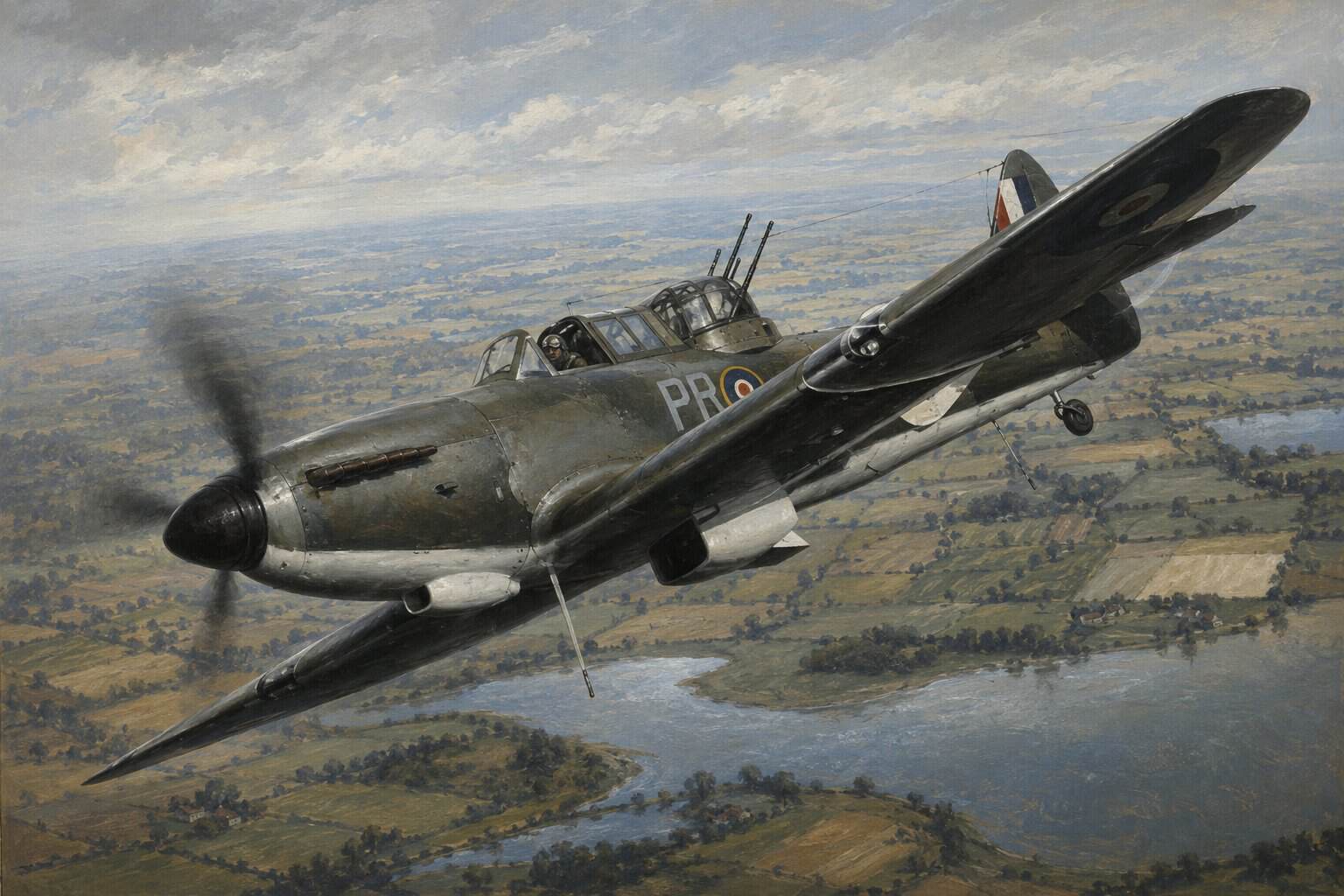
On 6 August 1942, the RAF brought its first offensive radar-jamming system, Moonshine, into operational use. The event did not have the visual drama of a bombing raid or a fighter combat, yet it marked a genuine turning point in air warfare. Moonshine showed that the battle in the air was no longer being fought only with bombs, guns and altitude. It was also becoming a contest of signals, deception and electronic advantage.
A new kind of air weapon
By 1942, the air war over Europe had already become heavily dependent on radar. German early-warning networks gave defenders precious minutes in which to detect approaching aircraft, judge their direction and begin the work of interception. For the RAF, reducing that warning time was increasingly important. If enemy radar could be confused, overloaded or deceived, a raid might get closer to its objective with less organised opposition.
Moonshine was the first RAF system designed for that offensive purpose. Developed by the Telecommunications Research Establishment, it worked against German Freya radar by receiving the enemy signal and rebroadcasting it in a misleading way. In simple terms, it altered what the German operators thought they were seeing. Instead of merely hiding aircraft, it sought to manipulate the enemy’s picture of the sky.
Operational use and immediate meaning
The introduction of Moonshine into action represented much more than a technical trial. It showed that the RAF was prepared to use electronic warfare actively as part of operational planning. This was an important intellectual step. The enemy’s radar network was treated not as a fixed obstacle to be endured, but as a system that could itself be attacked and deceived.
The aircraft carrying the equipment were part of a specialised effort that would later become closely associated with No. 515 Squadron and with a wider RAF electronic warfare tradition. In 1942, however, the concept was still experimental in spirit, even after it had entered combat. That made the first operational use especially significant. It marked the beginning of a field that would become central to modern air operations.
Why Moonshine mattered
Moonshine’s importance lay in the precedent it set. Once radar deception proved possible, the air war changed. The contest between bomber and defender was no longer confined to airframes, engines and weapons. It expanded into science, counter-science and the manipulation of information. Later systems would become more sophisticated, and entire specialist units would be organised to jam, spoof and confuse enemy defences, but Moonshine was one of the early steps on that path.
It also reflected an enduring RAF strength in wartime: the ability to combine operational need with scientific innovation. Britain could not always match the enemy in numbers, so gaining advantage through intelligence, research and technical improvisation became essential. Moonshine belonged to that tradition.
In wider air-war terms, 6 August 1942 deserves notice because it anticipates much of modern warfare. Aircraft now fight not only for physical space but for control of the electromagnetic environment. The RAF’s first offensive radar-jamming action was therefore small in immediate visibility but immense in implication. Moonshine helped open the age of electronic warfare, in which confusing the enemy can be nearly as decisive as destroying him.