On This Day, 1918: By 30 September 1918, Allied air power was helping breach the Hindenburg Line through reconnaissance, artillery support and…
Read the entry →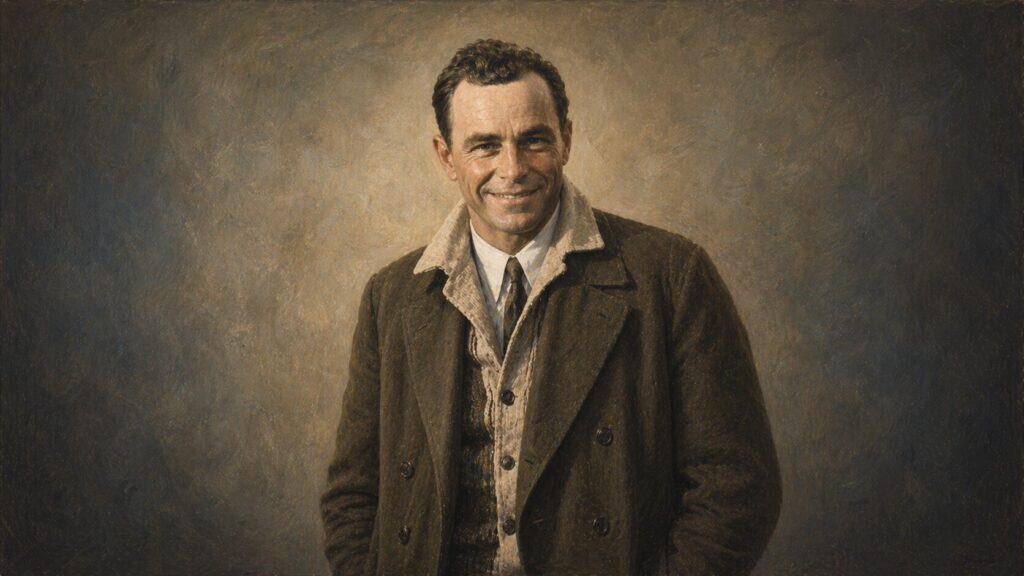
Petty Officer, later honorary Squadron Leader (RAAF Reserve)
Bert Hinkler
Bert Hinkler was an Australian aviator, RNAS gunner, RAF pilot and Avro test pilot whose 1928 solo England to Australia flight made aviation history.
Early Life
Herbert John Louis Hinkler was born at Bundaberg, Queensland, on 8 December 1892. He developed an interest in mechanics and flight at an early age, studying the movement of birds and building gliders in 1911 and 1912 while still a young working man in Queensland. His experiments were practical rather than theoretical, and they showed the combination of manual skill, persistence and observational intelligence that would define the rest of his career. After meeting the visiting American aviator Arthur Burr Stone, Hinkler worked as his mechanic and gained first-hand experience of the fragility and possibilities of early aircraft.
By the end of 1913 he had travelled to England and found work at the Sopwith aircraft factory. This move placed him at the centre of a rapidly developing aviation industry at precisely the moment when war was about to transform flying from an experimental pursuit into a military necessity.
Entry into Service
Hinkler enlisted in the Royal Naval Air Service on 7 September 1914. After training at the Central Flying School at Upavon, he served first in home establishments and then moved into operational work. An excellent shot and a capable mechanic, he was employed as an observer and aerial gunner at a time when air warfare remained improvised and hazardous. His value lay not only in courage under fire but also in his inventive turn of mind. During the war he devised improvements to aircraft controls and equipment, including a dual-control adaptation intended to help a gunner take over if a pilot became incapacitated.
In 1916 he joined No. 3 Wing, RNAS, flying in Sopwith 1½ Strutters from bases near Nancy while escorting bombing operations. After the wing was disbanded in 1917 he flew on night raids in Handley Page bombers and later served with No. 5 Squadron, RNAS, on day bombing work in Airco DH.4s. It was in this period that he first gained opportunities at the controls, moving from specialist aircrew work towards formal pilot training. His service as an aerial gunner brought him the Distinguished Service Medal, an indication of how highly his operational performance had been regarded.
Operational Career
Late in 1917 Hinkler began formal training as a pilot, passing through Royal Naval College, Greenwich, and later advanced instruction in England before joining the Royal Air Force after its formation in April 1918. In July 1918 he was posted to No. 28 Squadron in Italy. The available record shows him serving there as a pilot during the final phase of the war, although not every detail of his flying duties survives clearly. What is evident is that he had completed an unusual transition from observer and gunner to operational pilot, carrying into that new role the hard-won experience of front-line service in France and the broader demands of aerial war.
The First World War established the foundations of Hinkler's reputation. He was technically gifted, physically brave and unusually adaptable. His wartime inventions, his experience in multi-seat combat aircraft and his eventual qualification as a pilot all marked him out as more than a gifted enthusiast. They made him a highly credible airman in the years when aviation was still defining its methods and standards.
Major Actions or Commands
Hinkler's greatest fame came after the war rather than during it. Unable to secure a place in the proposed 1919 air race to Australia, he joined A. V. Roe & Co. at Hamble and built a major second career as a test pilot, later becoming the company's chief test pilot. In that capacity he helped evaluate new aircraft in a period when British aviation remained experimentally rich but technically risky. He flew the Avro Baby over the Alps to Turin in 1920, winning the Britannia Trophy, and after shipping the aircraft to Australia he completed a non-stop flight from Sydney to Bundaberg in 1921.
Throughout the 1920s Hinkler combined test flying with increasingly ambitious long-distance work. He took part in British competitive and developmental aviation, served as reserve pilot for the 1925 Schneider Trophy team, tested autogiros, and flew his Avro Avian on demanding record attempts. His defining achievement came in February 1928, when he flew solo from England to Australia in the Avro Avian G-EBOV. The flight dramatically reduced the existing England-Australia record and demonstrated how far reliability, navigation, and endurance flying had advanced since the war. It also brought him international fame, the Air Force Cross, and appointment as an honorary squadron leader in the Royal Australian Air Force Reserve.
Hinkler did not stop there. In 1931 he completed the first solo crossing of the South Atlantic by aeroplane, flying a de Havilland Puss Moth from the Americas to Britain. Between those headline flights he also attempted to move into aircraft design with the Hinkler Ibis amphibian, though commercial conditions in the Depression limited the project. His career therefore ranged across military service, flight testing, record flying and design, which together explain why he occupied such a distinctive place in early aviation history.
Later Life and Death
In May 1932 Hinkler married Katherine Rome in the United States. By then he was still seeking further long-distance achievements and possible commercial opportunities in aviation. On 7 January 1933 he departed England in his Puss Moth on another flight to Australia, intending eventually to continue onwards across the Pacific. He disappeared en route, and his aircraft and body were later found on the northern slopes of Pratomagno in the Apennines between Florence and Arezzo.
The circumstances of the crash were investigated, and contemporary enquiries did not settle every detail with complete certainty. The broad fact remains that he died in Italy from injuries sustained in the loss of his aircraft, ending a career that had repeatedly carried him to the limit of what light aircraft could then achieve. He was buried in Florence with full military honours.
Historical Significance
Bert Hinkler is remembered chiefly as a pioneer of long-distance solo flight, but his broader significance lies in how his life connected several formative stages in aviation history. He belonged to the generation that learned war flying when the discipline was still experimental, then helped carry that knowledge into the interwar world of testing, navigation, endurance and aircraft development. His wartime service in the RNAS and RAF mattered because it sharpened the practical judgment that later made him such an effective test and record pilot.
His public reputation has often rested on the dramatic image of the lone aviator, especially after the England-Australia flight of 1928. Yet that image does not fully explain his significance. Hinkler was also a mechanic, inventor and development pilot who worked at the intersection of engineering and airmanship. In RAF and wider Commonwealth aviation history, he stands as a figure who linked service flying, industrial test work and interwar pioneering achievement in a single career. That combination, rather than a single record, explains his enduring historical importance.
| Dates | Role | Unit | Aircraft |
|---|---|---|---|
| 1913–1914 | Aircraft factory worker | Sopwith Aviation Company | |
| 1914–1917 | Observer and aerial gunner | Royal Naval Air Service | Sopwith 1½ Strutter; Handley Page bombers; Airco DH.4 |
| 1917–1918 | Pilot trainee | Royal Naval Air Service | |
| 1918–1919 | Pilot | No. 28 Squadron, Royal Air Force | |
| 1919–1926 | Test pilot, later chief test pilot | A. V. Roe & Co., Hamble | Avro Baby; Avro Aldershot; Avro Avian |
| 1927–1933 | Record aviator and aircraft designer | Independent | Avro Avian; Hinkler Ibis; de Havilland Puss Moth |
Hinkler is remembered not simply for one record flight but for the broader way he represented early aviation's blend of improvisation, engineering skill and personal endurance. In Australia his public memory has centred on the solo England-Australia flight, while in aviation history more generally he also stands out as a wartime airman, Avro test pilot and long-range pioneer whose achievements helped normalise ambitious route flying. His reputation remains that of a gifted, technically minded flyer rather than a purely symbolic national hero.
Bert Hinkler Departs England for Australia
On 7 February 1928, Bert Hinkler left England on a pioneering solo flight to Australia, highlighting…
7 February 2026 · 5 minRAF Aircraft Support the Occupation of Archangel in 1918
On 2 August 1918, RAF aircraft supported the British-led occupation of Archangel during the wider North…
2 August 2026 · 3 minBritish Forces Evacuate Baku in the Final Months of 1918
On 14 September 1918, British forces evacuated Baku, illustrating the improvised and fluid character of imperial…
14 September 2026 · 3 min