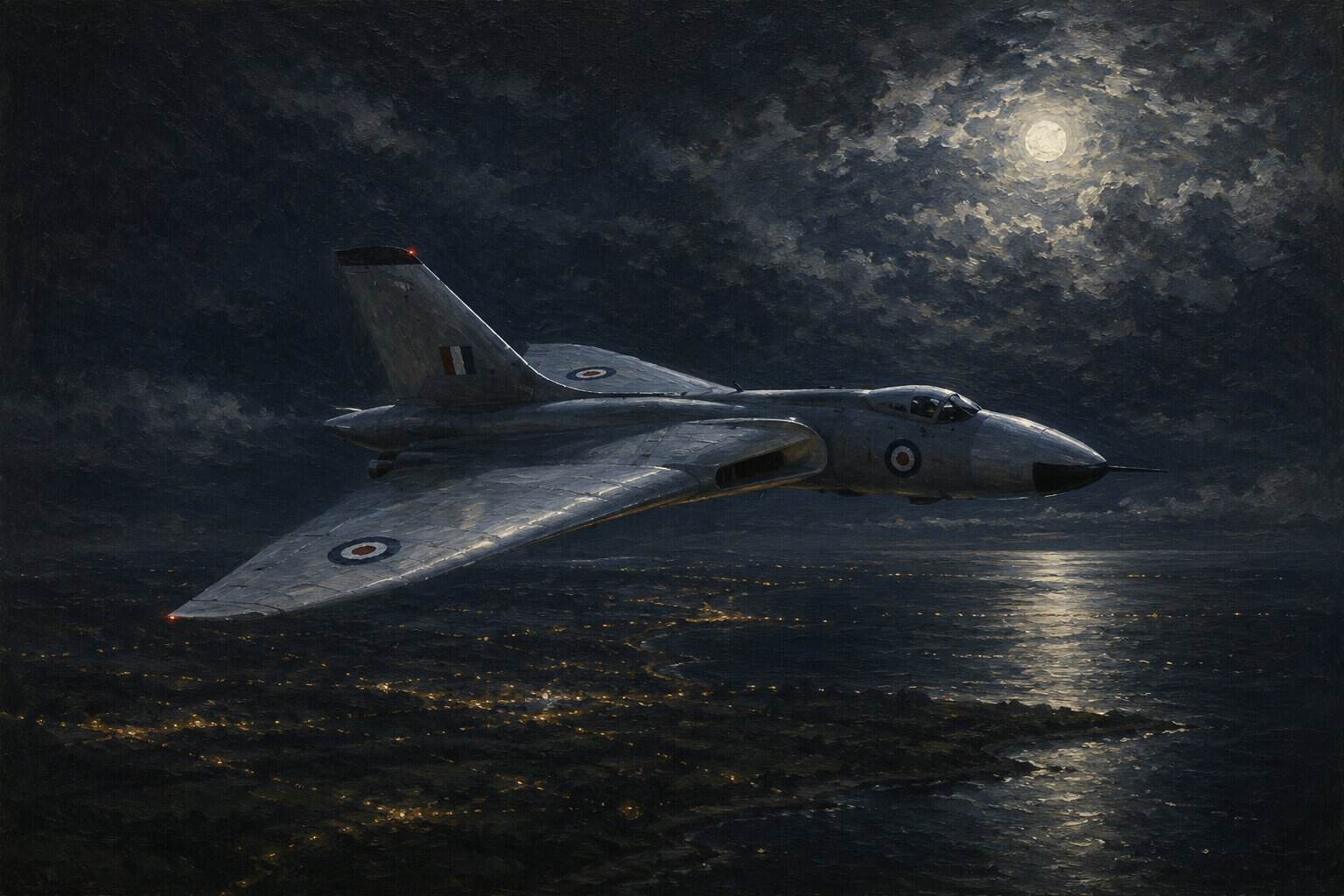
On 26 October 1962, RAF nuclear forces were entering a period of heightened readiness as the Cuban Missile Crisis approached its most dangerous point. Preliminary precautions were already being taken within Bomber Command, although the formal declaration of Alert Condition 3 followed on 27 October. The measures affected Britain’s V-bomber and Thor missile forces, which remained at their existing stations rather than undertaking a general dispersal.
The alert brought the RAF’s nuclear responsibilities into the immediate circumstances of a superpower confrontation. Britain’s bomber and missile forces formed part of a wider Western deterrent system, and a crisis centred on the Caribbean carried direct implications for units stationed in Britain and continental Europe.
A crisis extending beyond Cuba
The discovery of Soviet ballistic missile preparations in Cuba had raised the prospect of nuclear weapons being deployed close to the United States. On 22 October, President John F. Kennedy publicly announced a naval quarantine of the island. American and Soviet decisions over the following days placed military readiness and diplomatic negotiation under exceptional pressure.
The United States Air Force’s Strategic Air Command assumed Defence Condition 2, or DEFCON 2. Britain’s response followed its own arrangements for nuclear readiness. British commanders increased the preparedness of specified bomber and missile units while retaining them at their existing stations.
For the RAF, the danger extended across two connected responsibilities: the strategic striking power maintained by Bomber Command and the nuclear strike role of forces in Germany. Both belonged to the military framework through which Britain and its allies prepared for a possible confrontation with the Soviet Union.
Bombers and ballistic missiles
The V-bomber force comprised the Vickers Valiant, Avro Vulcan and Handley Page Victor. These aircraft provided the RAF with the means to carry nuclear weapons over long distances. Their effectiveness as a deterrent depended on trained crews, serviceable aircraft and arrangements that allowed a force to respond promptly to orders.
Bomber Command had introduced a permanent nuclear Quick Reaction Alert capability on 1 January 1962. Under that arrangement, one aircraft from each V-force squadron was held at fifteen minutes’ readiness. The October crisis therefore intensified responsibilities already embedded in the command’s daily operations.
Thor added a ground-launched ballistic missile component. Developed in the United States and deployed in British service, it was designed to deliver a nuclear warhead. By 1961, twenty Thor squadrons were established in the United Kingdom, each equipped with three missiles. That figure describes the deployed organisation before the crisis; the October alert brought the missile force into the same period of heightened tension as the nuclear strike squadrons.
Aircraft and missiles presented different operational demands, but both required sustained technical preparation and disciplined command procedures. During the crisis, those preparations supported forces whose potential employment carried consequences far beyond their individual stations.
Readiness through the confrontation
Bomber Command’s precautionary alert continued beyond the immediate diplomatic breakthrough of 28 October. Although the crisis began to ease, Alert Condition 3 remained in force until 5 November, when the command returned to its normal readiness arrangements. Following Khrushchev’s announcement on 28 October that the Soviet missiles would be withdrawn, arrangements for dismantling and removing them proceeded into November. The American naval quarantine remained in force until 20 November. The RAF’s recorded alert thus had its own timetable within the longer process of resolving the crisis.
For Britain’s air forces, 26 October marked a concrete increase in nuclear readiness. Bomber Command, RAF Germany and the Thor organisation were drawn into an emergency originating thousands of miles away. The episode demonstrated the operational connection between Britain’s standing deterrent arrangements and the decisions being taken in Washington and Moscow: aircraft, missiles and their crews stood ready while diplomacy determined the course of the confrontation.