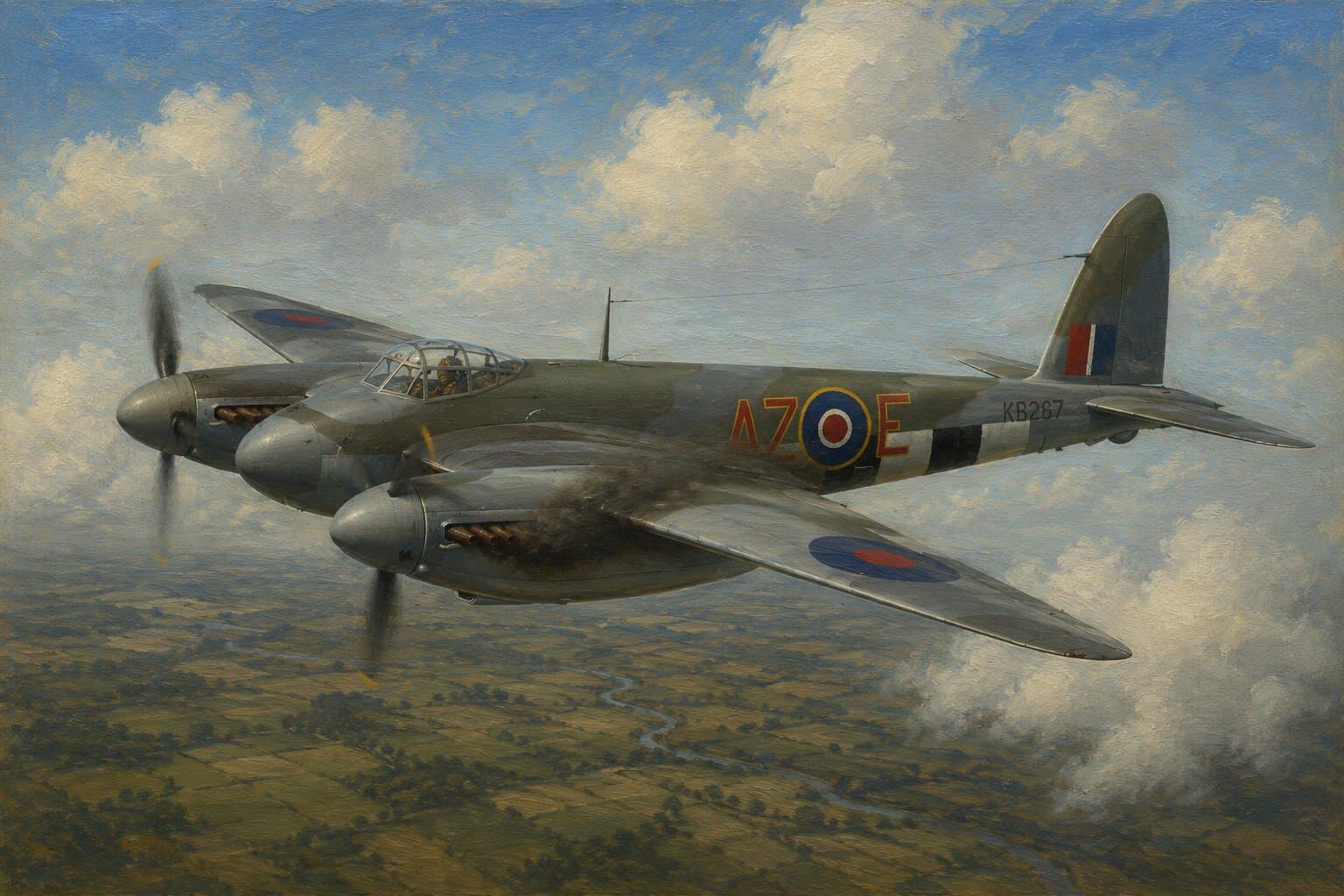
On 19 September 1944, Wing Commander Guy Gibson was killed when the de Havilland Mosquito in which he was flying crashed while returning from an operation. By that stage of the war, Gibson had long since become one of the most widely recognised figures in the Royal Air Force, chiefly because of his leadership of the Dams Raid in 1943. His death, therefore, carried significance beyond the immediate loss of a serving officer. It also showed that, even in the later stages of the war, the RAF still depended on highly experienced men in active and dangerous conditions.
A Famous Name Still On Operations
Gibson's public reputation had been established by his association with one of the most celebrated RAF operations of the war. That fame, however, can obscure an important point about wartime service. Senior and decorated aircrew were not automatically removed from risk simply because they had become well known. The RAF remained an operational fighting service, and prestige offered no exemption from the demands of continuing air operations.
By September 1944, the air war over Europe had entered a different phase from the period in which Gibson had first become famous. Allied air power was pressing hard against German resistance, supporting the wider campaign on the continent and maintaining constant pressure on enemy communications and military movement. Even so, flying remained hazardous. Mechanical trouble, weather, navigational difficulty, enemy action, and the strain of repeated operations could still make any sortie dangerous, regardless of rank or reputation.
The Crash And Its Meaning
The crash that killed Gibson ended the career of a man whose name had become closely tied to British perceptions of RAF courage and offensive spirit. Yet the circumstances of his death are also a reminder that wartime loss was not reserved for the anonymous or the inexperienced. The RAF's operational system continued to draw upon men with proven judgement and combat experience because such qualities remained valuable in a hard and unfinished war.
That wider context matters. By late 1944, the RAF was sustaining an immense air effort across several roles, from strategic attack to direct support of land operations. This tempo required not only aircraft and crews but leadership, knowledge, and confidence under pressure. Experienced airmen embodied all three. Their presence in operations could strengthen effectiveness, but it also meant the service remained exposed to losing some of its most capable figures at any time.
A Late-War Reminder
Gibson's death therefore belongs to two histories at once. One is the story of an individual whose name had entered wartime legend while the conflict was still in progress. The other is the broader history of the RAF as an organisation still fighting a long, costly air war in which distinction offered no guarantee of survival.
Remembered only as the death of a famous officer, the event can seem isolated from the wider campaign. Set in its proper context, it becomes a reminder of how relentless RAF operations remained in 1944 and how heavily the service still relied on experienced men. Gibson's final flight closed a remarkable career, but it also underlined a harder truth of air warfare: even its most celebrated participants remained vulnerable until the fighting itself was over.