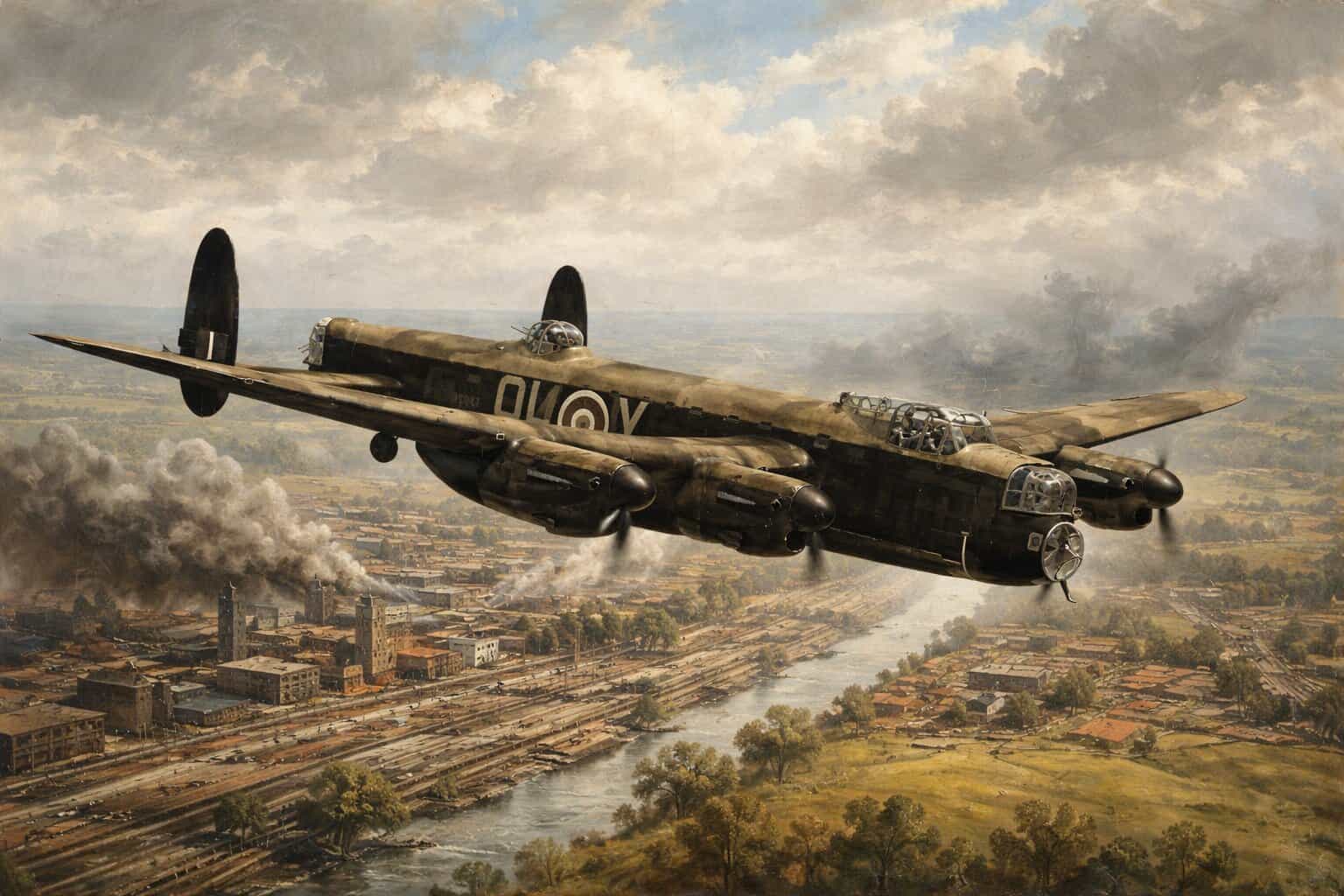
On 17 April 1942, Wing Commander J. D. Nettleton, often identified as John Nettleton, led Avro Lancasters from 44 Squadron and 97 Squadron in a daring low-level daylight attack on the MAN works at Augsburg. The objective was important, the method hazardous, and the cost severe. In RAF history, the Augsburg raid endures as one of those operations in which courage is beyond doubt, even when the losses force hard questions. Nettleton was later awarded the Victoria Cross, and the action has remained closely associated with the exceptional determination shown by the crews involved.
A hazardous attack in daylight
The raid stood apart because of how it was carried out. Daylight bombing at low level over heavily defended territory exposed crews to enemy fighters and ground fire with little margin for concealment. Yet the method was chosen because it offered the prospect of striking a specific industrial target with greater direct effect than a higher, less precise attack might achieve. The MAN works were connected with German war production, and attacking such facilities formed part of the wider effort to weaken the enemy’s capacity to continue the war.
What the RAF crews faced on the approach was exactly the danger critics of daylight bombing feared. Enemy opposition was intense, and losses mounted before the attack force could return. Such outcomes remind us that operational audacity and operational cost are often bound together. The Augsburg raid was not remembered for being easy or cleanly successful, but for demanding an extraordinary willingness to press on despite conditions that had become plainly lethal.
Courage, sacrifice and legacy
Nettleton’s leadership became central to the memory of the raid. The award of the Victoria Cross reflected not only personal bravery but the quality of command required to keep an attack together in the face of mounting danger. In the RAF, leadership in combat has often meant more than issuing orders. It has meant embodying steadiness under pressure and setting an example to others in the face of evident danger. That is why Augsburg became part of RAF legend even though its immediate cost was so painful.
Significance
The Augsburg raid remains important because it captures several truths about the RAF bomber war in 1942. It shows the determination to strike important industrial targets, the willingness to experiment with hazardous methods when conventional attack seemed inadequate, and the immense human cost that such choices could impose. The raid was courageous, memorable and deeply costly all at once.
For RAF history, Augsburg endures not because it offers a simple tale of success or failure, but because it exposes the hard edge of operational decision-making in the bomber offensive. It remains one of the clearest examples of bravery under appalling conditions, and of the price that Bomber Command crews were sometimes required to pay in order to achieve results judged strategically necessary.