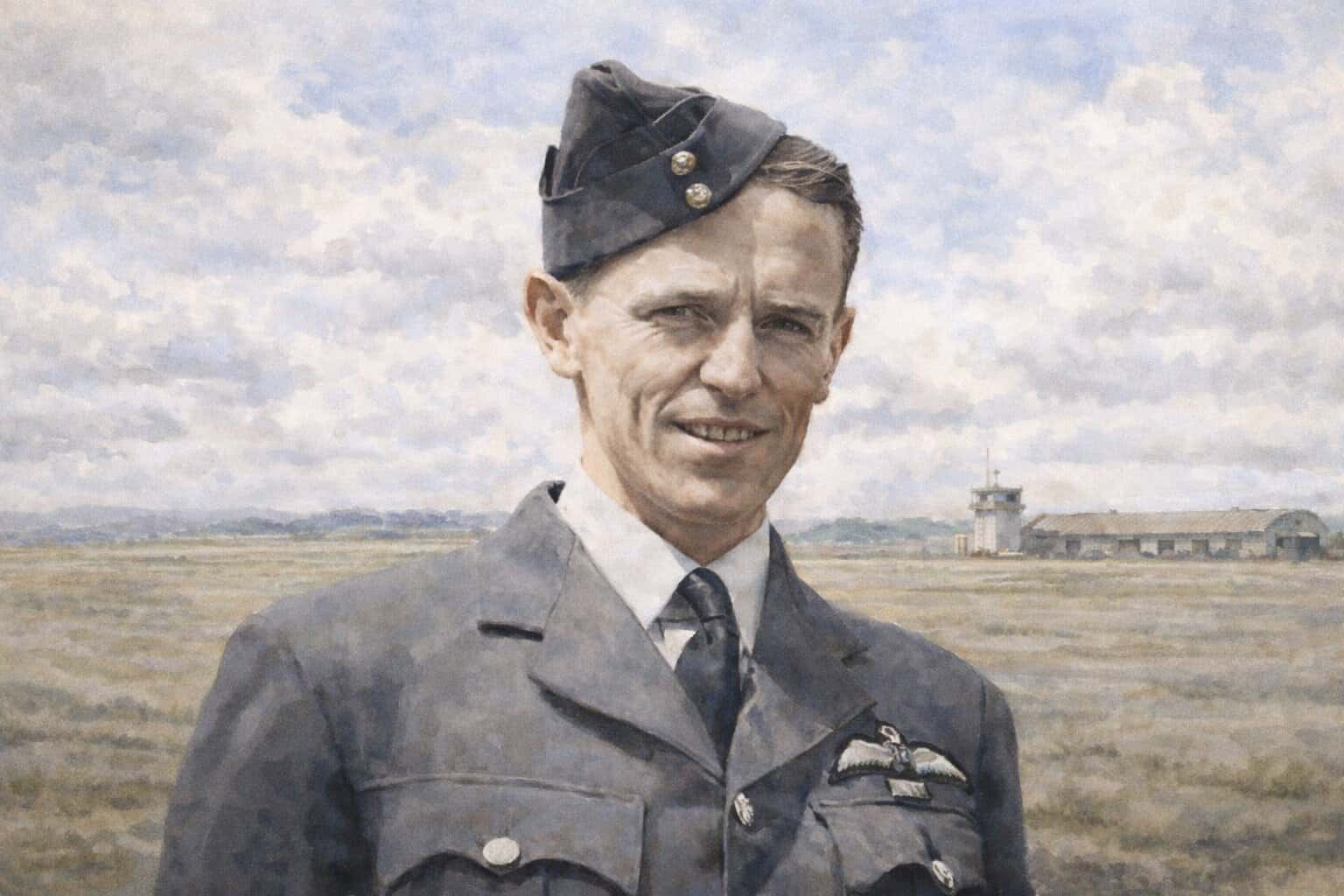
On 3 May 1943, Squadron Leader Leonard Trent of No. 487 Squadron RNZAF earned the Victoria Cross for pressing home an attack on a power station at Amsterdam despite overwhelming fighter opposition. The award recognised one of the most resolute acts of leadership and courage in the wartime air offensive over occupied Europe. In circumstances where the temptation to turn back would have been very strong, Trent continued with the mission, setting an example of determination that would become central to how the operation was remembered.
A mission under intense opposition
The attack on the Amsterdam power station was hazardous not only because of the target itself but because of the enemy response it drew. Fighter opposition on that scale transformed a difficult mission into a near-desperate one. In such moments, an air commander faces both tactical and moral choices. To continue means accepting grave danger to oneself and to others; to break off may preserve lives but leave the task undone. Trent’s distinction lay in pressing on despite the mounting evidence of peril.
That decision is why his story has endured. The Victoria Cross was not awarded for routine bravery, still less for mere persistence. It recognised conduct of the highest order in the face of extreme odds. Trent’s action showed a commitment to duty that was not theoretical. He upheld the attack when enemy resistance made success uncertain and survival doubtful.
Leadership in the air
What makes the episode especially important is the leadership it displayed. Air operations depend upon teamwork, but in moments of crisis, they also depend upon the steadiness of those at the front of a formation or mission. Trent’s resolve would have shaped the behaviour and expectations of the men flying with him. In wartime aviation, leadership was not exercised from safety; it was demonstrated within the same danger shared by the rest of the crew and force.
The award also highlights the contribution of Commonwealth personnel within the wider RAF war effort. No. 487 Squadron RNZAF was one of many units through which airmen from across the Commonwealth fought in Europe under RAF command structures while preserving national identity. Trent’s VC therefore belongs to both the RAF story and the broader shared history of Allied air warfare.
Why Trent’s VC still matters
The attack on the Amsterdam power station speaks to a wider truth about the air war in north-west Europe. Many operations involved carefully selected industrial or infrastructure targets whose destruction was intended to weaken the enemy’s ability to sustain occupation and war production. Such raids could be highly dangerous, particularly when conducted at levels and conditions that exposed crews to concentrated opposition. The human cost of carrying them through was often severe.
On 3 May 1943, Leonard Trent embodied the standard of courage that the Victoria Cross exists to mark. His action is remembered not because it was easy to admire from a distance, but because it was so hard to imagine doing. Under overwhelming fighter attack, he pressed home the mission. In the record of RAF and Commonwealth gallantry, that remains one of the clearest examples of duty maintained when almost everything argued for retreat.