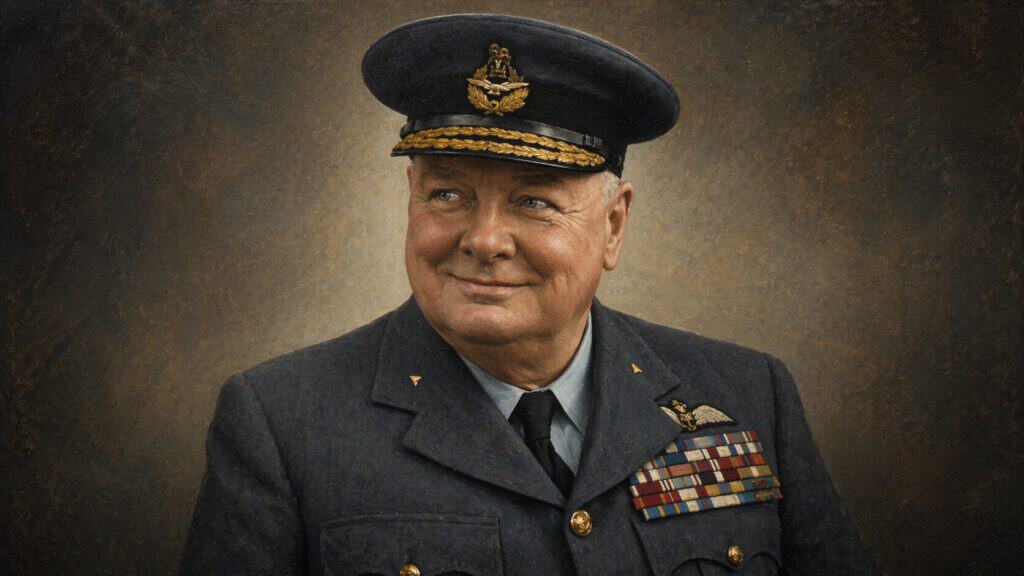
On 18 June 1940, Winston Churchill told the House of Commons that the Battle of France was over and that the Battle of Britain was about to begin. The words were political, strategic and deeply operational at the same time. Britain had just come through the collapse of its principal continental ally, and RAF fighter squadrons returning from France were about to shoulder the burden of defending the United Kingdom in the air.
A speech shaped by military reality
Churchill's statement was not a flourish detached from events. It reflected a grim strategic moment. France was falling, the British Expeditionary Force had been evacuated from Dunkirk, and the Luftwaffe was expected to turn its full attention towards Britain. Under those conditions, a struggle in the air was not merely probable; it was central to Britain's ability to remain in the war as an independent fighting power.
That is why the speech matters in RAF history. Churchill was giving public form to what planners, commanders and aircrew already understood. The next great test would depend heavily on Fighter Command, its stations, its ground crews, its control system and the pilots who would have to meet German attacks day after day. The speech was therefore both an act of leadership and a recognition of the RAF's looming responsibility.
Fighter squadrons return to defend home skies
The reference to fighter squadrons returning from France gave the moment particular weight. Those units had already seen hard service in a losing campaign and had paid a price in aircraft and experienced men. Their withdrawal to Britain did not signal relief or respite. It meant redeployment from one desperate front to another. The contest ahead would be fought over southern England, the Channel approaches and the industrial, political and military heart of the country.
Aircraft such as the Supermarine Spitfire and Hawker Hurricane would soon become symbols of national resistance, but on 18 June, none of that was guaranteed. What existed instead was a difficult balance of limited strength, urgent preparation and the need to husband resources while improving readiness. The RAF had to repair machines, train replacements and refine tactics while facing the certainty of attack.
The power of naming the struggle
Churchill's phrase gave the coming campaign a shape that was easy to understand yet faithful to the stakes involved. By naming the Battle of Britain before the great air fighting had fully unfolded, he turned a succession of coming raids and interceptions into a national trial with moral significance. That mattered because wars are fought not only with matériel, but with interpretation. Language can steady a country, define purpose and help people understand sacrifice.
For the RAF, that act of naming also highlighted the service's place at the centre of national survival. Bomber Command, Coastal Command and other arms of the air effort remained important, but Fighter Command stood in the foreground. The battle would test not only pilots in combat, but the wider system of radar, command, reporting and maintenance that allowed Britain to use scarce resources efficiently.
A turning point in national resolve
The lasting importance of 18 June lies in the way speech and strategy met one another. Churchill was neither declaring victory nor disguising danger. He was preparing Parliament and the country for a period in which the RAF would become the chief shield against invasion, intimidation and defeat from the air.
In retrospect, the moment stands as one of the clearest examples of political leadership aligning with operational truth. The Battle of Britain would be won by aircrew, controllers, mechanics and commanders, but Churchill's words helped define what their effort meant. He signalled that the fight ahead would be decisive, and in doing so, he fixed the RAF's next great task in the national consciousness before the battle had fully begun.