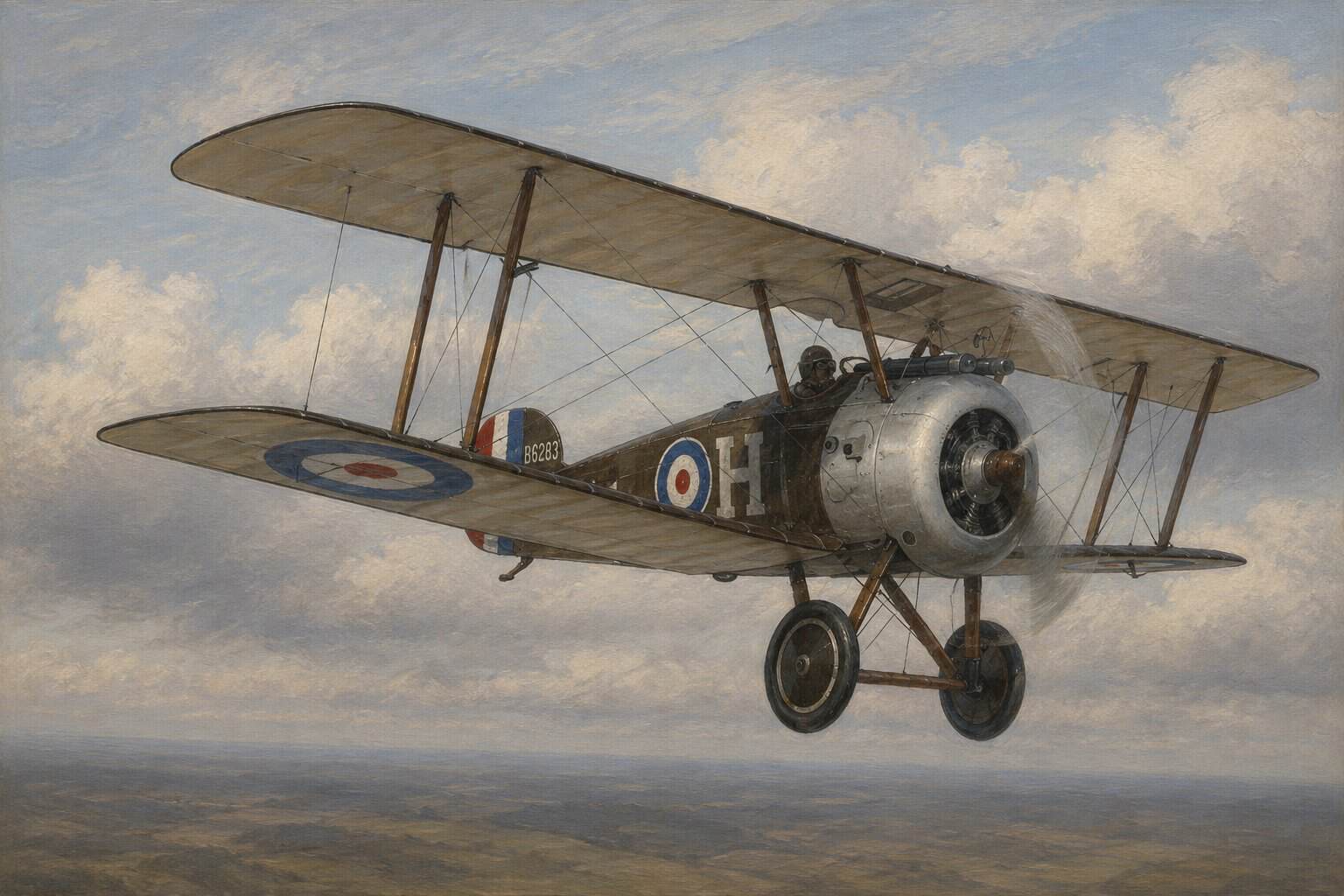
On 2 August 1918, Royal Air Force aircraft helped British-led forces occupy the port of Archangel, an early and now often overlooked episode in the Service’s expeditionary history. Coming only months after the RAF itself had been formed, the operation demonstrated that British air power was already being used beyond the familiar battlefields of the First World War. In North Russia, aircraft offered reconnaissance, communication and visible support to a small intervention force operating in a politically confused and militarily uncertain environment.
A new service in a new theatre
The intervention in North Russia grew out of Allied anxiety over the Russian collapse, the fate of war material in northern ports and the wider struggle that followed the Bolshevik Revolution. Archangel mattered because it was a major access point to the region. Holding the port gave the Allies a foothold from which they could land men and stores, influence events inland and support anti-Bolshevik elements.
For the RAF, the episode is significant because it came at a formative moment. The Service had been created on 1 April 1918, yet within months it was contributing to operations in one of the most remote theatres in which Britain was involved. North Russia posed all the difficulties that normally punish early air operations: harsh weather, long distances, weak infrastructure and uncertain lines of communication. Even so, aircraft could still provide something uniquely valuable by extending awareness and presence beyond what troops on the ground could easily see.
Supporting the occupation
In practical terms, the RAF’s role in the occupation of Archangel was not that of an overwhelming striking force. It was an enabling contribution. Aircraft supported the movement and security of the landing force, provided reconnaissance, and added a degree of speed and flexibility to operations around the port. In an intervention where confusion and limited resources were constant problems, that mattered.
Air support also had a psychological effect. The presence of British aircraft signalled organisation and resolve at a moment when control was still fluid. Early military aviation often exerted influence disproportionate to the weight of bombs it could carry, because it gave commanders a means to observe, communicate, and project authority quickly across a difficult landscape. Archangel was a case in point.
Why the moment matters
This event is easy to lose in the shadow of larger campaigns, yet it reveals an important truth about the RAF in its infancy. The Service was never solely a European trench-war appendage. From the beginning, it was being drawn into imperial, maritime and expeditionary commitments where mobility counted for more than mass. North Russia offered a preview of later RAF roles in distant theatres, where aircraft would help hold territory, support small forces and shape events in regions lacking developed infrastructure.
The occupation of Archangel also reminds us that air power’s value is not measured only by dramatic combat. Sometimes its importance lies in making an operation possible, more coherent and less vulnerable. In 1918, when aviation was still technically immature, even limited aerial support could alter the tempo and confidence of a landing.
In wider air-war terms, 2 August 1918 showed that the RAF was already becoming an instrument of policy as well as battle. The occupation of Archangel was not a classic air campaign, but it did demonstrate how quickly aircraft could become part of Britain’s response to instability overseas. That capacity for distant intervention would remain one of the enduring themes of RAF history.