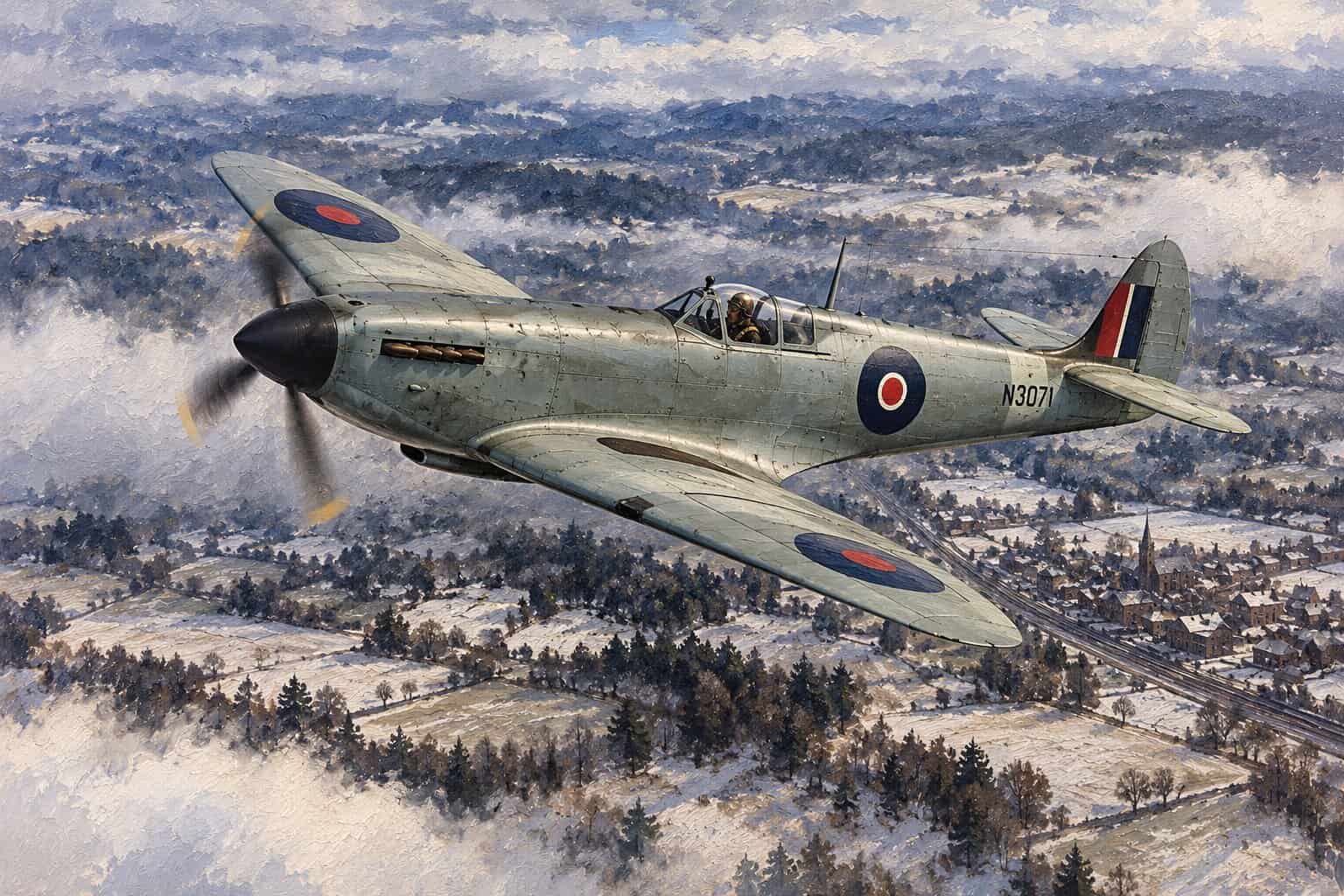
On 22 November 1939, Flight Lieutenant Maurice ‘Shorty’ Longbottom flew the first successful operational photographic-reconnaissance sortie by a specially modified Supermarine Spitfire. Flying Spitfire I Type A N3071 from Coulommiers in France, he photographed the Eupen–Elsenborn area near the German frontier as part of a reconnaissance flight over the wider frontier region. The flight gave the RAF an early operational demonstration of a reconnaissance method built around speed, altitude and cameras.
Longbottom belonged to the Special Survey Flight, a detachment of No. 2 Camouflage Unit. Behind that deliberately inconspicuous designation stood a small organisation developing a specialised means of gathering intelligence over potentially hostile territory. Its aircraft carried photographic equipment, and their protection depended on performance and careful flying.
A Specialist Flight Takes Shape
The mission grew from the work of Sidney Cotton and the Heston Flight, formed in September 1939 for photographic reconnaissance. Cotton had already undertaken clandestine aerial photography over Germany before the war. His experience helped shape an approach in which aircraft, cameras and operating methods were adapted together for intelligence collection.
Longbottom contributed to the development of the concept as well as flying its early missions. In August 1939 he had advocated using small, fast aircraft at high altitude to reduce the likelihood of detection and interception. The Spitfire offered a promising combination of speed and climbing performance for that purpose.
Fighter Command released two Spitfires for conversion. The Heston Flight subsequently became No. 2 Camouflage Unit on 1 November, giving the experimental photographic effort an administrative identity intended to conceal its activities. By the time of Longbottom’s successful sortie, a detachment was operating from France.
Preparing the Spitfire for Photography
The conversions involved a coordinated reduction in weight and aerodynamic drag. Armament and radio equipment were removed, gun openings were closed, and the airframe surfaces were carefully smoothed. A pale blue-green finish helped complete the preparation of the aircraft for its specialised role.
Cameras occupied space in the wings previously used by guns and ammunition. Their downward-facing installation enabled the pilot to photograph the ground beneath the aircraft during a reconnaissance run. Heating arrangements protected the photographic equipment against the cold encountered at altitude.
These changes made the camera installation central to the aircraft’s purpose. The pilot had to bring together navigation, altitude and a usable view of the target so that the exposed film could provide intelligence after landing. Weather and visibility therefore remained important constraints on the mission.
An earlier attempt on 20 November had been frustrated by cloud, preventing the photographic task from being completed. Two days later, conditions allowed Longbottom to make the flight that established the modified Spitfire as an operational photographic-reconnaissance aircraft.
Longbottom’s Successful Sortie
On 22 November, Longbottom completed the photographic task in N3071. The Eupen–Elsenborn area provided the subject of the mission, while Coulommiers served as the departure airfield. The achievement established a successful operational application of the modified Spitfire in photographic reconnaissance.
The flight also gave practical substance to the preparations undertaken by Cotton’s organisation. A frontline fighter design had been adapted into a dedicated photographic aircraft, and Longbottom had carried that adaptation through an operational mission. The value of its performance lay in making the collection and return of imagery possible.
From Experiment to Dedicated Capability
The early reconnaissance Spitfires provided a foundation for further development. Subsequent versions gained greater fuel capacity and improved camera arrangements, extending the distances and photographic tasks that the aircraft could undertake. Reconnaissance requirements increasingly influenced the configuration of dedicated variants.
Longbottom’s sortie belongs at the beginning of that operational development. Its immediate achievement was a completed photographic mission; its wider importance lay in demonstrating a workable combination of aircraft performance and specialist equipment. As RAF photographic reconnaissance expanded, that combination supported the collection of imagery for assessing enemy installations, preparing operations and examining their results.