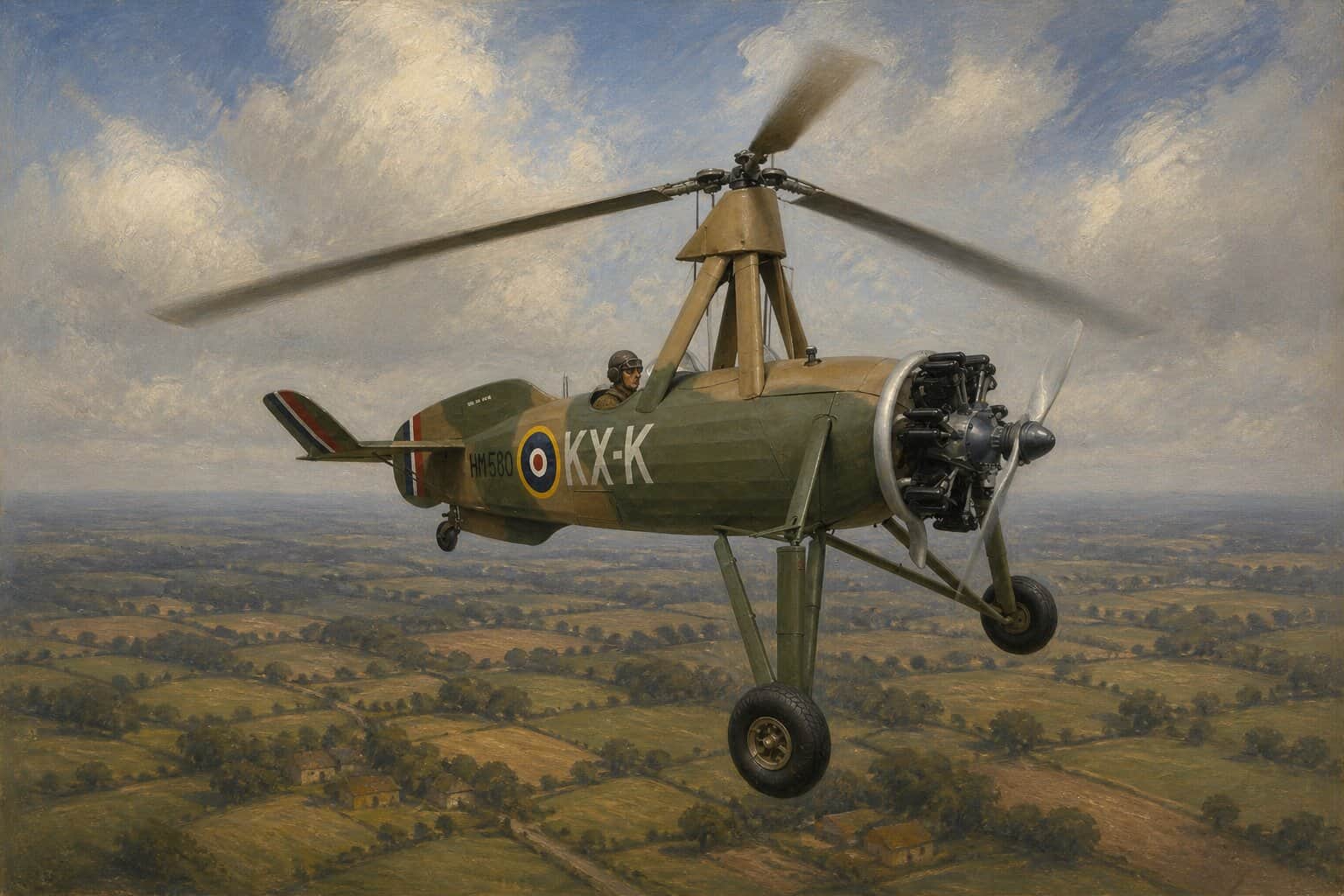
On 15 June 1943, No. 529 Squadron was formed at RAF Halton, becoming the RAF’s first squadron equipped with autogiros. The date may sound like a niche administrative moment, but it reflected an important wartime requirement: the rapid expansion of radar-based air defence and the equally practical need to test, calibrate and properly support that system. In that role, an unusual aircraft type found a useful place in the wartime RAF.
Why an autogiro unit was needed
By 1943, radar had become an indispensable part of Britain’s air war. Ground stations, fighter control and technical networks all depended upon reliable performance. Calibration was therefore not a side issue. If the equipment were inaccurate, the wider defensive and interception system would suffer. Aircraft that could fly steadily at suitable speeds and altitudes for technical checking had real operational value, even if they were far removed from the glamour of fighters and bombers.
No. 529 Squadron grew out of earlier experimental work by No. 1448 Flight at Halton, where Squadron Leader Alan Marsh and others had pioneered radar calibration using autogiros and light aircraft. The squadron continued that task after formation, turning specialised experimentation into an established RAF unit. In that sense, 15 June marked not just the creation of a squadron but the formal recognition of a new support capability inside the service.
The aircraft and the work
The autogiro, represented in RAF service by types such as the Cierva-designed machines built in Britain, was not a helicopter in the modern sense. Its rotor was not driven in powered hover, but it offered slow, controlled flight characteristics that could be useful for calibration and observation work. That made it suitable for technical tasks where steadiness and flexibility mattered more than speed.
No. 529 Squadron later became notable for another reason as well: it was the only RAF wartime unit to operate autogiros and, later, helicopters operationally. That gives the squadron a special place in the long story of rotary-wing aviation in British service. Although its wartime role was highly specialised, it pointed towards later developments in how the RAF and wider British armed forces would use rotary-wing aircraft.
Significance beyond the novelty
It would be easy to treat the unit simply as a curiosity because autogiros never became a mainstream RAF combat type. That would miss the real point. Air power depends not only on the visible striking force of fighters and bombers, but also on the technical infrastructure that makes those aircraft effective. Radar calibration helped keep Britain’s defensive system accurate, and the formation of a dedicated squadron for such work showed how mature that system had become by mid-war.
For RAF history, No. 529 Squadron stands at the meeting point of air defence technology and aviation experimentation. It reminds us that wartime innovation often occurs in support roles that are less celebrated yet operationally necessary.
No. 529 Squadron was a small unit with an unusual aircraft. Yet, its formation speaks to a larger truth about the wartime RAF: effective air defence depended on calibration, measurement and technical support as much as on fighters in the air.