On This Day, 1940: On 7 October 1940, Hurricane pilot Archie McKellar of 605 Squadron was credited with five Bf 109 victories…
Read the entry →
44 Squadron
Fulmina Regis Iusta — The King's thunderbolts are righteous
How 44 Squadron evolved from home defence and Lancaster raids to the V-Force, with the Augsburg raid central to its wartime record.
Originally a home defence night-fighter squadron, later a heavy bomber and strategic strike squadron with major Bomber Command and Cold War nuclear-deterrent service.
44 Squadron, later designated No. 44 (Rhodesia) Squadron, had one of the longest and most varied histories of any Royal Air Force unit. Formed in 1917 for home defence during the First World War, it later became one of Bomber Command’s better-known heavy bomber squadrons and, in the Cold War, part of the V-Force. Its story runs from Sopwith biplanes defending Britain at night to Lancasters over occupied Europe and finally Vulcans held at strategic readiness.
The squadron is most closely associated with the Second World War. It was one of only two RAF bomber squadrons to operate continuously throughout the conflict, became the first squadron to convert fully to the Avro Lancaster, and was central to the Augsburg raid of April 1942, for which Wing Commander John Dering Nettleton was awarded the Victoria Cross. Those distinctions gave 44 Squadron an enduring place in the history of Bomber Command.
Formation and early service
No. 44 Squadron was formed on 24 July 1917 at Hainault Farm in Essex as part of the London Air Defence Area. Its early role was home defence, a task shaped by the continuing threat of German air attack on Britain. The squadron briefly used the Sopwith 1½ Strutter before moving on to the Sopwith Camel, and it became one of the units that helped pioneer night fighting under difficult First World War conditions.
This phase of its history is also notable for one of its officers: Arthur Harris, who later commanded the squadron during the final part of the First World War. Long before he became identified with Bomber Command, he was gaining practical experience in one of the RAF’s early defensive formations. The squadron was disbanded at the end of 1919 as the post-war air force contracted.
Re-formation and the road to war
The squadron was re-formed in March 1937 as a bomber unit during the RAF’s inter-war expansion. After a short period with the Hawker Hind, it moved through the Bristol Blenheim and briefly the Avro Anson before settling on the Handley Page Hampden in 1939. By the outbreak of the Second World War, it was based at RAF Waddington and part of the expanding bomber force that would carry the RAF’s early offensive effort.
In the first years of the war, 44 Squadron flew leaflet raids, minelaying operations and attacks on invasion-related and maritime targets. It also took part in the difficult and costly early bomber offensive against Germany and occupied Europe, when Bomber Command was still experimenting with methods, tactics and aircraft. The Hampden period established the squadron as a hard-worked operational unit, but also revealed the limitations of the RAF’s early-war twin-engined bombers.
Lancaster conversion and the main offensive
A major turning point came at the end of 1941, when 44 Squadron received the Avro Lancaster. It became the first squadron to convert completely to the new four-engined bomber and flew some of the type’s earliest operational sorties in March 1942. That transition mattered well beyond the squadron itself, because the Lancaster would become the principal heavy bomber of the RAF’s strategic air offensive.
The squadron’s new aircraft was tested immediately in demanding operations. On 17 April 1942, 44 Squadron and 97 Squadron carried out the daylight low-level raid on the MAN diesel engine works at Augsburg. The attack was one of the boldest Lancaster operations of the war’s early bomber phase and came at high cost. Nettleton, who led the raid, received the Victoria Cross for pressing home the attack in the face of severe opposition and bringing his aircraft back after major losses among the force.
In 1941, the squadron had been redesignated No. 44 (Rhodesia) Squadron in recognition of Southern Rhodesia’s contribution to the war effort and the strong Rhodesian presence among its personnel. Under that title, it became increasingly associated with the main bomber offensive. It attacked industrial and naval targets, laid mines, and took part in operations against Germany’s major centres of war production and communication.
44 (Rhodesia) Squadron at war
During the wider bombing campaign, the squadron operated first from Waddington, then from Dunholme Lodge and later Spilsby. It took part in some of Bomber Command’s most important operations, including attacks on German ports, the first thousand-bomber raid on Cologne, strikes against the battleship Tirpitz, and the sustained offensive against the Ruhr and Berlin. Its wartime record also included long-range raids such as the attack on Danzig and major precision or heavy attacks in occupied Europe and Germany.
The cost was severe. 44 Squadron suffered some of the heaviest losses in Bomber Command, a reflection both of the intensity of its service and of the dangerous operations assigned to it. Yet it maintained a high operational tempo throughout the conflict and remained an important component of No. 5 Group’s striking power.
By the end of the war, the squadron had flown more than 2,000 Hampden sorties and more than 4,000 Lancaster sorties. In July 1945, it moved to RAF Mepal as part of the projected Tiger Force, intended for operations against Japan, but the war ended before that transfer resulted in combat service in the Far East.
Post-war bomber service and the Vulcan era
The end of the Second World War did not end the squadron’s importance. Its Lancasters were progressively replaced by Avro Lincolns, and in the early 1950s, it converted to the Boeing Washington and then the English Electric Canberra. This succession of aircraft reflected the RAF’s rapid post-war adaptation as piston-engined heavy bombers gave way to jet bombers and new Cold War requirements. The squadron was disbanded in July 1957, but only temporarily.
It re-formed at RAF Waddington on 10 August 1960 as part of the V-Force, equipped first with the Vulcan B.1 and B.1A and later with the Vulcan B.2. In this role, 44 Squadron moved from conventional strategic bombing into the nuclear deterrent structure that underpinned British air power during the Cold War. When the RAF shifted from high-level penetration plans to low-level strike tactics, the squadron adapted again.
The Vulcan force later moved from the independent nuclear deterrent to NATO-assigned tactical strike responsibilities. In 1982, the squadron’s Vulcans were involved in the Falklands campaign during the period of Operation Black Buck, an indication that even at the end of its life, the unit remained connected to a significant RAF operation. No. 44 Squadron was finally disbanded on 21 December 1982.
Historical significance
44 Squadron is significant because it links several different ages of RAF history without losing its identity. It began as a home defence unit, became a major Bomber Command squadron, acquired a distinctive Rhodesian wartime association, and ended as part of Britain’s nuclear bomber force. Few squadrons illustrate so clearly the movement of the RAF from improvised First World War air defence, through the mass bomber offensive of 1939 to 1945, and into the strategic logic of the Cold War.
Its wartime service gives it its strongest historical claim. The first operational use of the Lancaster, the Augsburg raid, the Rhodesian connection and the scale of its losses all make 44 Squadron one of the more consequential bomber squadrons in RAF history.
Home Defence, 1917–1918
Channel and North Sea, 1939–1945
Invasion Ports, 1940
German Ports, Baltic, 1940–1945
France and Low Countries, 1940
Biscay Ports, 1940–1944
Ruhr, 1940–1943 and 1945
Berlin, 1940–1944
Atlantic, 1942
Normandy, 1944
Rhine, 1940–1944
Fortress Europe, 1940–1944
France and Germany, 1944–1945
Walcheren
Augsburg Raid
First Thousand Bomber Raid on Cologne
Attack on Tirpitz
Battle of Berlin
Ruhr campaign
Operation Black Buck
Yes. The squadron was commanded in wartime by two Victoria Cross holders, Roderick Learoyd and John Dering Nettleton; Nettleton won his VC for leading the Augsburg raid while commanding 44 Squadron in April 1942.
| Period | Station | Notes |
|---|---|---|
| July 1917–June 1919 | Hainault Farm | Formed for London Air Defence Area home-defence duties and early night-fighter work. |
| March 1937–June 1937 | RAF Wyton and RAF Andover | Re-formed as a bomber squadron during the inter-war expansion. |
| June 1937–May 1943 | RAF Waddington | Blenheim and Hampden service, then Lancaster conversion and the Augsburg period. |
| May 1943–September 1944 | RAF Dunholme Lodge | Main-force bomber operations during the height of the offensive over Germany. |
| September 1944–July 1945 | RAF Spilsby | Late-war operations against Germany and occupied Europe. |
| July 1945–August 1946 | RAF Mepal and RAF Mildenhall | Tiger Force preparation and immediate post-war transition. |
| August 1946–July 1957 | RAF Wyton, RAF Marham, RAF Coningsby, RAF Cottesmore and RAF Honington | Lincoln, Washington and Canberra bomber service before disbandment. |
| August 1960–December 1982 | RAF Waddington | Vulcan V-Force service and final Cold War operations. |
| Name | Dates | Notes |
|---|---|---|
| Arthur Harris | 1918–1919 | Later Bomber Command commander; led the squadron in its closing First World War phase. |
| John N. Boothman | 1939 | Commanding officer at the outbreak of the Second World War. |
| Roderick Learoyd VC | 1941 | Commanded during the transition from Hampdens toward the Lancaster era. |
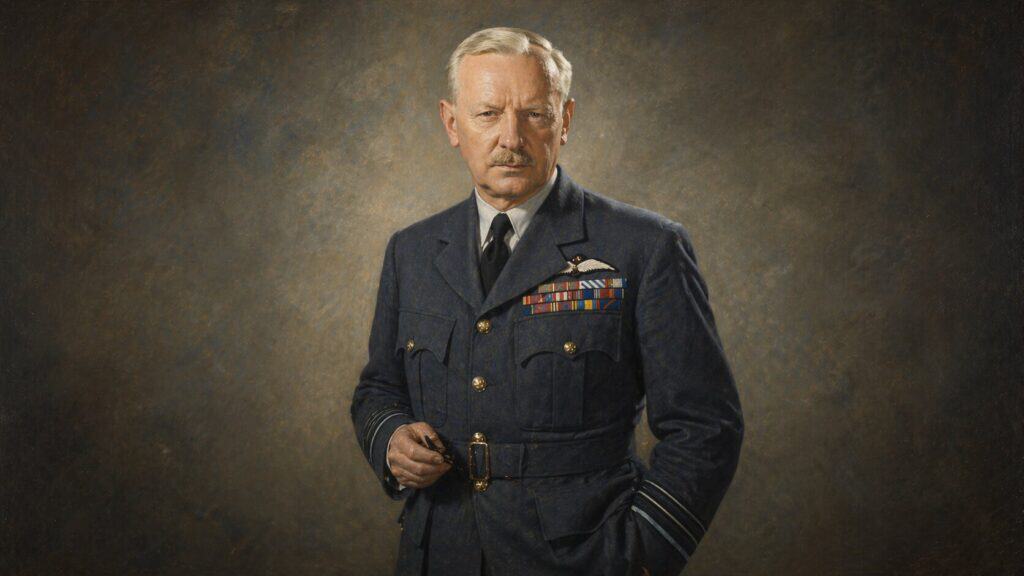
| John Dering Nettleton VC | 1942–1943 | Led the squadron during the Augsburg raid and early Lancaster offensive. |

Avro Lancaster Enters RAF Operations with No. 44 Squadron
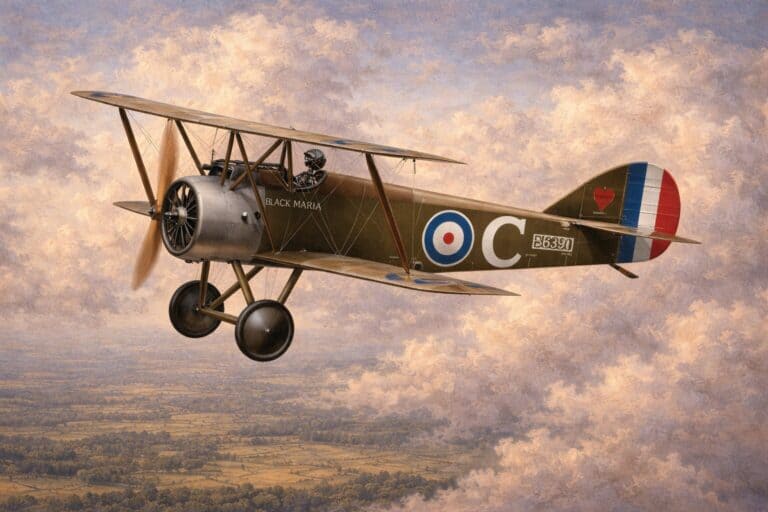
On 3 March 1942, No. 44 Squadron took the Avro Lancaster on its first operational sortie,…
3 March 2026 · 3 minLow-Level Lancaster Strike on MAN Works at Ausburg
Augsburg Raid: J. D. Nettleton led Lancasters against Augsburg in 1942, a low-level daylight strike remembered…
17 April 2026 · 3 minJohn Dering Nettleton VC Reported Missing After Turin Raid
On 12/13 July 1943 Acting Wing Commander John Dering Nettleton VC failed to return from a…
12 July 2026 · 3 min