On This Day, 1940: On 22 July 1940, an RAF Blenheim used airborne interception radar to shoot down a Dornier Do 17…
Read the entry →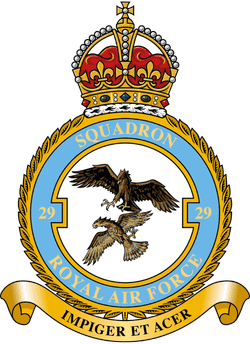
29 Squadron
Impiger et acer — Energetic and keen
How 29 Squadron developed from wartime night fighting into one of the RAF’s long-lived air-defence and fighter-training units.
Fighter squadron with a distinguished night-fighter past and a modern role in RAF fast-jet training and air defence.
29 Squadron occupies a prominent place in RAF history as one of the service’s leading night-fighter units. Although it had older roots, its wartime reputation rests chiefly on the defence of Britain after dark and on its role in the growth of radar-guided interception. In historical terms, the squadron belongs within the wider RAF effort to build an effective night air-defence system in the face of sustained German attack.
Its importance lies in the fact that night fighting demanded more than just fighter skill. It required radar, ground control, disciplined interception procedures and aircraft suited to the task. 29 Squadron was one of the units through which those methods became operational realities rather than theoretical possibilities.
Pre-war background
Like several notable RAF squadrons of the Second World War, 29 Squadron entered the conflict with an established service identity rooted in the inter-war period. This gave it a degree of continuity and experience at a time when the RAF as a whole was under pressure to expand rapidly and adapt to new forms of war.
That experience, however, did not remove the scale of the challenge. The shift from pre-war assumptions to wartime necessity was profound, especially once it became clear that Britain had to defend itself against bombing by night as well as day.
Night fighting and technical change
29 Squadron’s wartime significance is closely tied to the RAF’s development of night fighting as a serious combat discipline. The difficulties were substantial. Finding and intercepting hostile aircraft in darkness was far more complicated than daylight combat, and early-war methods were often inadequate.
The answer increasingly depended on airborne interception radar, ground-controlled interception, and better integration between fighters and the wider air-defence system. 29 Squadron became part of that transformation. Its service reflects not just operational flying, but the broader story of how technical innovation was absorbed into RAF doctrine and practice.
Role in Britain’s air defence
The squadron’s contribution mattered because the night war mattered. The Luftwaffe’s bombing offensive against Britain could not be answered by day-fighter success alone. Night-fighter squadrons had to carry their share of the defensive burden, and the work was often less dramatic in public memory than the daylight struggle of 1940.
Yet in strategic terms, it was essential. Every improvement in night interception reduced enemy freedom of action and strengthened the credibility of Britain’s overall air-defence system. Units such as 29 Squadron formed part of that essential but sometimes underappreciated effort.
Historical significance
29 Squadron matters in RAF history because it exemplifies the growth of modern night air defence in wartime Britain. Its story belongs to the history of radar, technical adaptation and the patient building of an effective system under pressure.
It stands as one of the key squadron-level examples of how Britain’s air defence matured beyond the better-known daylight fighter battles. In that sense, 29 Squadron helps complete the broader picture of how the RAF defended Britain in the Second World War.
Battle of Britain 1940
Defence of Britain 1940–1944
Fortress Europe 1940–1944
France and Germany 1944–1945
Gulf 1991
Battle of Britain, 1940
Home Defence and night fighting during the Blitz
Normandy and Arnhem support, 1944
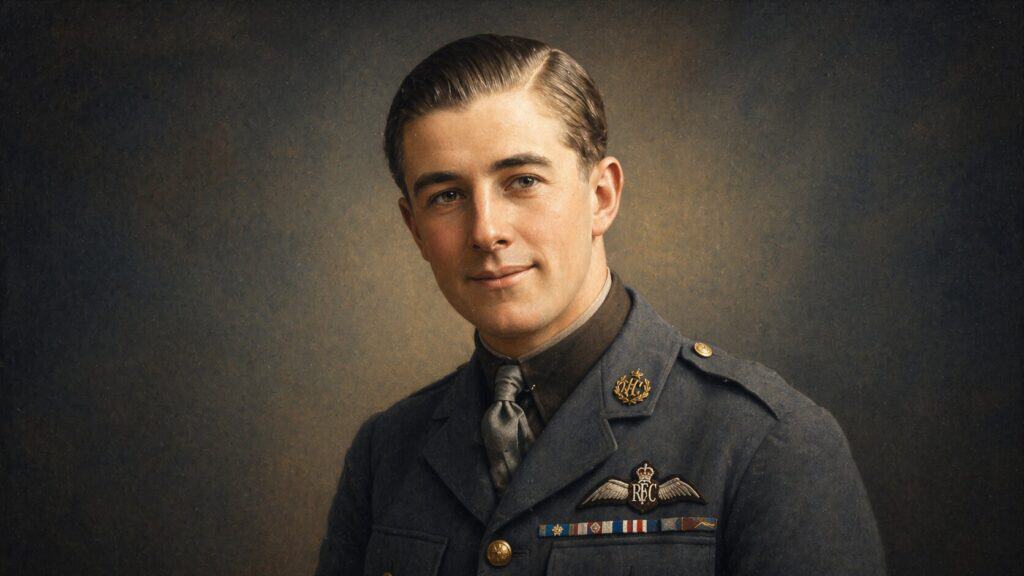
Captain James McCudden VC served with 29 Squadron in the First World War and was awarded the Victoria Cross for repeated conspicuous bravery and combat success, gazetted in April 1918.
| Period | Station | Notes |
|---|---|---|
| 1916–1919 | France and Germany, ending at RAF Spittlegate | DH2, Nieuport and S.E.5a fighter service before disbandment. |
| 1923–1937 | RAF Duxford and RAF North Weald | Inter-war fighter service. |
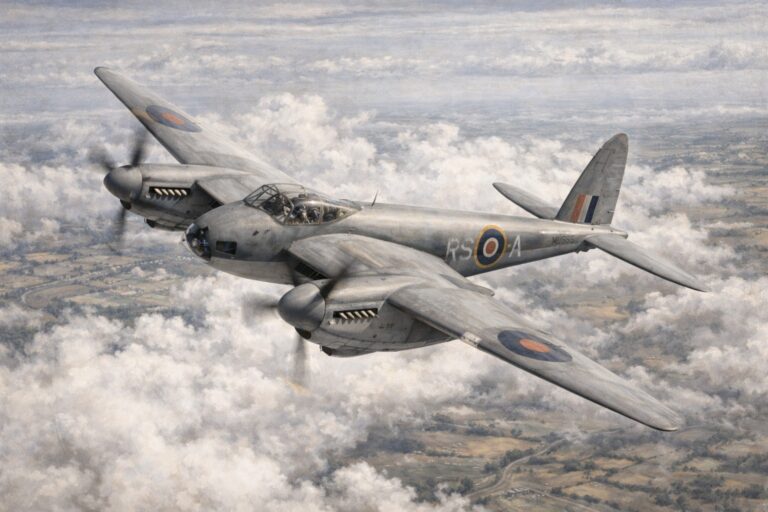
| 1937–1945 | RAF Tangmere, RAF Digby, RAF Wellingore and later night-fighter stations | Blenheim, Beaufighter and Mosquito air-defence operations. |
| 1946–1957 | RAF West Malling and RAF Tangmere | Mosquito, Meteor and Javelin post-war night-fighter service. |
| 1959–1988 | RAF Acklington and RAF Coningsby | Lightning air-defence era. |
| 1988–1998 | RAF Coningsby | Tornado F.3 phase. |
| 2003–present | RAF Coningsby | Typhoon operational conversion role. |
| Name | Dates | Notes |
|---|---|---|
| L Dawes | 7 November 1915 | First commanding officer on the squadron’s formation in the First World War. |
| Malcolm L Taylor | 12 August 1924 | Commanded during the inter-war fighter period and later became an air vice-marshal. |
| Maurice W S Robinson | 2 December 1938 | Led the squadron on the eve of the Second World War. |
| Stanley C Widdows | 16 July 1940 | Commanded during the early wartime night-fighter phase. |
| Edward L Colbeck-Welch | 13 June 1941 | Led the squadron as radar-guided night interception became increasingly important. |
| John W Allan | 18 December 1944 | Commanded in the later wartime period and later became an air commodore. |

No. 29 Squadron Phantoms Take Ascension Island QRA in 1982
On 24 May 1982, No. 29 Squadron’s Phantom fighters took over Quick Reaction Alert on Ascension…
24 May 2026 · 3 minDanzig Attacked in RAF Long-Range Daylight Raid
On 11 July 1942 Bomber Command struck Danzig shipyards in the RAF’s most distant daylight raid…
11 July 2026 · 3 minMission to Bomb Dunkirk Abandoned Due to Heavy Opposition
On 17 February 1943, an RAF bombing mission against Dunkirk was abandoned after heavy opposition, with…
17 February 2026 · 4 min