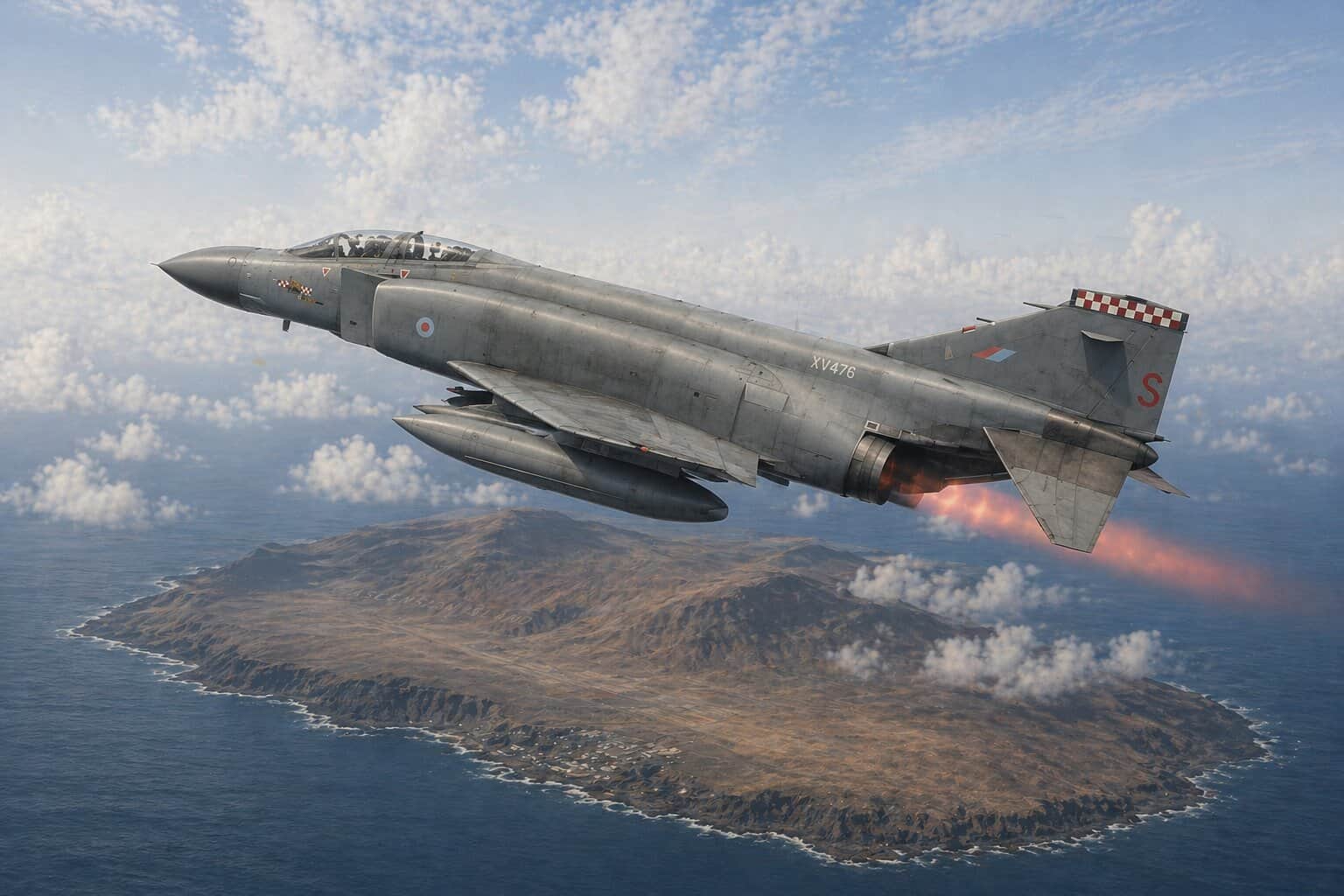
On 24 May 1982, No. 29 Squadron assumed Quick Reaction Alert protection of Ascension Island with Phantom aircraft. The move formed part of the wider air effort behind Operation Corporate, Britain’s campaign to recover the Falkland Islands. Although far from the combat zone itself, Ascension was one of the most important pieces of ground in the entire operation, and its defence mattered accordingly.
Why Ascension mattered
Ascension Island served as a vital staging base between Britain and the South Atlantic theatre. Aircraft, crews, stores and planning all flowed through it. Long-range operations depended upon it, reinforcement traffic used it, and the wider logistics of the campaign would have been far harder without it. To protect such a hub was therefore not an administrative luxury but an operational necessity.
Quick Reaction Alert on the island reflected that reality. A base handling such essential traffic could not be left without a credible air-defence presence, particularly in wartime. Even the possibility of interference or attack had to be taken seriously. By placing Phantom fighters on alert there, the RAF gave the staging base a visible and immediate shield.
The role of No. 29 Squadron
For No. 29 Squadron, the deployment demonstrated the continued value of established air-defence units in a campaign better known for long-range bombing, transport and maritime operations. QRA is a demanding business. Aircraft and crews must be ready to launch at short notice, often for a threat that may never fully materialise but must nevertheless be treated as real. The discipline required is part of the deterrent effect itself.
That aspect is worth remembering. A successful defensive deployment is often one in which no dramatic interception occurs. Its success lies in preparedness, coverage, and the confidence it provides to everyone who depends on the protected base. The presence of Phantom aircraft on Ascension was significant, even though their role was largely precautionary. They helped secure the foundation on which other RAF and British operations relied.
A campaign sustained by many different tasks
The Falklands air war is sometimes remembered chiefly for the most dramatic missions, yet campaigns are held together by many less celebrated functions. Tanker support, transport, reconnaissance, airfield management and defensive readiness all matter. The arrival of Phantoms on QRA duty is part of that wider story. It was an example of the RAF using fast jets not for attack, but to preserve the security of an indispensable rear-area node.
That in turn reveals something important about air power in expeditionary warfare. The aircraft seen nearest the front are only one part of the picture. Bases, routes and support hubs must also be defended, because they enable every other mission. In 1982, Ascension was not peripheral to the campaign. It was one of the hinges on which the whole enterprise turned.
Why the deployment deserves notice
The transfer of QRA responsibility to No. 29 Squadron on 24 May 1982 marked a practical recognition of Ascension’s strategic value. It also showed the versatility of the Phantom force in RAF service. The aircraft could contribute not only as symbols of Cold War air defence in Europe, but as deployable guardians of British air operations far from home.
Ascension was far from the battle area, yet its protection was integral to the campaign’s air bridge. The Phantom detachment mattered because it helped secure the staging base through which aircraft, stores and personnel moved south, showing that the defence of the rearward route was part of the campaign itself.