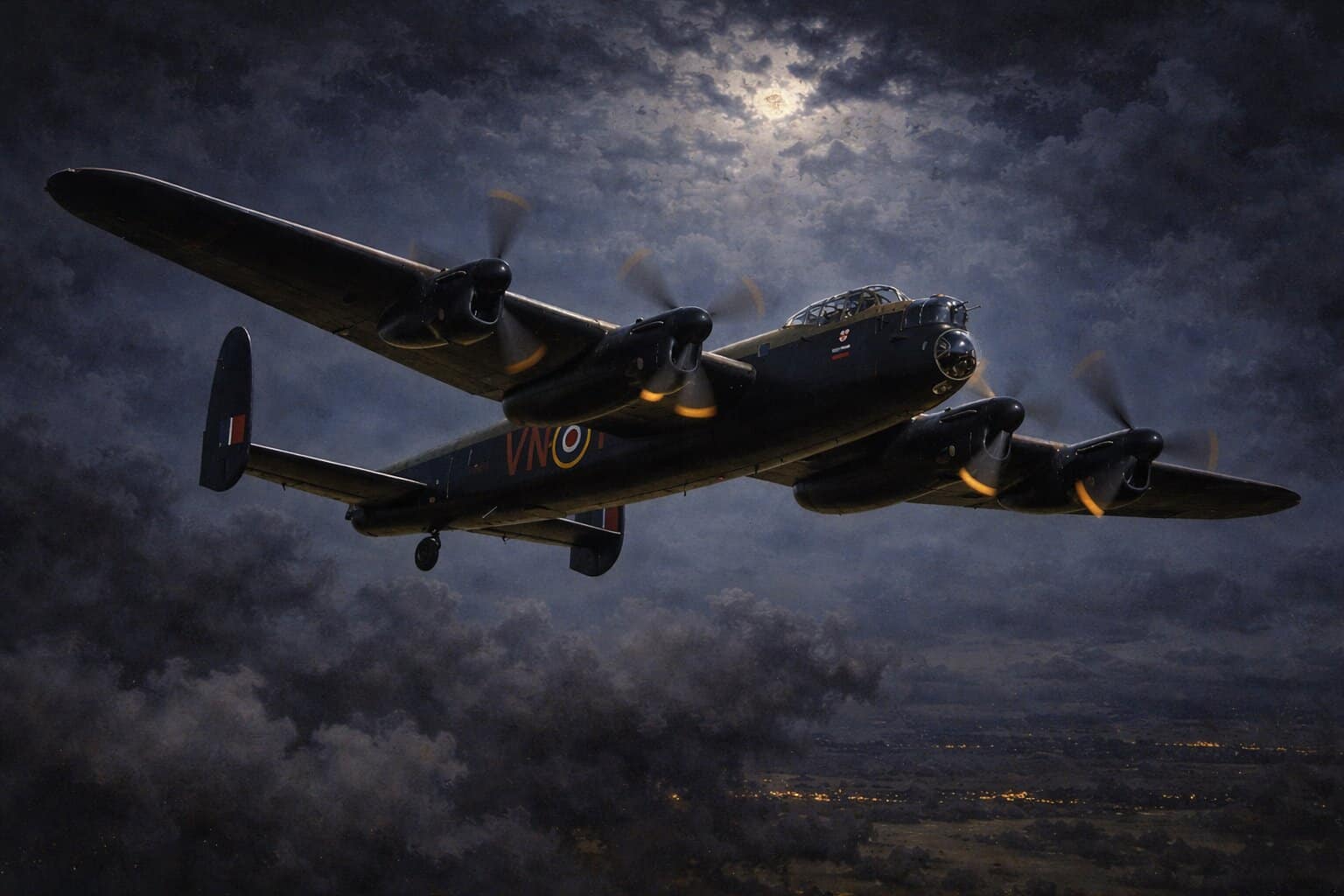
On the night of 30–31 May 1942, RAF Bomber Command launched its first thousand-bomber raid against Cologne. The operation was intended to inflict physical destruction on one of Germany’s major cities, but it also had a second purpose: to demonstrate that Bomber Command could assemble and dispatch an attacking force on a scale not previously seen in the strategic air offensive. In both senses, the raid was a landmark. It marked a public and operational assertion that Britain’s night bomber force could concentrate overwhelming weight over a single target.
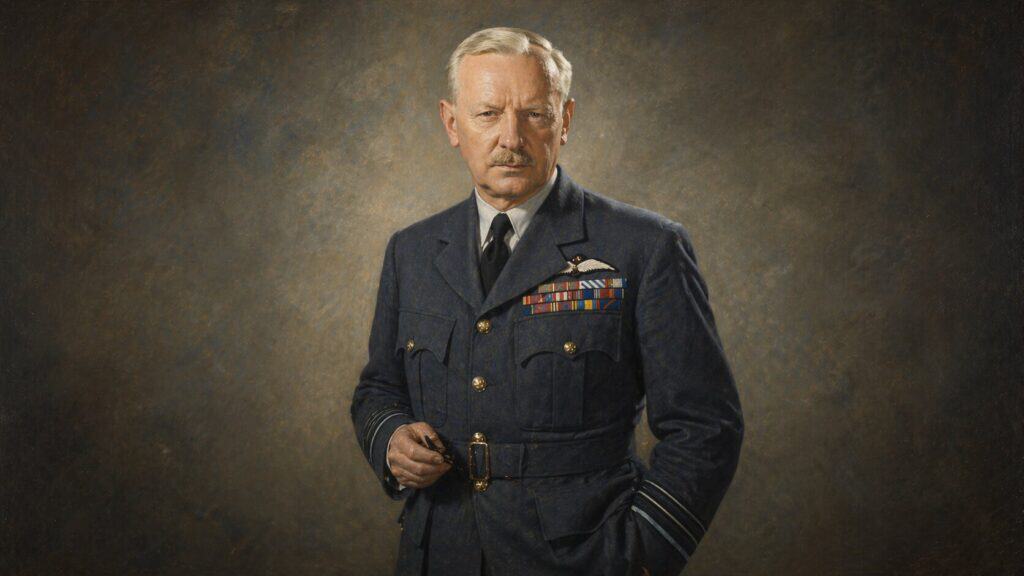
The background to the attack was one of pressure and uncertainty. Bomber Command had faced criticism over the effectiveness of earlier raids, while Air Chief Marshal Arthur Harris, newly in command, sought a dramatic demonstration of mass bombing’s potential. By gathering aircraft not only from front-line squadrons but also from training and reserve sources, the command created a force whose sheer size was designed to overwhelm German defences and prove what concentration could achieve.
How the raid was executed
Cologne was chosen because it was a major industrial and communications centre and offered a large urban target suitable for a concentrated night attack. The operational method depended upon compressing the attacking stream in time and space so that defences would struggle to respond efficiently. This was not simply a matter of sending many aircraft in the same general direction. It required planning, routing, timing and a command system capable of moving an enormous force across hostile territory in darkness.
The raid also demonstrated the importance of recent improvements in navigation and operational control. Bomber Command in 1942 was still far from achieving perfect accuracy, but it was learning to direct large formations more effectively and to turn scale itself into a weapon. If enough bombers reached the same city within a relatively short period, the cumulative effect on buildings, services, firefighting and morale could be immense.
Results and immediate impact
The attack caused extensive destruction in Cologne and demonstrated that the RAF could deliver an extraordinary blow. It also produced the propaganda and political effect Harris wanted. A thousand-bomber raid was a headline in itself, and it signalled to Britain, Germany and the wider alliance that the strategic bombing offensive was entering a new phase.
Yet the operation also exposed the realities of the campaign. Large raids still involved losses, strain on crews and questions about how decisively urban bombing could shorten the war. The raid did not settle those debates. What it did do was establish a new benchmark for bomber effort and a new level of expectation for what Bomber Command might deliver.
Why Cologne mattered in RAF history
In RAF terms, the Cologne raid stands as a turning point because it linked organisation, doctrine and public purpose. It was not merely a bigger version of earlier attacks. It was an attempt to prove that strategic bombing could operate through concentration at scale, and that Bomber Command possessed both the institutional reach and the operational confidence to do so. The wider air-war significance lies in that combination of destruction and demonstration. Cologne was attacked to damage Germany, but also to validate a theory of offensive air power: that a massed bomber force could impose cumulative pressure upon an industrial enemy and sustain that pressure over time. On this day, Bomber Command announced that it intended to fight the air war in precisely those terms.