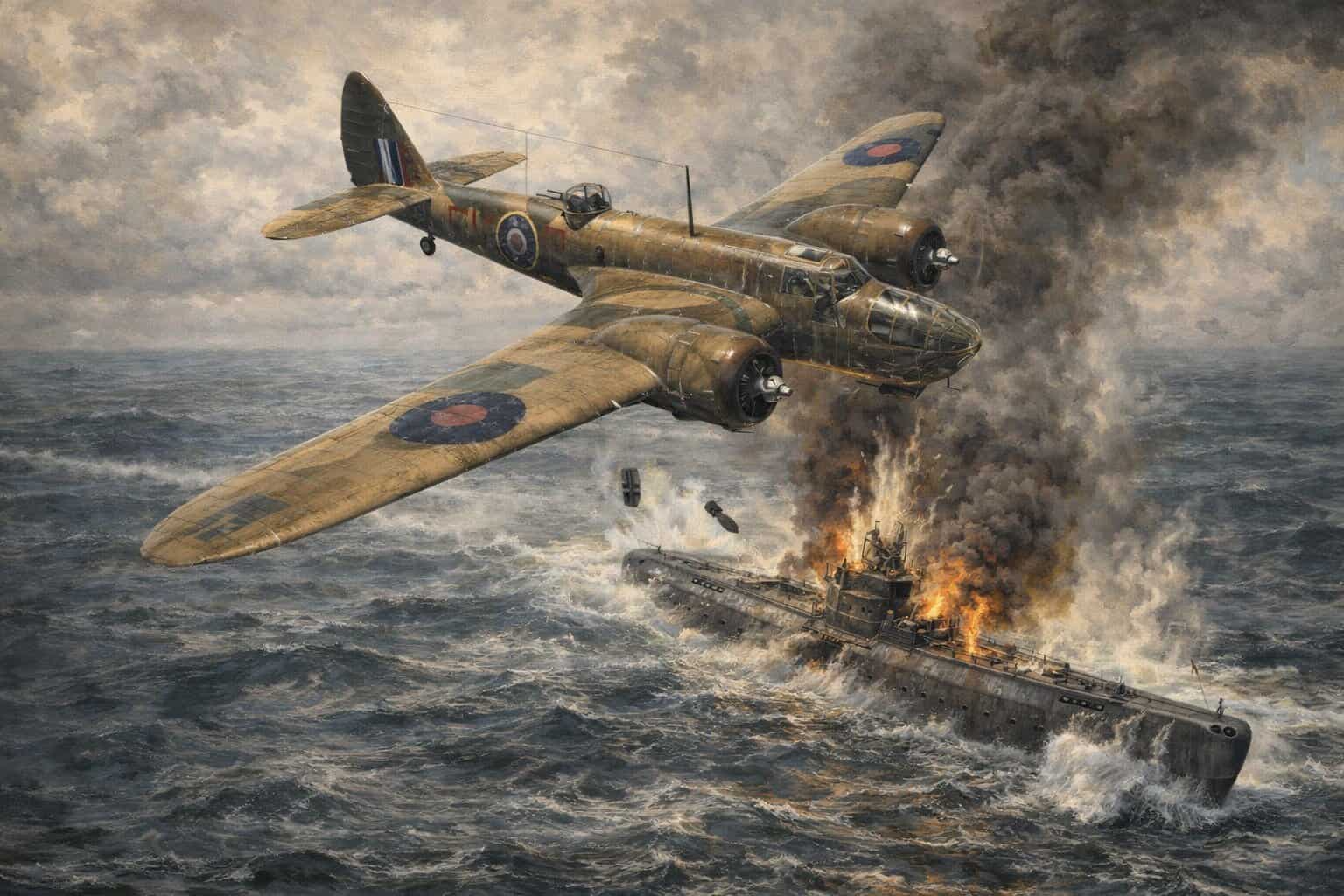
On 11 March 1940, a Bristol Blenheim of No. 82 Squadron destroyed the German submarine U-31 while the boat was on the surface, marking the first time a U-boat had been sunk by air power alone without naval assistance. In the early months of the Second World War, that was a notable achievement. The campaign against German submarines was already emerging as one of Britain’s most important struggles, because the security of the sea lanes would determine whether the country could continue to import food, fuel and war material. Any successful blow against the U-boat arm therefore carried weight beyond the immediate tactical result.
The importance of the incident lay not only in the loss of one submarine, but in what it suggested about the growing offensive potential of RAF aircraft in maritime operations. At this stage of the war, anti-submarine warfare was still developing. Methods, weapons and cooperation between the services would all improve considerably as the conflict went on. Yet the destruction of U-31 showed that aircraft could already do more than search vast stretches of sea. Given the chance, they could also strike decisively.
The Attack on U-31
According to the surviving summary, the Blenheim caught U-31 on the surface and sank it. That detail is central. A surfaced submarine was far more vulnerable than one submerged, and aircraft were especially dangerous when they could attack quickly before a boat escaped below. The encounter illustrates one of the recurring realities of the war at sea: survival often depended on moments of detection, surprise and immediate response.
For the RAF, this success was significant because it was achieved independently rather than as the finishing act of a naval engagement. The claim that U-31 was the first U-boat destroyed solely by air power without assistance underlined the Service’s ability to make a direct contribution to maritime warfare in its own right. In a conflict often remembered through great bomber offensives and fighter battles, the episode is a reminder that RAF operations also played an important part in the struggle over Britain’s sea communications.
Recognition and Immediate Significance
The action also brought recognition to Squadron Leader “Paddy” Delap, who received the Distinguished Flying Cross. That award reflected the value attached to the destruction of U-31 at a time when every confirmed success against the submarine threat mattered. Early-war victories of this kind had an operational value, but they also carried a moral and institutional significance. They demonstrated that the RAF could claim a share in one of the war’s most pressing defensive battles.
The sinking did not, by itself, transform the wider U-boat campaign. Germany’s submarine force remained a serious and persistent danger, and the Battle of the Atlantic would become a long contest of adaptation, endurance and industrial strength. Nevertheless, the destruction of U-31 offered an early example of how air power could help contain that threat. It pointed towards a future in which maritime patrol aircraft, airborne radar, improved weapons and closer inter-service coordination would become indispensable.
Wider Air-War Reflection
Seen in the broader history of the RAF, 11 March 1940 stands as a small but revealing moment in the expansion of air power beyond the traditional boundaries of reconnaissance and coastal patrol. The Service was still learning how best to apply aircraft against submarines, but this success showed that the aeroplane had become a serious anti-submarine weapon. The sinking of U-31 deserves notice not simply as an isolated wartime incident, but as an early indication of a wider truth: control of the air could have decisive consequences far out at sea as well as over the battlefield or the city.