On the night of 13 February 1945, aircraft of RAF Bomber Command began a major bombing attack on the German city of Dresden, marking the opening phase of one of the most controversial air operations of the Second World War. The attack formed part of the wider Allied strategic bombing campaign against Germany during the final months of the war in Europe.
By early 1945, the Allied advance from both east and west had placed Germany under immense pressure. Soviet forces were pushing rapidly into eastern Germany while Anglo-American armies approached the Rhine. Within this context, Allied planners sought to disrupt German communications and hinder the movement of troops and supplies toward the Eastern Front. Dresden, an important railway and administrative centre in eastern Germany, was among the cities selected for attack.
Strategic Context and Planning
The attack on Dresden formed part of a broader Allied effort to strike transportation centres and urban infrastructure that supported the German war effort. The city had previously avoided large-scale destruction compared with other German urban centres, but it possessed significant rail yards and industrial facilities that contributed to Germany’s wartime economy.
The operation was planned as a combined Allied effort involving both the Royal Air Force and the United States Army Air Forces. The RAF would conduct night attacks, while American bomber formations would follow with daylight operations. This approach had become a common pattern by the later stages of the war, allowing continuous pressure to be placed on German targets.
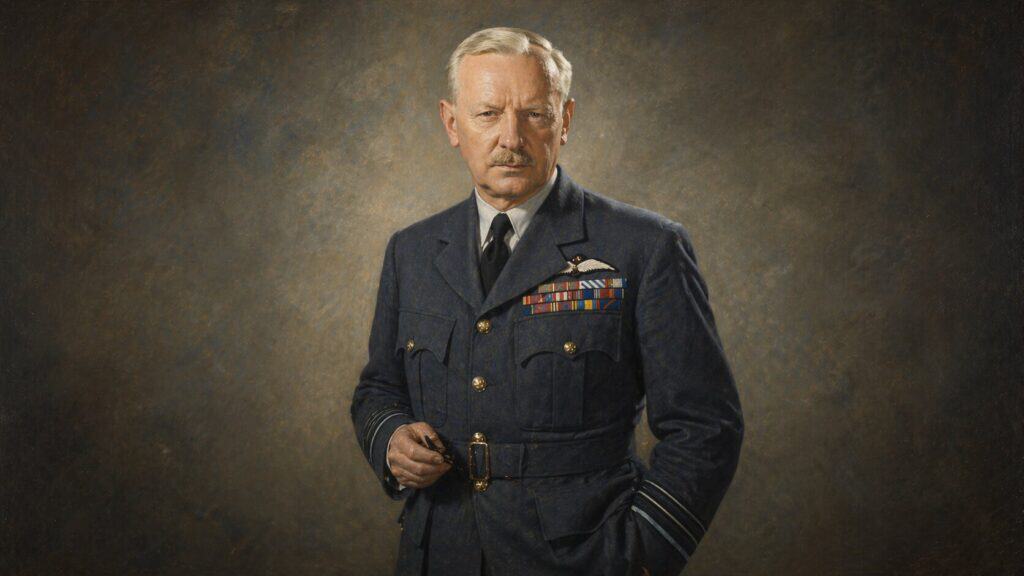
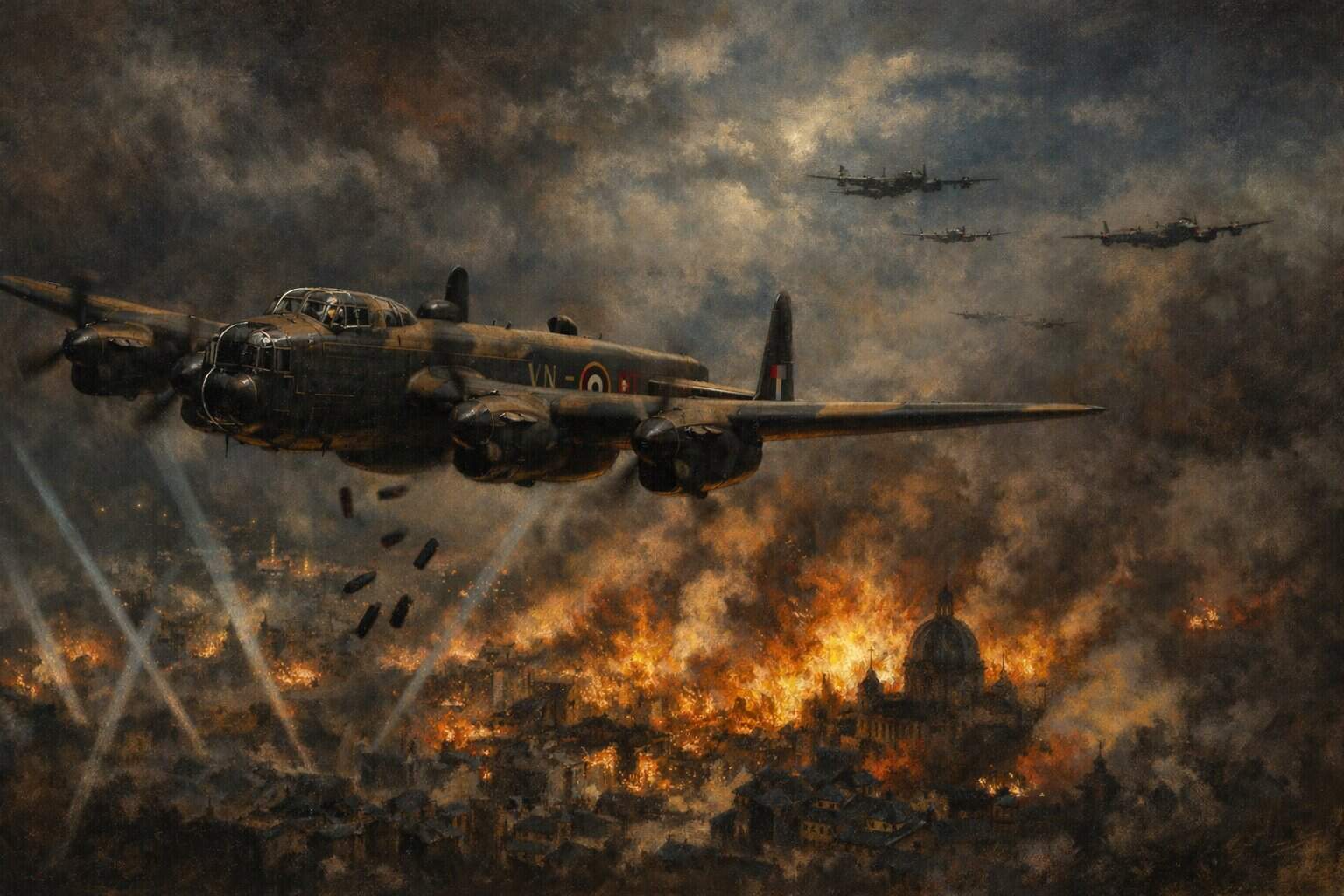
For the opening stage of the operation, RAF Bomber Command, led by Air Chief Marshal Sir Arthur Harris, organised a large night raid against the city. The attacking force included heavy bombers such as the Avro Lancaster, supported by specialised Pathfinder Force aircraft that marked the target area.
The Night Raids of 13-14 February
Shortly before midnight on 13 February 1945, the first wave of RAF bombers arrived over Dresden. Pathfinder aircraft marked the city centre using flares and incendiary markers, enabling the following bomber stream to concentrate its attack on the designated aiming points.
The initial wave dropped a combination of high-explosive bombs and incendiaries. This technique, frequently used during Bomber Command’s later operations, aimed first to damage buildings and infrastructure before igniting widespread fires. The high-explosive bombs shattered roofs, windows, and water systems, leaving structures highly vulnerable to fire.
A second RAF wave followed several hours later in the early hours of 14 February. By this time, large fires were already burning across parts of the city. The additional incendiaries dropped during the second attack dramatically intensified the situation, causing multiple fires to merge and spread across densely built-up districts.
The conditions created what later became described as a firestorm, in which intense heat and strong winds generated by the fires drew in surrounding air and accelerated the spread of flames. Large areas of Dresden’s historic centre were devastated during the night.
Allied Follow-Up Attacks
The bombing of Dresden did not end with the RAF night raids. On 14 February, formations of the United States Army Air Forces carried out daylight attacks on the city. These raids targeted transportation facilities, including rail yards and bridges, as part of the wider effort to disrupt German logistics.
Further bombing attacks followed in the days immediately after the initial raid. By this stage, much of the central urban area had already suffered severe destruction.
The combined effects of the attacks caused extensive damage across the city. Industrial sites, residential districts, and transport infrastructure were heavily affected. Civilian casualties were extremely high, although the precise number remains a matter of historical debate and careful research.
Consequences and Historical Debate
The bombing of Dresden quickly became one of the most discussed air operations of the war. At the time, Allied leaders viewed the attack as part of the ongoing strategic bombing campaign intended to accelerate Germany’s collapse and assist the Soviet advance on the Eastern Front.
However, the scale of destruction and the large number of civilian casualties later led to significant debate about the military necessity and proportionality of the raid. Historians have examined the operation in the broader context of the Allied bombing strategy, which had evolved throughout the war as technological capabilities and strategic objectives changed.
While Dresden was not unique in experiencing large-scale bombing during the conflict, the scale of the devastation and the late stage of the war ensured that the operation would remain a subject of continuing historical examination.
Significance in the Air War
The Dresden raids reflected the culmination of the Allied strategic bombing campaign against Germany. By 1945, Bomber Command had developed highly organised night operations involving large bomber streams, radar navigation aids, and specialist target-marking units.
The attack demonstrated the destructive potential of combined high-explosive and incendiary bombing when applied to a densely built urban area. It also illustrated the extent to which air power had become a central instrument of Allied strategy in the war’s later stages.
For historians of the Royal Air Force and the wider air war in Europe, the Dresden raids remain a powerful example of both the capabilities and the controversies associated with strategic bombing. The events of 13–14 February 1945 continue to be studied as part of the broader effort to understand the role of air power in modern warfare and the difficult moral and strategic questions that accompanied it.