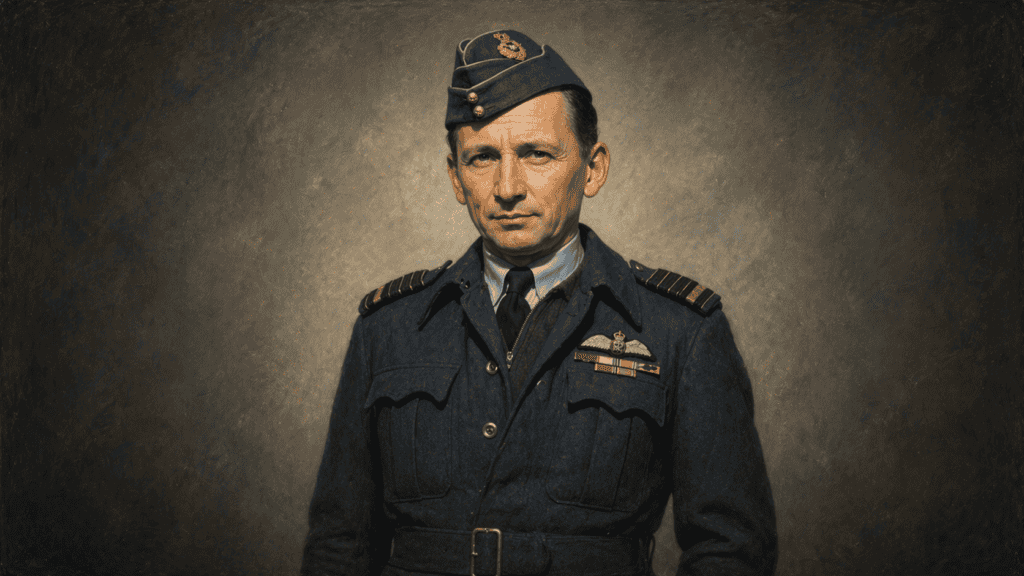
On 2 February 1943, the Allied air forces operating in the Mediterranean were formally reorganised under a new unified command structure with the creation of the Mediterranean Air Command (MAC). The organisation was placed under the leadership of Air Chief Marshal Sir Arthur Tedder, a senior Royal Air Force commander who had already played a major role in shaping Allied air operations in North Africa. The new command was intended to improve coordination between British and American air forces as the Allied campaign in the Mediterranean entered a new and increasingly complex phase.
By early 1943, the strategic situation in the theatre was changing rapidly. The Allied victory at the Second Battle of El Alamein and the success of Operation Torch, the Allied landings in North-West Africa in November 1942, had placed Axis forces in Tunisia under intense pressure. At the same time, the increasing presence of United States Army Air Forces units alongside the RAF created a need for clearer operational coordination. The establishment of Mediterranean Air Command aimed to provide a unified air leadership capable of directing Allied air power across the entire theatre.
The Need for Unified Air Command
During the early stages of the North African campaign, Allied air forces often operated under separate national command arrangements. RAF formations, Commonwealth units, and American air forces were frequently assigned to different operational structures. While cooperation was generally effective, the growing scale of the campaign necessitated a more integrated system.
Senior Allied planners recognised that modern warfare required close coordination between land, sea, and air forces. Air power in particular had become central to disrupting enemy logistics, protecting shipping routes, and supporting advancing ground formations. The lessons learned during the fighting in North Africa highlighted the importance of concentrating air resources and directing them in accordance with a unified strategic plan.
Air Chief Marshal Sir Arthur Tedder, who had previously commanded Allied air forces in the Middle East and North Africa, was considered well-suited to lead the new organisation. His experience working with both British and American commanders made him a natural choice for a role that required careful coordination between different services and national commands.
Structure and Responsibilities
Mediterranean Air Command was designed as the central authority responsible for directing Allied air operations across the theatre. Under this structure, air forces were organised into several major components responsible for different operational roles.
These included formations responsible for strategic bombing, tactical support for ground forces, and coastal and maritime operations to control the vital sea routes of the Mediterranean. The command structure brought together RAF units, Commonwealth air forces, and American formations under a single strategic leadership while still allowing each component to operate within its specialised role.
One of the principal goals of the new organisation was to ensure that air power could be concentrated at decisive points. By coordinating reconnaissance, fighter cover, and bomber operations, Mediterranean Air Command sought to maximise the effectiveness of Allied aircraft across a vast operational area that stretched from North Africa to the central Mediterranean.
Air Power in the Tunisian Campaign
The creation of Mediterranean Air Command came at a critical moment in the Tunisian campaign, the final phase of the North African war. Axis forces had established strong defensive positions in Tunisia, supported by reinforcements arriving from Europe and by aircraft operating from nearby bases in Sicily and southern Italy.
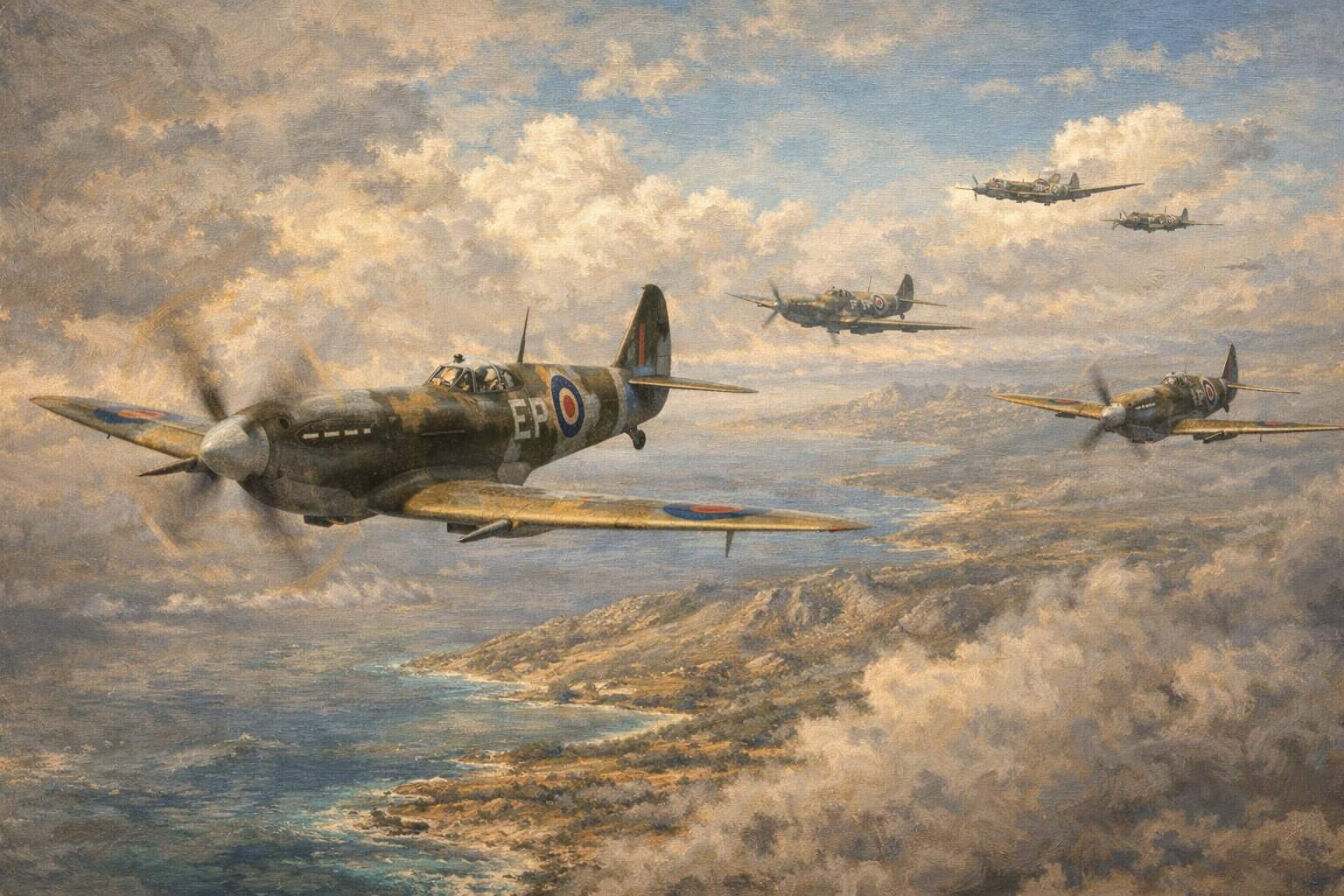
Allied air power played a crucial role in contesting control of the skies over Tunisia and the surrounding sea lanes. Aircraft attacked supply convoys, bombed airfields, and provided support to advancing ground forces. Coordinated air operations were particularly important in restricting the flow of Axis reinforcements across the Mediterranean.
The unified command structure allowed Allied air forces to operate more efficiently during the final stages of the campaign. Improved coordination between British and American units helped ensure that reconnaissance, fighter interception, and bombing missions supported one another more effectively than before.
Significance of the Mediterranean Air Command
The formation of the Mediterranean Air Command represented an important development in Allied military organisation during the Second World War. By placing air operations under a single theatre-level command, the Allies improved their ability to plan and conduct complex joint operations.
The structure created in February 1943 also provided a model for future Allied cooperation. As the war progressed, integrated command arrangements between British and American forces became increasingly common, particularly in large-scale operations involving multiple services and nations.
Mediterranean Air Command played a central role in coordinating the air campaigns that followed the North African fighting, including the operations that led to the invasion of Sicily and the subsequent campaign in Italy. The organisation helped ensure that Allied air power could be directed where it was most needed across a wide and strategically vital theatre.
In the wider context of the air war, the creation of Mediterranean Air Command on 2 February 1943 demonstrated how effective command structures could multiply the impact of available forces. By bringing together diverse Allied air units under a unified leadership, the new command strengthened the strategic use of air power in one of the war’s most important theatres.