On This Day, 1940: On 7 October 1940, Hurricane pilot Archie McKellar of 605 Squadron was credited with five Bf 109 victories…
Read the entry →
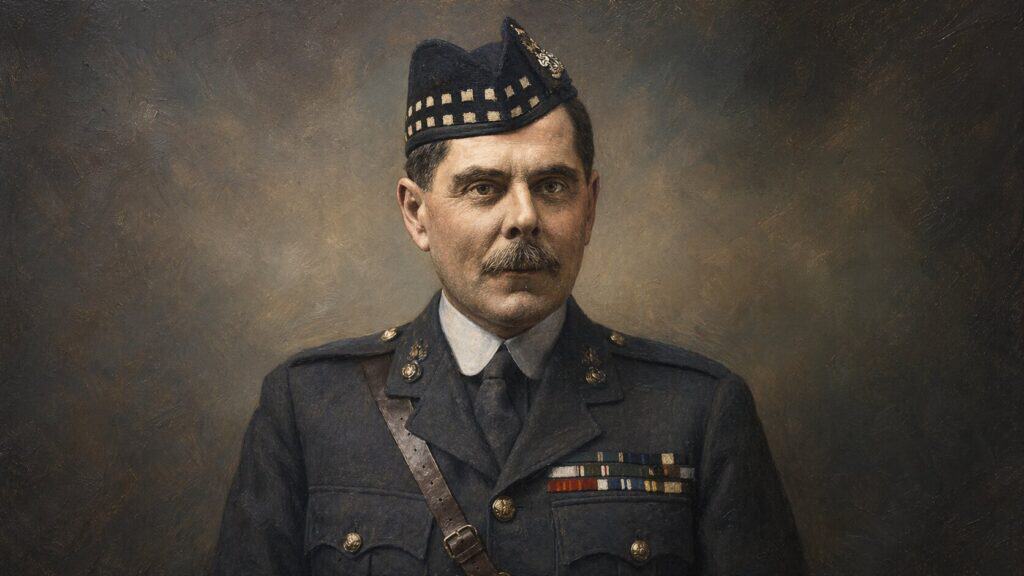
Air Vice Marshal
Charles Longcroft
Discover how Charles Longcroft helped shape the Royal Flying Corps and early RAF, from squadron command in the First World War to founding RAF Cranwell.
Early Life
Charles Alexander Holcombe Longcroft was born at Llanarth in Cardiganshire on 13 May 1883, into a family with military and landed connections in Wales. Educated at Charterhouse and then at the Royal Military College, Sandhurst, he entered the Welch Regiment in 1903. His early career was therefore conventional for an officer of his generation, shaped by army service rather than by any established air arm. Military flying in Britain was still experimental, and when Longcroft first turned towards aviation, it remained a specialist pursuit with uncertain prospects.
That changed in 1912. After gaining Royal Aero Club Certificate No. 192 in March of that year, Longcroft volunteered for duty with the Air Battalion of the Royal Engineers. Within weeks, the Royal Flying Corps had been created, and he transferred into the new organisation. He was among the small group of officers whose careers bridged the period between improvised pre-war flying and the beginnings of a permanent British air service. In 1913, he won the first Britannia Trophy after one of the Royal Flying Corps' longest flights of the period, an early sign that he was regarded as both a skilled pilot and a dependable organiser in a hazardous young profession.
Entry into Service
Longcroft's move into military aviation came before war gave the aircraft an agreed role. He served first as a flying officer and then as a flight commander in the Royal Flying Corps, including service with No. 2 Squadron. By May 1914, he had become Officer Commanding No. 1 Squadron RFC, one of the earliest operational flying units in British service. The appointment placed him at the centre of the Corps' rapid expansion on the eve of the First World War.
When war began, the Royal Flying Corps was still defining how aircraft would be used in reconnaissance, artillery observation, communications and command. Longcroft belonged to the generation of officers who had to improvise doctrine while also keeping fragile aircraft and inexperienced organisations in the air. He later commanded No. 4 Squadron RFC and then moved into a sequence of higher appointments concerned with training and formation command, reflecting the extent to which the wartime air arm depended on capable administrators as much as on individual pilots.
Operational Career
During the First World War, Longcroft held a series of increasingly senior posts. From squadron command, he advanced to the command of a training wing, then 2nd Wing, and later V Brigade of the Royal Flying Corps. In November 1917, he became General Officer Commanding the Training Division of the RFC, a significant appointment at a moment when the British air arm needed to produce aircrew and units on a larger scale than ever before. In 1918, he went on to command III Brigade after the creation of the Royal Air Force.
His wartime service combined front-line command with organisational responsibility. That balance helps explain his later importance. Longcroft was not remembered primarily for a single combat episode or for ace status, but for helping to turn military flying into a functioning service arm. His honours reflected that broader contribution. He was mentioned in despatches, appointed a Companion of the Distinguished Service Order, and later received the Air Force Cross. He also received foreign recognition, including the Order of Saint Stanislaus and the Legion of Honour.
Major Actions or Commands
Longcroft's most enduring appointment began on 1 November 1919, when he became the first commandant of RAF College Cranwell. The college opened to cadets in February 1920 and was the first air academy of its kind in the world. This was more than a ceremonial post. The new Royal Air Force, only recently formed from the merger of the Royal Flying Corps and the Royal Naval Air Service, needed institutions that would give it permanence, professional standards and its own officer culture. Longcroft was one of the officers entrusted with that work.
His later appointments confirmed his place in the RAF's senior leadership. He served as Director of Personal Services and then as Air Officer Commanding Inland Area. These were important administrative commands within a service still securing its independence and identity in the interwar period. Longcroft retired from the RAF in 1929 at his own request, but he remained associated with public and ceremonial service, later becoming Gentleman Usher of the Scarlet Rod and, in 1948, Registrar and Secretary of the Order of the Bath.
Later Life and Death
In 1921 Longcroft married the widowed Marjory Hepburn, née McKerrell-Brown, and they had a son. Outside formal command, he continued to occupy positions of public trust after leaving the RAF. His long later association with the Order of the Bath reflected the standing he had achieved within Britain's military establishment.
He died in Paddington, London, on 20 February 1958. By then, the Royal Air Force had become a mature, independent service, and many of the structures that defined its officer training and professional identity had their roots in the years when Longcroft held senior command.
Historical Significance
Charles Longcroft occupies an important place in RAF history because his career linked three formative stages: the experimental flying world before 1914, the rapid wartime expansion of the Royal Flying Corps, and the institutional consolidation of the Royal Air Force after 1918. He was one of the comparatively small number of officers who held senior command in both the RFC and the early RAF, and his work at Cranwell gave him a lasting role in shaping how the new service trained its officers.
He is less widely remembered than figures such as Hugh Trenchard, partly because his contribution was structural rather than doctrinal and because it was expressed through command, training and administration rather than public controversy. Even so, his record shows why he deserves attention. Longcroft helped build continuity between pioneering military aviation and the permanent service that followed, and his career stands as a reminder that the RAF's early history was shaped not only by famous wartime leaders but also by the organisers who gave the service durable institutions.
| Dates | Role | Unit | Aircraft |
|---|---|---|---|
| 1903–1912 | Officer | Welch Regiment | |
| 1912–1914 | Flying officer and flight commander | Air Battalion, Royal Engineers; No. 2 Squadron RFC | |
| 1914–1915 | Officer Commanding | No. 1 Squadron RFC | |
| 1915 | Officer Commanding | No. 4 Squadron RFC | |
| 1915–1918 | Senior wing, brigade and training commands | Training Wing, 2nd Wing, V Brigade and Training Division, RFC | |
| 1918 | General Officer Commanding | III Brigade RAF | |
| 1919–1923 | First Commandant and Air Officer Commanding | RAF College Cranwell | |
| 1923–1926 | Director of Personal Services | Air Ministry | |
| 1926–1929 | Air Officer Commanding | Inland Area |
Longcroft is remembered less for a single famous wartime episode than for the institutional part he played in the making of British air power. His reputation rests on early flying service, senior RFC command and, above all, his role in establishing RAF College Cranwell as the new service's officer academy. In RAF history he stands as one of the organisers who helped convert experimental military aviation into a permanent professional arm.
Royal Air Force College Opens at Cranwell
On 5 February 1920, Royal Air Force College Cranwell opened to train future RAF officers, marking…
5 February 2026 · 5 minRoyal Aircraft Factory F.E.2 Continues Flying Trials
By 29 September 1913, the Royal Aircraft Factory F.E.2 was still in flying trials as Britain…
29 September 2026 · 3 minThe RAF Is Founded as the World’s First Independent Air Force
On 1 April 1918, the Royal Air Force was founded through the merger of the RFC…
1 April 2026 · 3 min