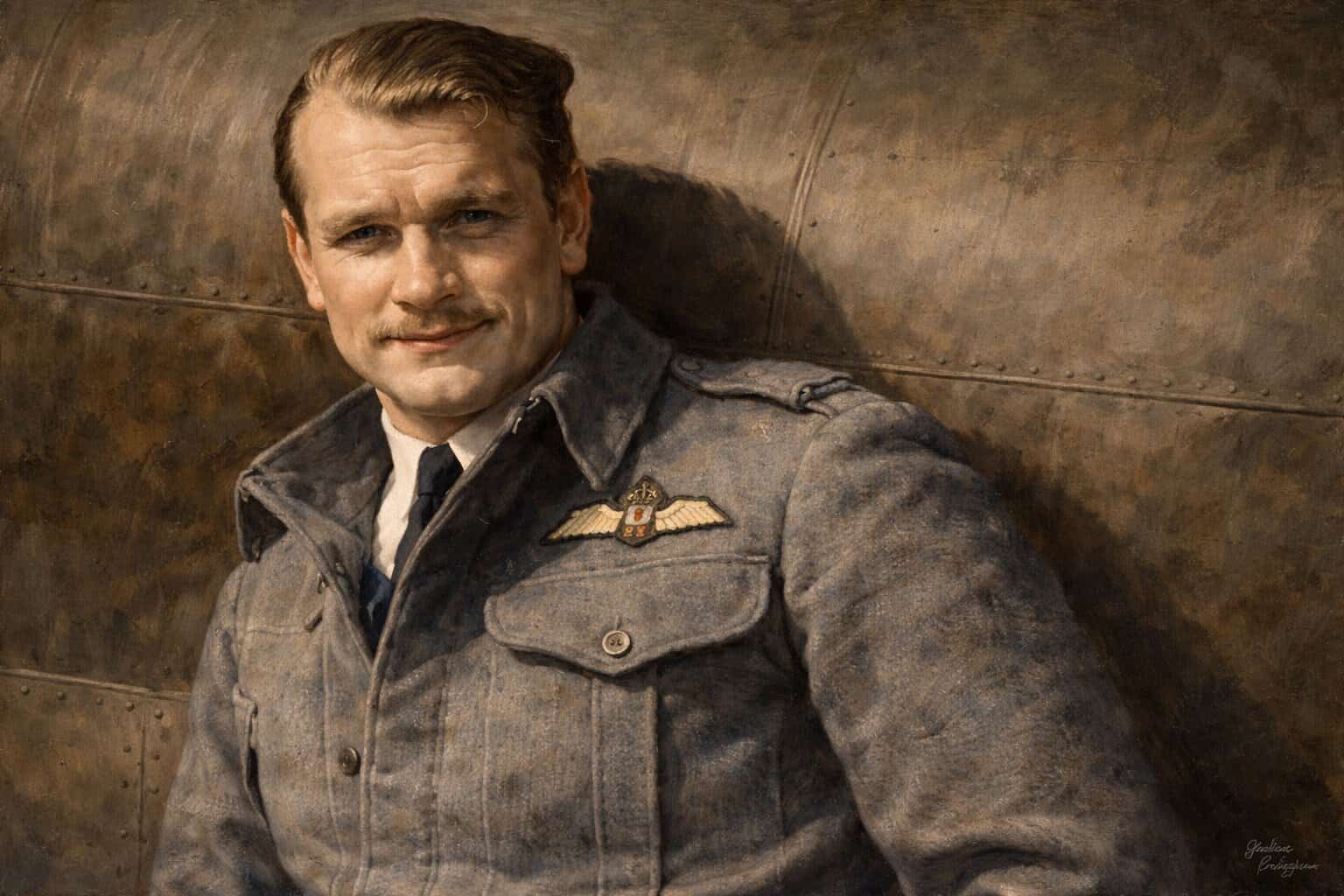
On 17 March 2025, John “Paddy” Hemingway, the last surviving Battle of Britain pilot, died peacefully at the age of 105. His death carried significance far beyond the loss of one veteran, because it marked the passing of the final living pilot from the generation forever associated with Britain’s defence in 1940. Hemingway belonged to “the Few”, a phrase that has become inseparable from the Battle of Britain and from the national memory of that perilous year. To describe him as the last surviving Battle of Britain pilot is to recognise both his individual service and his symbolic place in history.
John Hemingway remained a direct link to the generation that fought in 1940. With his death, a direct human link to the cockpit experience of the Battle of Britain finally came to an end. The events of 1940 remain central to RAF identity and to British wartime remembrance, and Hemingway’s passing therefore had a special resonance.
A Life That Spanned an Age
Hemingway lived to 105, an age that spanned an extraordinary sweep of history. He had belonged to the RAF generation that faced the Luftwaffe during Britain’s most vulnerable wartime months, and he survived long enough to become a living bridge between that era and the present day.
For decades, veterans such as him gave the Battle of Britain a personal voice. Their memories reminded later generations that what is now treated as settled history was once immediate danger, exhaustion, uncertainty and sacrifice. As time passed, their numbers inevitably dwindled. Each death among the surviving pilots narrowed that living connection to 1940. The death of the last surviving pilot represents a distinct moment in remembrance: not the end of history, but the end of direct testimony from those who fought the battle in the air.
The Meaning of “the Few”
Hemingway’s death also highlighted why Battle of Britain pilots continue to occupy such a powerful place in public memory. They stood at the centre of a campaign long understood as one of the decisive episodes of the war. Their efforts helped deny the enemy control of the skies and preserved Britain from a graver threat.
Yet remembrance should also resist turning them into abstractions. “The Few” were not merely a phrase or legend. They were young men flying under intense strain, confronting danger repeatedly and enduring losses among friends and comrades. Hemingway’s death invites reflection not only on victory, but on the human cost borne by his generation.
From Living Memory to Historical Memory
There is a difference between remembering an event through archives and monuments and remembering it through a living witness. While Hemingway lived, the Battle of Britain still had one surviving pilot whose existence connected national commemoration to individual experience. His death shifts that memory fully into the historical realm.
The responsibility for carrying it forward now rests entirely with records, institutions, families and the wider public. That does not diminish the battle’s importance. If anything, it increases the duty to remember carefully and truthfully. When eyewitnesses are gone, myth can too easily displace reality. The challenge is to preserve not only the grandeur of the story, but also its detail, complexity and human texture.
A Farewell With National Meaning
John “Paddy” Hemingway’s death on 17 March 2025 was therefore both a personal farewell and a national milestone. It marked the end of an era in RAF remembrance, as the final pilot of the Battle of Britain passed into history. He is remembered because he served when Britain most needed men of skill and steadiness in the air. He is remembered, too, because his long life kept the memory of 1940 within living reach for so long.
With his passing, that living reach has ended, but the obligation to honour what he and his comrades did has not. The day records not only the death of a veteran, but the closing of the last personal chapter in one of the Service’s defining stories.