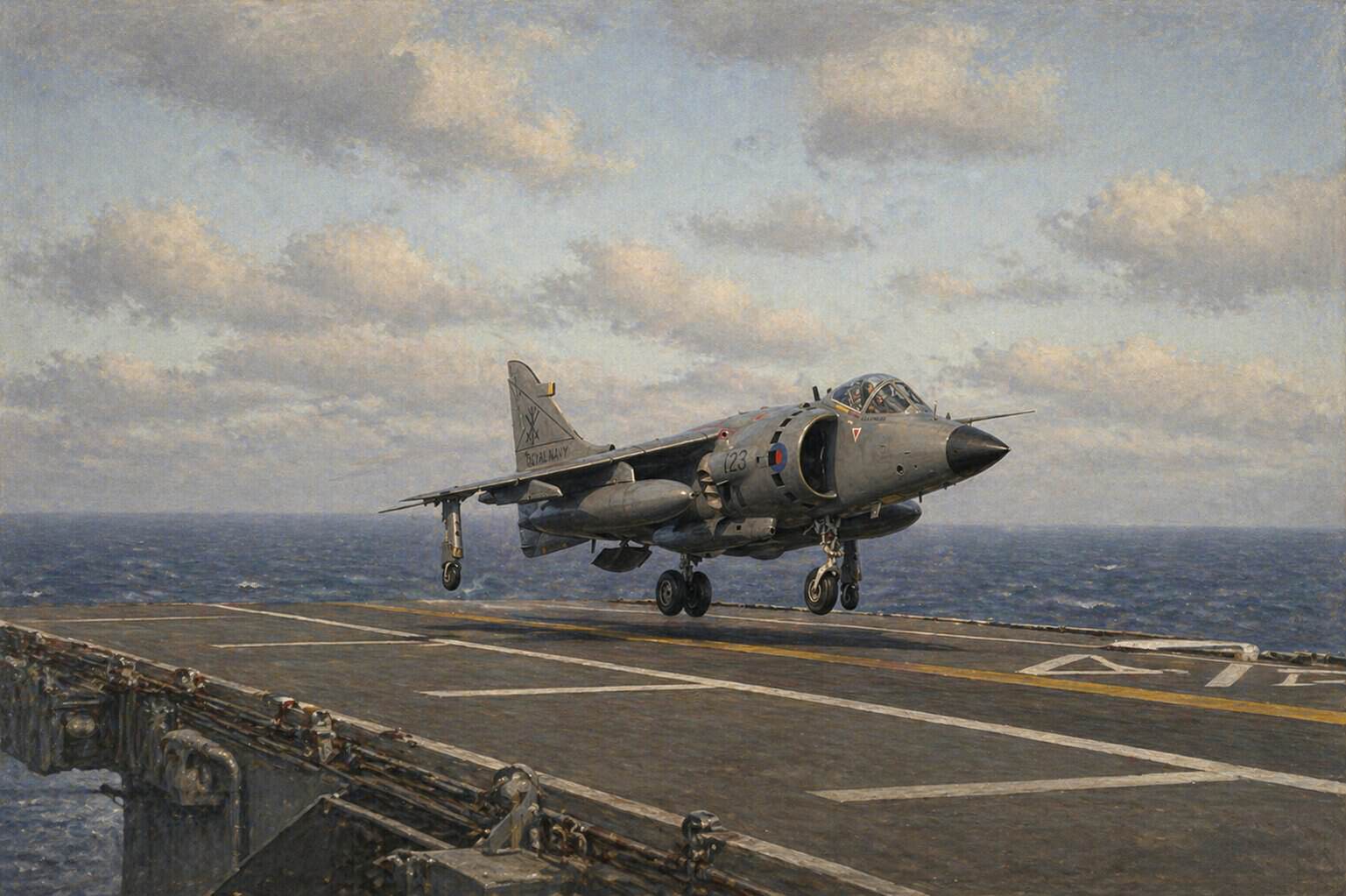
On 18 May 1982, Harrier GR3s and Sea Harriers of 809 Naval Air Squadron arrived in theatre aboard Atlantic Conveyor, reinforcing British air power in the South Atlantic during the Falklands War. Their arrival was an important moment in the campaign because British air strength at sea and ashore remained limited, and every additional fast jet increased the task force’s ability to protect the fleet, contest the air battle and support operations against Argentine forces.
The reinforcement came at a critical stage. The British task force was operating at an extreme distance from home, with carrier aviation and supporting air assets under constant operational pressure. Aircraft losses, maintenance demands and the sheer scale of the theatre meant that the arrival of additional jets could have immediate operational value.
Reinforcing British Air Power
The incoming aircraft included RAF Harrier GR3s and Sea Harriers assigned to 809 Naval Air Squadron. Carried south aboard Atlantic Conveyor, they represented one of the most important air reinforcements of the campaign. Their presence strengthened both the fleet’s defensive posture and Britain’s ability to sustain offensive operations as the conflict intensified.
The Harrier family was especially valuable in the Falklands because of its flexibility. Sea Harriers provided fleet air defence and combat air patrols, while RAF Harrier GR3 aircraft added useful capability in the ground-attack role. In a theatre with no nearby secure land base at the outset, that adaptability mattered greatly.
The arrival of these aircraft also underlined how dependent the campaign was on logistics and maritime movement. In the South Atlantic, air power could not simply be generated from established infrastructure. It had to be transported, protected and integrated into operations at long range. That made reinforcement itself a strategically important act.
Atlantic Conveyor and the Wider Campaign
Atlantic Conveyor became one of the most important auxiliary vessels of the war because it carried aircraft, stores and matériel vital to British operations. The reinforcement delivered on 18 May therefore belonged to a broader logistical effort that underpinned the entire campaign.
This is a useful reminder that the Falklands air war was not only a story of combat sorties and air-to-air engagements. It was also a story of movement, sustainment and the continuous effort to bring the right aircraft and equipment into the theatre in time to influence events. The British position depended on making limited air assets count.
By increasing available air strength, the reinforcement helped Britain preserve offensive and defensive flexibility. The fact that the fast jets had been flown off before Atlantic Conveyor was sunk a week later was a major stroke of fortune for the British side. In the weeks that followed, those aircraft would contribute to the increasingly complex air battle over the islands, the fleet and the approaches to the landing areas.
Operational Importance
The arrival of Harrier GR3s and Sea Harriers aboard Atlantic Conveyor on 18 May 1982 marked a significant reinforcement of British air power during the Falklands War. It showed how rapidly the campaign demanded not only bravery in combat, but also the efficient movement and concentration of scarce air assets.
The arrival of the Atlantic Conveyor did not guarantee success, but it brought British air power to a more sustainable level at a critical stage of the campaign. That value was underscored when the ship was sunk on 25 May: the Harrier reinforcements had already been flown off, and their survival preserved air strength that might otherwise have been lost with the vessel.