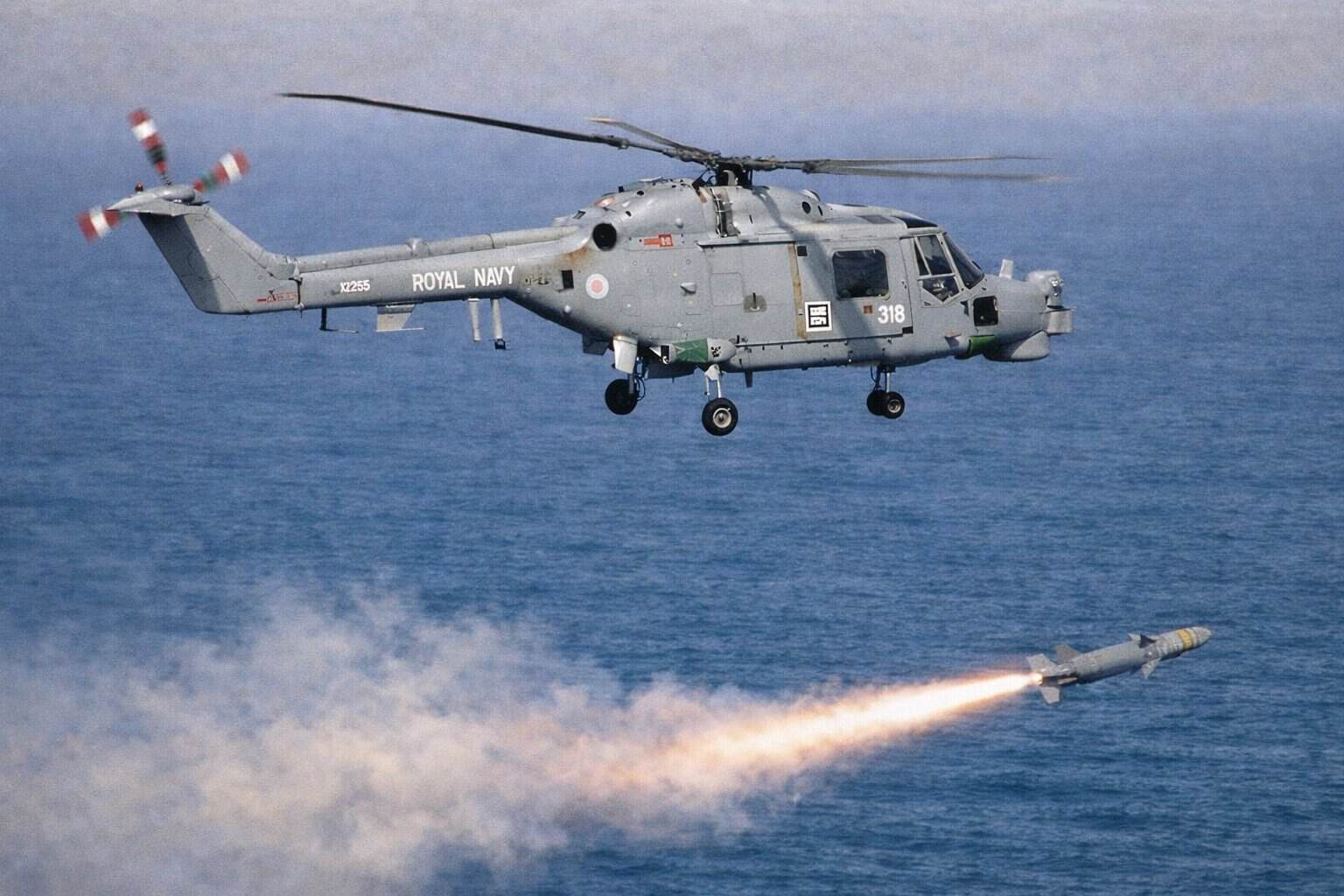
On 2 May 1982, Sea Skua missile attacks sank Comodoro Somellera and damaged Alferez Sobral during operations in the South Atlantic. Although this was a naval helicopter action rather than an RAF strike, it still belongs within the wider air story of the Falklands campaign. The conflict was fought across an immense distance and under difficult weather conditions, and success often depended on the flexible use of airborne force wherever it could be brought to bear. These attacks showed how quickly British air power, in its broadest sense, could threaten the movement of Argentine ships at sea.
Air power in a maritime campaign
The Falklands War is often remembered through its most famous dramatic episodes, yet much of its military meaning lay in the steady contest for control of sea and airspace. Helicopter-launched missile strikes against vessels formed part of that struggle. They were not merely isolated tactical successes. They demonstrated that British forces could detect, reach and attack enemy ships using mobile airborne platforms capable of operating in a fluid maritime environment.
That mattered because the South Atlantic theatre placed unusual stress on every aspect of command and logistics. Surface forces could not be everywhere at once, and the ability to send aircraft out to investigate and engage contacts gave Britain an important operational edge. Airborne missiles extended that advantage by allowing relatively small aircraft to deliver decisive effects against vulnerable ships.
The significance of the 2 May attacks
The sinking of Comodoro Somellera and the damaging of Alferez Sobral were significant not simply as losses to Argentina, but as proof of concept under wartime conditions. They showed that an anti-ship missile attack from helicopters could shape the maritime picture by denying the enemy confidence in operating freely. In campaigns fought over great spaces, uncertainty can be as damaging as destruction. If ships must assume that aircraft may appear with little warning, their patterns of movement, communication and support all become more difficult.
From a British perspective, this was part of the gradual tightening of pressure in the theatre. The campaign was not won in a single blow. It was built through successive actions that reduced Argentine options and increased British freedom of manoeuvre. Air attacks of this kind deserve notice because they helped create the cumulative military imbalance from which later success would flow.
Why it matters in RAF Chronicle terms
An RAF Chronicle can properly note this episode because RAF history does not exist in isolation from the rest of British air warfare. The Falklands campaign was emphatically joint, and the effectiveness of British air power rested on contributions from different services operating toward a common aim. RAF transport, reconnaissance, planning and later strike efforts formed part of the same larger system of pressure in which these maritime missile attacks also belonged.
On 2 May 1982, the South Atlantic campaign once again showed that control of events could be exercised from the air, even far from established bases. The attacks on Comodoro Somellera and Alferez Sobral were a reminder that airborne force in modern war is not confined to conventional bomber or fighter narratives. It also includes agile, precise maritime strikes that alter the enemy’s calculations and strengthen the wider campaign.