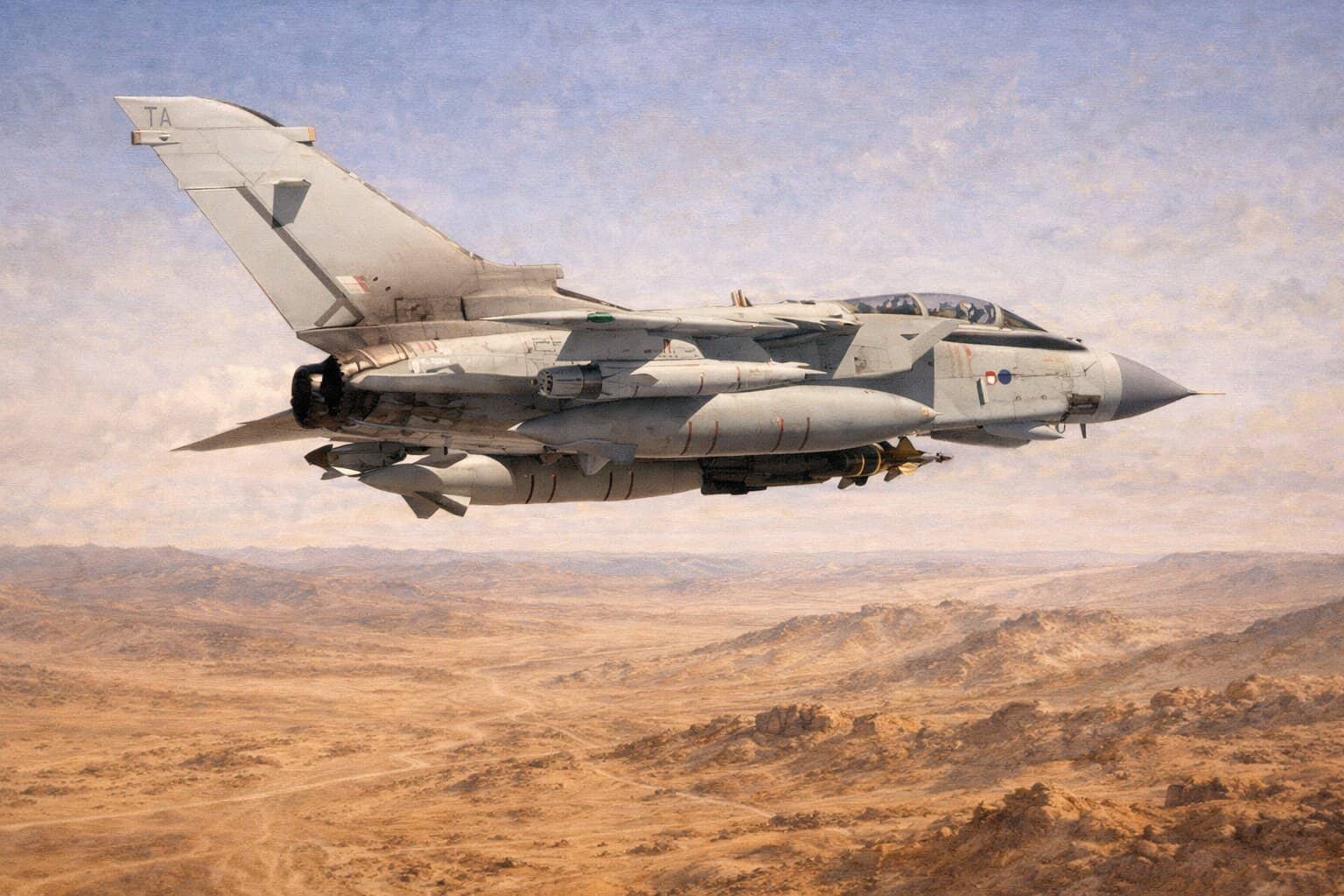
On 20 March 2003, the coalition air policing operations known as Operation Northern Watch and Operation Southern Watch came to an end ahead of offensive action against Iraq and the beginning of Operation Telic. For the Royal Air Force, the conclusion of these missions marked the end of a long period of containment in which allied aircraft had patrolled Iraqi airspace, enforced restrictions and responded to threats over many years after the 1991 Gulf War. Though later events would quickly dominate attention, the closing of the Watch operations was itself a significant moment in the history of modern RAF air campaigns.
The two operations had been created to monitor and control separate areas of Iraqi airspace. Their basic purpose was deterrence and protection rather than conquest. Coalition aircraft maintained a persistent presence, challenged hostile activity and sought to constrain the Iraqi regime’s freedom of action from the air. This placed the RAF in a form of sustained expeditionary commitment that differed from short, decisive campaigns. It demanded endurance, routine professionalism and the ability to operate in politically sensitive conditions for extended periods.
From containment to war
What ended on 20 March was more than a pair of named operations. It was an entire phase of policy. Northern Watch and Southern Watch belonged to the post-Cold War era of coercive containment, in which air power was used to pressure a hostile state without full-scale invasion. Their termination signalled that this period had given way to open offensive action. In that sense, the date marks a hinge between two chapters: years of patrols, monitoring and limited engagement on one side, and the beginning of a major war on the other.
For the RAF, that transition mattered greatly. Air policing operations require persistence, rules-based discipline and constant readiness in uncertain circumstances. They are rarely dramatic in the public imagination, yet they impose steady operational and human demands. Crews, engineers, planners and support staff all contribute to an effort that must remain credible every day, not merely in moments of crisis. Ending such operations therefore represented the conclusion of a substantial and often underappreciated commitment.
The RAF’s role in persistent air power
The modern RAF has often had to balance high-intensity combat capability with the less visible tasks of surveillance, patrol, deterrence and enforcement. Northern Watch and Southern Watch exemplified that balance. These missions relied on presence as much as striking power. Their effectiveness lay partly in the message sent by regular coalition patrols: Iraqi forces could be observed, challenged and, if necessary, engaged.
Such operations also demonstrated how air power can shape events over time. Aircraft can patrol large areas, respond quickly and sustain political pressure without the immediate deployment of major land forces. That does not make them simple. On the contrary, they demand careful command arrangements, international coordination and strict attention to legal and political limits. The RAF’s participation showed how the Service had adapted to the strategic conditions of the late twentieth and early twenty-first centuries.
Remembering a transition point
The end of Northern and Southern Watch is easily overshadowed by the war that followed, yet it deserves notice in its own right. It marked the close of a long-running effort to contain Iraq from the air and illustrated the RAF’s contribution to coalition operations built on endurance rather than spectacle. 20 March 2003 is therefore best understood as a turning point.
It was the day when one form of modern air operation ended just before another began. In closing the Watch missions, the RAF and its allies were not simply changing operational names; they were moving from containment to offensive war, with all the consequences that shift would bring.