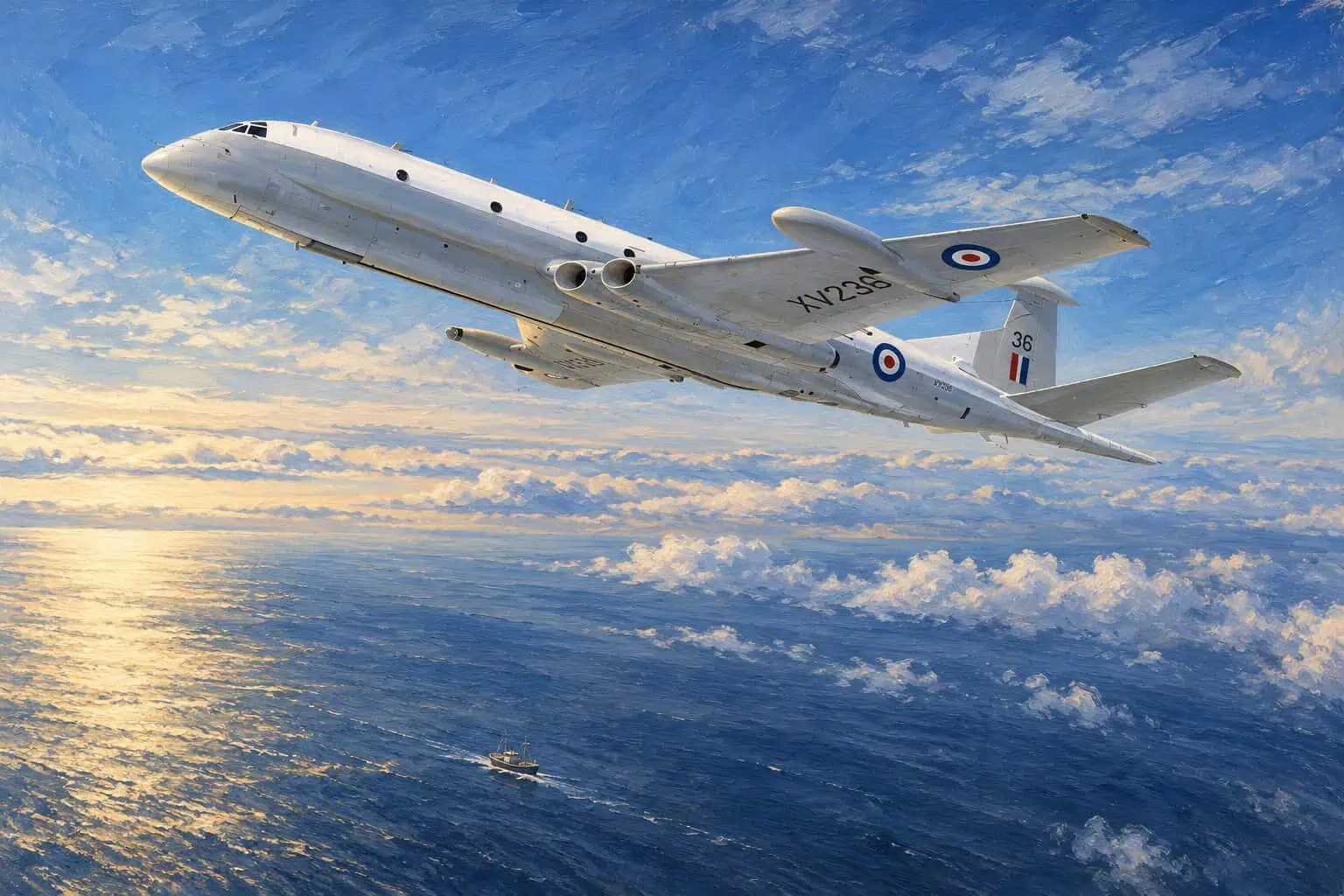
On 24 November 1975, Royal Air Force Nimrod maritime patrol aircraft resumed intensive surveillance inside Iceland’s declared 200-mile fishing zone. The flights formed part of Operation Heliotrope during the Third Cod War, supporting British fishing interests through reconnaissance, a visible military presence and information for naval operations.
The renewal of intensive patrols placed RAF crews within a confrontation over access to the fishing grounds around Iceland. Iceland’s extension of its fisheries jurisdiction and Britain’s determination to protect its trawlers brought aircraft, civilian protection vessels and naval forces into a dispute whose settlement depended on negotiations between the two governments.
Surveillance over the fishing grounds
The Hawker Siddeley Nimrod provided the long-range maritime reconnaissance capability used for the intensive patrols. Locating British and Icelandic vessels was central to the task. Information about their positions supported the Royal Navy’s operations and helped maintain a picture of activity across the contested fishing grounds.
The sorties had three principal purposes: locating vessels in support of the Royal Navy, providing a British military presence in support of United Kingdom trawlers, and demonstrating the government’s resolve to protect British fishing interests. Heliotrope therefore combined a practical reconnaissance task with a political signal. The presence of a patrol aircraft carried significance alongside the information its crew gathered.
This was a further application of an established capability. RAF maritime aircraft had already undertaken surveillance during the earlier fisheries confrontation of 1972–73. The intensive flights resumed on 24 November belonged to the Third Cod War and the dispute over Iceland’s newly declared 200-mile zone.
The renewed surveillance effort
As the renewed effort began on 24 November, a Nimrod was already operating over the fishing grounds and further flights were being arranged. Civilian protection vessels were also operating with British trawlers.
The government was preparing to meet representatives of the fishing industry that afternoon, while naval protection and other measures remained under consideration. Ministers continued to pursue a negotiated settlement with Iceland as military and civilian resources supported the trawler fleet.
The RAF contribution therefore formed part of a developing response. Surveillance was under way while decisions about further protection measures were still being considered.
The operation’s later course
Nimrod patrols were subsequently supplemented by a small number of sorties flown by Handley Page Hastings T5 aircraft from No. 230 Operational Conversion Unit. These additional flights extended the reconnaissance effort supporting the Royal Navy during the continuing dispute.
Operation Heliotrope ceased on 2 June 1976 following agreement between British and Icelandic negotiating teams. Between 24 November 1975 and 2 June 1976, 158 Nimrod sorties and 20 Hastings sorties were flown in support of the Royal Navy. These figures describe the operation across that period, with the opening day marking the resumption of intensive surveillance.
For the RAF, the fisheries confrontation gave maritime reconnaissance a distinct diplomatic and economic purpose. Crews located vessels, supported the protection effort and sustained a military presence while negotiations continued. Heliotrope’s conclusion linked the end of those patrols to a negotiated settlement, completing an unusual deployment of British air power over the North Atlantic fishing grounds.