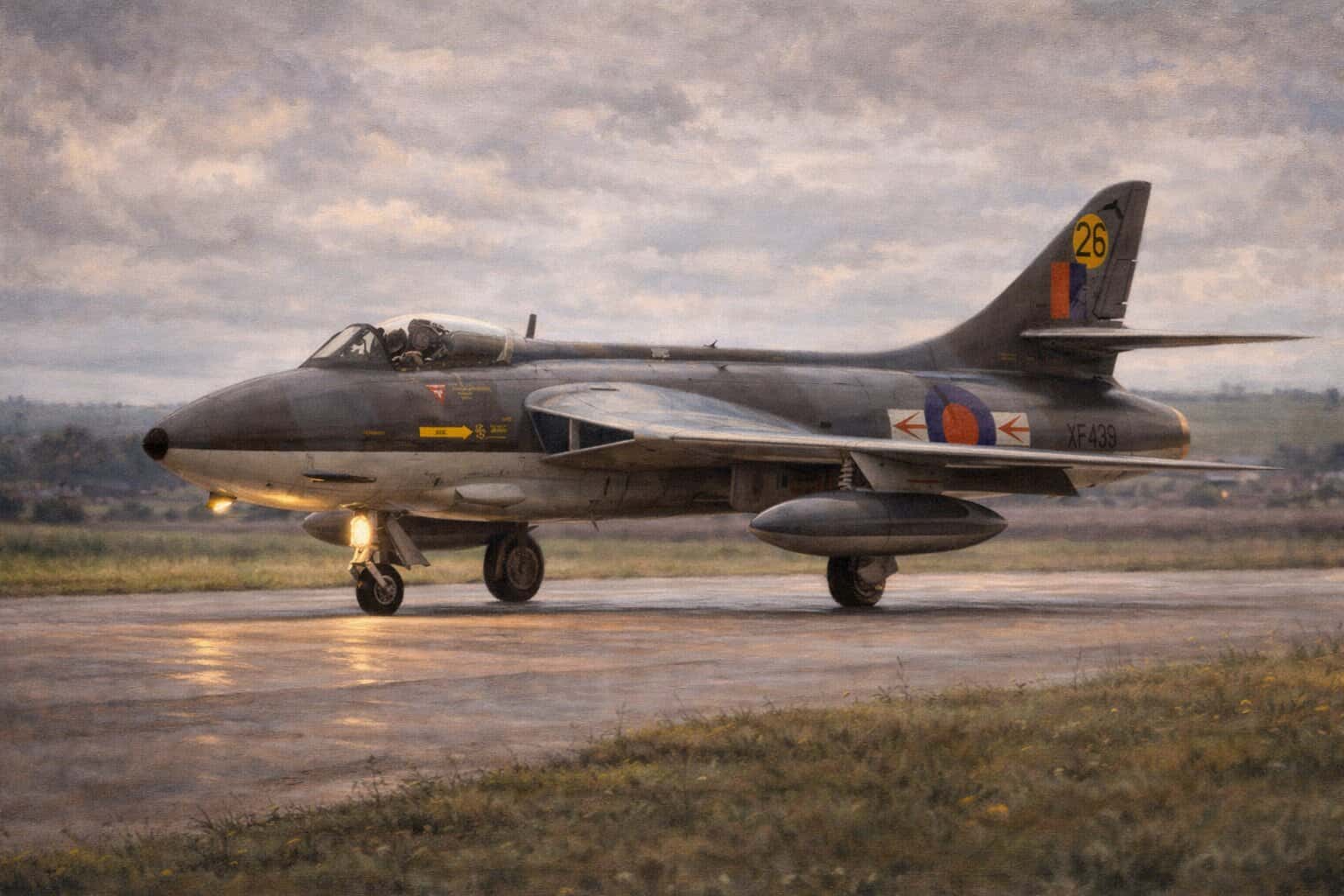
On 28 March 1967, the RAF joined a highly unusual emergency operation when Hawker Hunters, alongside aircraft of the Fleet Air Arm, attacked the wreck of the tanker Torrey Canyon in an effort to disperse and reduce the devastating oil pollution spreading off the south-western approaches. Known as Operation Mop Up, the action was a striking example of military air power being directed not against an armed enemy, but against a peacetime environmental crisis whose scale demanded urgent national action.
The Torrey Canyon Disaster
The grounding of Torrey Canyon created one of the most serious maritime pollution incidents Britain had yet faced. Once the damaged vessel began releasing large quantities of oil, coastal communities, shipping interests and government departments confronted a fast-moving problem with no easy solution: weather, tides and the sheer volume of oil complicated every response. The threat to shorelines and wildlife was grave, while public attention grew rapidly as the consequences became visible.
In those circumstances, the government turned to the armed services for help. The idea of attacking a wrecked tanker from the air was extraordinary, but the reasoning was direct enough: if the remaining oil could be burned or the wreck further broken up under controlled conditions, the spread of contamination might be limited. It was an improvised answer to an improvised emergency, shaped by urgency rather than by any settled doctrine.
RAF Hunters in an Unfamiliar Role
For the RAF, Operation Mop Up placed fast jets in a role few would have associated with them. Hawker Hunters were designed for combat tasks, yet here they were employed in support of civil authorities during an environmental disaster. That alone makes the date noteworthy in RAF history. It demonstrated the service’s capacity to adapt aircraft, crews and planning to meet a national need outside conventional military operations.
The mission also highlighted a broader truth about air power. Aircraft can deliver speed, reach and concentrated force against a target, whether that target is hostile, physical or accidental in nature. In this case, the target was a damaged ship whose contents threatened far-reaching harm. The use of air attack was therefore not symbolic. It was a practical attempt to influence events quickly when delay would only worsen the situation.
Joint Action and Public Expectation
The participation of both RAF and Fleet Air Arm aircraft reflected the scale of the emergency and the need for coordinated action. Britain’s response drew together civil and military authorities in a very public test of national capability. Unlike many Cold War activities, this was an operation visible to the British public and closely tied to domestic concerns. It reminded observers that the armed forces could be called upon not only in war or deterrence, but also when an unforeseen crisis overwhelmed normal civilian means.
Operation Mop Up did not offer a perfect solution. Environmental damage from Torrey Canyon remained severe, and later generations would debate aspects of the response. Yet historical significance does not depend on flawless results. What matters is that the operation represented a serious and immediate effort to use available means against an urgent national problem.
A Distinctive Moment in RAF History
The beginning of Operation Mop Up on 28 March 1967 stands apart from most entries in the RAF story. It was neither a battle nor a routine exercise, but an emergency deployment of military aviation in aid of environmental containment. The event illustrates the adaptability of the RAF and the willingness of the British state to employ air assets creatively when conventional responses seemed inadequate.
In that sense, the operation occupies an important place in the history of the service. It showed that the RAF’s usefulness could extend beyond defence in the narrow sense, into the management of national crises where speed and force from the air still had a part to play.