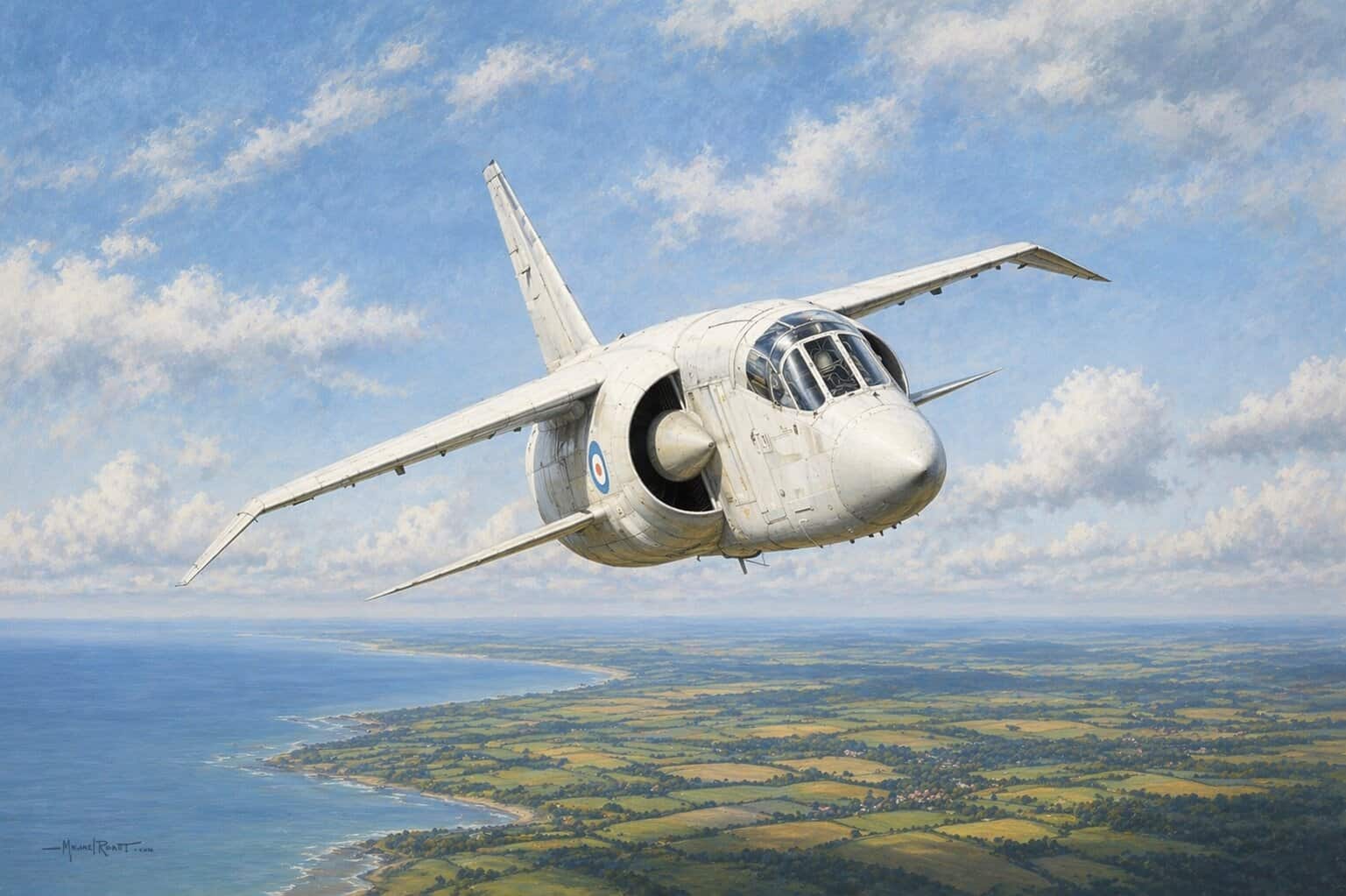
On 6 April 1965, a budget decision brought Britain’s advanced BAC TSR2 strike aircraft project to an end. Few cancellations in British aviation history have carried such enduring symbolic weight. The aircraft had been conceived as a highly capable strike and reconnaissance platform, and its termination quickly came to represent far more than the fate of a single programme. It stood for the difficulty of reconciling strategic ambition, technological complexity and financial reality in the Cold War era.
The TSR2 belonged to a period in which military aviation was advancing rapidly. Expectations of speed, range, low-level performance, sensors and weapons integration were all rising. Governments wanted aircraft that could survive in demanding conditions and answer a variety of operational needs. Yet those same ambitions increased risk. The more advanced a project became, the greater the danger that cost and schedule would drift beyond what ministers were prepared to accept.
Why the TSR2 mattered
Even in its bare essentials, the cancellation tells us something important about the RAF and the British state. Air power depends not only on doctrine and skilled crews, but on industrial capacity and political willingness to sustain expensive programmes. The TSR2’s end showed that technological promise alone was not enough. An aircraft could appear impressive and still fail to survive the pressure of changing priorities and public expenditure limits.
For the RAF, such decisions had practical and cultural consequences. Strike capability sat close to the heart of Britain’s Cold War posture, and choices about aircraft procurement shaped what the service could do, how it trained and how it fitted within alliance strategy. A cancelled programme therefore meant more than disappointment in design offices. It forced a rethinking of future equipment and exposed the service to decisions taken well beyond the air station and squadron.
The politics behind cancellation
The summary specifically identifies a budget decision, and that is crucial. Defence policy is often presented as though threats alone determine outcomes. In reality, governments weigh military requirements against economic circumstances, competing departments and wider political goals. The Cold War imposed serious demands, but it did not remove those constraints. If anything, it sharpened them, because maintaining credible forces over time required sustained national expenditure.
The cancellation of the TSR2 therefore speaks to a broader British dilemma in the 1960s. The country still sought a major role in world affairs and possessed remarkable engineering talent, yet it also faced hard choices about what it could fund. In that environment, advanced military projects became tests of national reach as much as of aeronautical design. The end of the TSR2 was a reminder that strategic aspiration could be checked by the Treasury as decisively as by any foreign adversary.
An enduring place in RAF memory
The project’s afterlife in public memory has been unusually strong. That is partly because cancelled aircraft invite speculation: people imagine what might have been achieved had the programme survived. But the deeper reason is that the TSR2 came to symbolise a moment when British aerospace ambition seemed both impressive and vulnerable. Its end was read as a turning point, whether fairly or not, in debates about independence, procurement and national confidence.
On 6 April 1965, however, the essential fact was simpler and harsher. A major Cold War aircraft project was stopped by financial decision. For the RAF, that meant the loss of a future capability around which hopes had gathered. For historians, it remains a striking example of how air power is shaped not only in the sky or on the test range, but in the budget room as well.