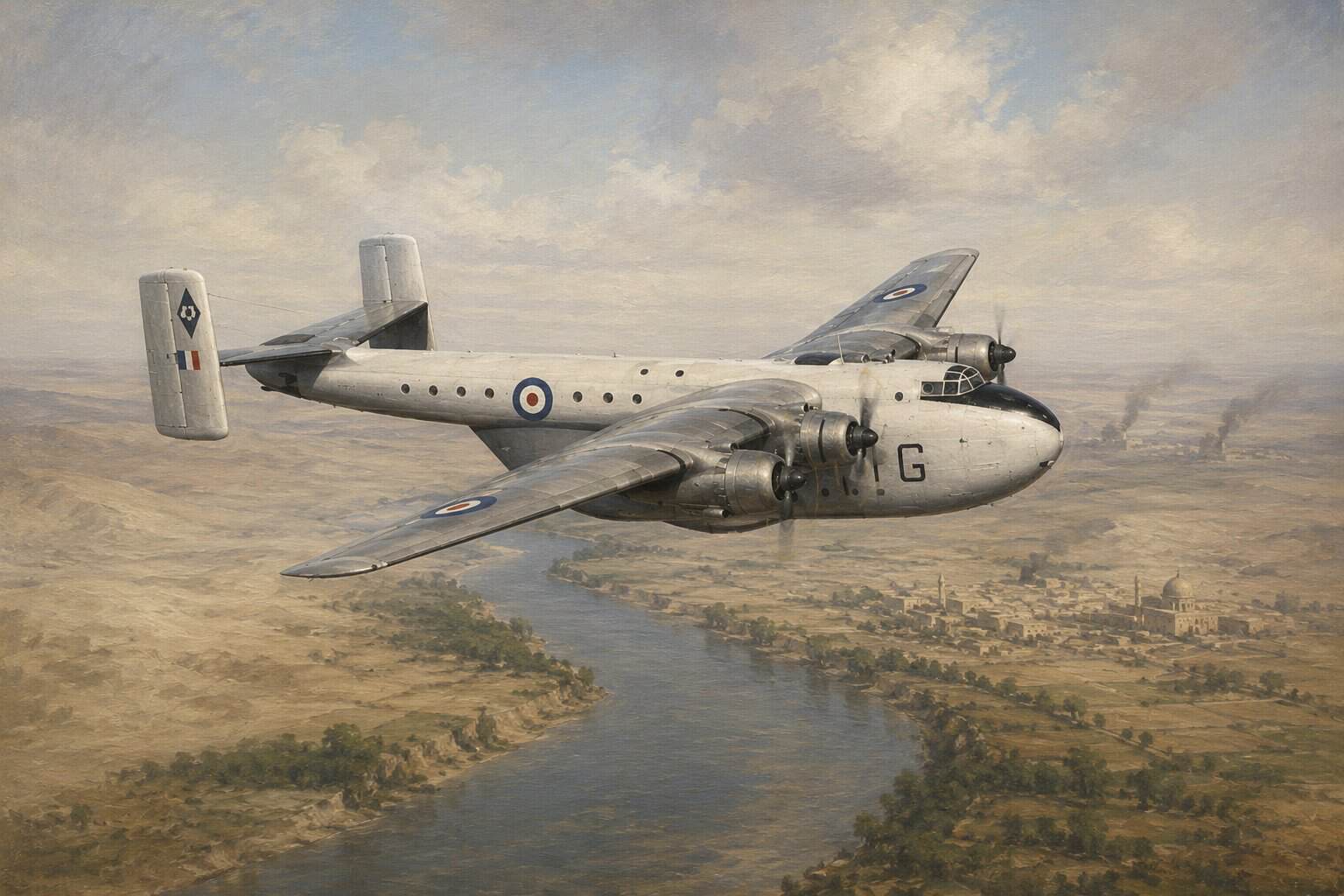
On 1 July 1961, the RAF began the rapid air movements that formed a crucial part of Operation Vantage, Britain’s response to the threat posed by Iraqi claims against newly independent Kuwait. The crisis had erupted only days after Kuwait ended its treaty relationship with Britain, when Iraq’s ruler, Abd al-Karim Qasim, asserted that the new state should be absorbed into Iraq. Kuwait’s ruler asked Britain for military help on 30 June. London answered with remarkable speed, and air power was central to the demonstration that Kuwait would not be left exposed.
What did the RAF do in Operation Vantage?
Between 1 and 6 July 1961 the RAF flew about 7,000 personnel and 720 tons of equipment into the Gulf from the UK, Cyprus, Aden and Kenya. Hunters of Nos. 8 and 208 Squadrons went to Kuwait, Canberras from RAF Germany gathered at Sharjah and V-bombers were held at readiness in Malta (RAF Museum; RAF Museum, The RAF and Kuwait). Operation Vantage was, above all, a test of readiness and reach. The British response required that forces be deployed in theatre before an Iraqi move could become a fait accompli. That meant the RAF had to do what it could do better than any other arm: move people, equipment and combat capability over long distances at short notice. Transport aircraft began lifting troops and stores towards the Gulf, while fighter support was also introduced to provide an immediate visible shield.
The operation showed the value of a balanced air transport force. RAF aircraft, including Britannias, Beverleys and other transports, helped sustain the initial deployment, while Hawker Hunters flew into Kuwait to reinforce local defence. In practical terms, this was not a dramatic bombing campaign or an air battle, but a disciplined, highly effective display of mobility. Aircraft turned political intent into military presence within days.
That speed mattered. In crises of this kind, time is often more decisive than firepower. A garrison placed too late can invite aggression; one placed early can prevent it altogether. The RAF’s contribution lay not merely in carrying men and matériel but in changing the strategic calculation facing Baghdad. Britain was signalling that any Iraqi advance would meet organised resistance, not diplomatic protest alone.
Did Iraq invade Kuwait in 1961?
No. Iraq made no move once British forces were in place, withdrawals began later in July, and an Arab League force took over so that British units could leave. In the event, Iraq did not attack. British sea, land and air forces stabilised the situation until an Arab League force could assume responsibility, allowing the United Kingdom to draw down its presence without having to fight the campaign it had prepared for. That outcome made Operation Vantage a success of deterrence rather than destruction.
For the RAF, the operation was an important Cold War demonstration of expeditionary power. It proved that air transport, tactical support and rapid reinforcement could shape events far beyond Europe. The service was not simply a force for nuclear planning or home defence; it remained a practical instrument of government in overseas emergencies where speed, credibility and restraint all mattered.
Why was Operation Vantage a success?
It deterred an invasion without a shot being fired, because British forces arrived before Iraq could act. Speed of reinforcement by air made the difference. Operation Vantage deserves attention because it showed how air power could preserve stability without escalating into war. The RAF’s aircraft helped create a fait accompli of a different kind: not conquest, but defence. By arriving quickly and visibly, they denied an aggressor the space in which coercion might succeed.
It also reflected a wider truth about post-war British operations. In the age of decolonisation and regional crisis, the decisive question was often whether Britain could reinforce a threatened point before events outran policy. On 1 July 1961, the RAF answered that question positively.
What did Vantage show about air power?
It showed that transport aircraft moving troops quickly could achieve as much as combat aircraft. Beverleys, Britannias and Valettas of RAF Transport Command did as much to prevent a war as the Hunters did. Seen in the broader history of air power, Operation Vantage was a reminder that the most important sortie is not always the one that drops weapons. Sometimes the decisive effect comes from transport aircraft on tight schedules, fighters positioned for reassurance and a rapid build-up that prevents a war from beginning at all. That was the RAF’s achievement at the opening of Operation Vantage.