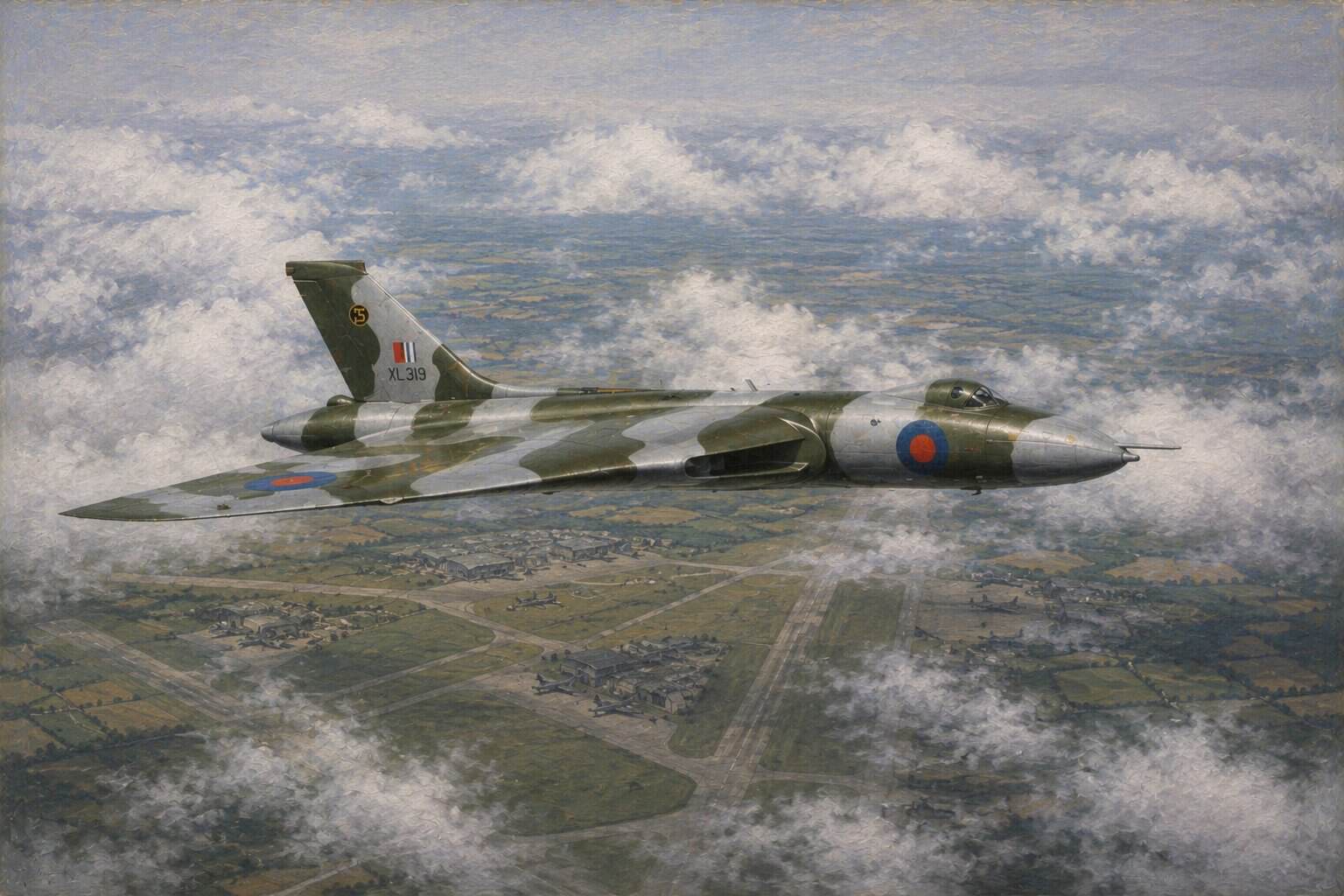
On 10 October 1960, No. 83 Squadron formed at RAF Scampton as the Royal Air Force‘s first Vulcan B.2 squadron. Its establishment gave the improved version of the Avro Vulcan its first front-line squadron organisation, placing Scampton at the centre of an important stage in the development of Britain’s strategic bomber force.
The anniversary marked the formation of the unit in its new B.2 role. Its first aircraft arrived on 23 December 1960, completing a further step in a process that brought together conversion training, squadron organisation and aircraft delivery. These separate milestones shaped the introduction of the second-generation V-bomber force.
A new stage for the Vulcan force
The Vulcan was one of the aircraft through which RAF Bomber Command maintained Britain’s airborne nuclear deterrent. The B.2 developed that capability with a modified wing, more powerful engines and equipment intended to improve its effectiveness against increasingly capable air defences.
The improved version also incorporated in-flight refuelling and electronic jamming equipment. Refuelling extended the possibilities for long-range operations, while electronic countermeasures sought to disrupt the radars upon which opposing defences depended. Such improvements connected aircraft development directly with the operational demands of the Cold War.
For 83 Squadron, taking up the B.2 therefore meant joining the leading edge of a changing force. The aircraft’s performance and equipment offered a basis for further development as the RAF worked to sustain the credibility of its nuclear striking power.
Conversion begins at Waddington
The training organisation had begun receiving the new aircraft before the Scampton squadron formed. On 1 July 1960, the first Vulcan B.2 reached No. 230 Operational Conversion Unit at RAF Waddington. Conversion flying began later that month.
Waddington provided the training element of the introduction, preparing aircrew for the improved bomber. Scampton provided the home for its first front-line squadron. The sequence linked the introduction of aircraft into the conversion system with the creation of a squadron organisation capable of receiving them.
The October formation belonged within that sequence. Establishing the squadron ahead of its aircraft allowed the operational organisation to take shape while the wider conversion programme was already under way. The distinction between formation and delivery is central to the unit’s transition to the B.2.
Aircraft arrive in December
No. 83 Squadron received its first Vulcan B.2 on 23 December 1960. By the end of the year, the improved bomber had progressed from the conversion unit to delivery to its first front-line squadron.
The new aircraft initially carried free-fall weapons. Stand-off armament followed later, with the B.2’s increased performance making it suitable for modification to carry Blue Steel. The squadron’s establishment in October thus occupied an early position in the development of the later weapons-equipped force.
Scampton and the second-generation V-force
The formation of 83 Squadron in its B.2 role gave institutional shape to the introduction of a new bomber variant. Training at Waddington, organisation at Scampton and the December delivery each contributed a distinct part of the transition.
The V-force entered 1961 with this second-generation capability beginning to take shape. As the B.2 became the principal later Vulcan variant, 83 Squadron’s place as its first squadron connected the formation at Scampton with the aircraft’s subsequent development in British strategic service.
