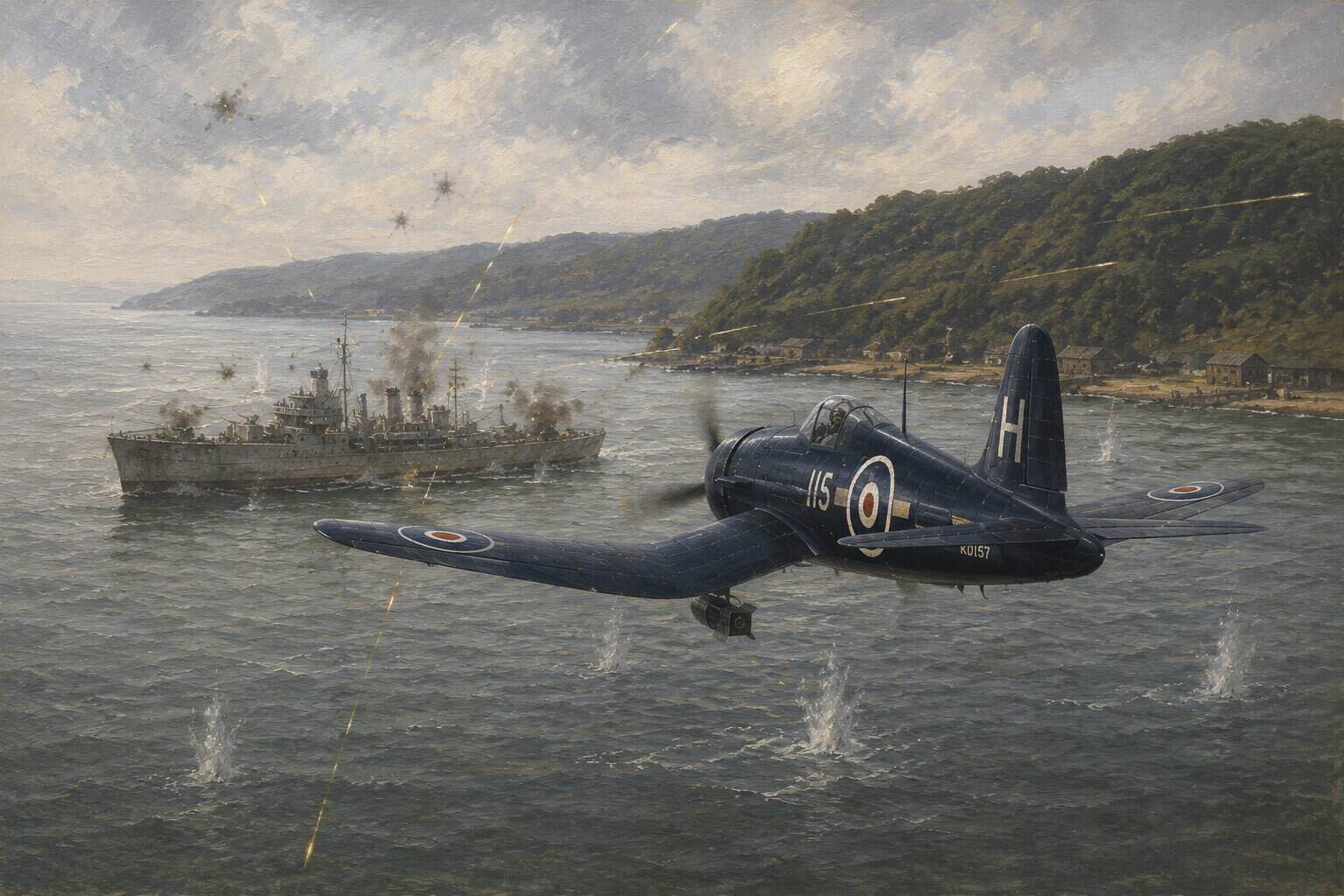
On 9 August 1945, Lieutenant Robert Hampton Gray carried out the attack on the Japanese escort vessel Amakusa for which he would be awarded the Victoria Cross posthumously. Although he served in the Fleet Air Arm rather than the Royal Air Force, the episode belongs to the wider British air war story in the Pacific in its final, still dangerous phase. It came at a moment when Japanese defeat was increasingly clear, yet combat operations continued to demand the same resolve that had characterised the long years of war.
A British airman in the final days of war
By August 1945, British and Commonwealth air power in the Far East had become part of the closing pressure being applied against Japan. The European war was already over, but the conflict in Asia had not yet ended, and air operations still carried real risks for crews committed to strikes against Japanese targets. In that setting, Gray's action stood out not simply because it occurred so late in the war, but because it demonstrated that the final phase of the campaign could be as unforgiving as any that had come before.
His story also widens the usual frame through which the last weeks of the Second World War are remembered. The public memory of August 1945 often centres on diplomatic decisions and the imminent prospect of surrender. Yet operational flying had not simply ceased. British airmen and naval aviators were still carrying the war to the enemy, and in doing so they remained exposed to the hazards of attack, anti-aircraft fire and loss. Gray's final mission belongs to that often overlooked closing chapter of the air war.
The attack on Amakusa
The central event was Gray's attack on the Japanese escort vessel Amakusa. Its significance is clear enough. This was not a symbolic gesture undertaken after the war had effectively finished, but a combat action mounted while resistance still existed and while British air power was still engaged in active operations. The fact that the attack later led to a posthumous Victoria Cross indicates the exceptional courage associated with the mission.
What gives the episode its enduring power is the contrast between the strategic situation and the immediate human reality. At the strategic level, the war was moving rapidly towards its end. At the level of the individual pilot, however, none of that removed the need to press home an attack with determination and discipline. In military history, those moments often reveal the true measure of service: when the larger outcome appears close, but duty still requires complete commitment. Gray's action against Amakusa belongs firmly in that category.
Gallantry, sacrifice and remembrance
The posthumous Victoria Cross attached lasting national recognition to Gray's conduct. The award placed his name among those whose courage was judged to have gone beyond the already severe expectations of wartime flying service. It also underlined an important historical truth about the end of the war against Japan: the final days were not bloodless, and they still imposed a cost on those ordered into action.
The significance of the episode lies in its place within the broader British air-war narrative rather than in a narrowly service-specific reading. Gray's courage reflected the same qualities of commitment, professionalism and sacrifice that marked British air operations across the Second World War. His final attack stands as both a personal act of extraordinary bravery and a reminder that the war's last chapter was written not only in conference rooms and surrender documents, but also in the dangerous reality of front-line flying.