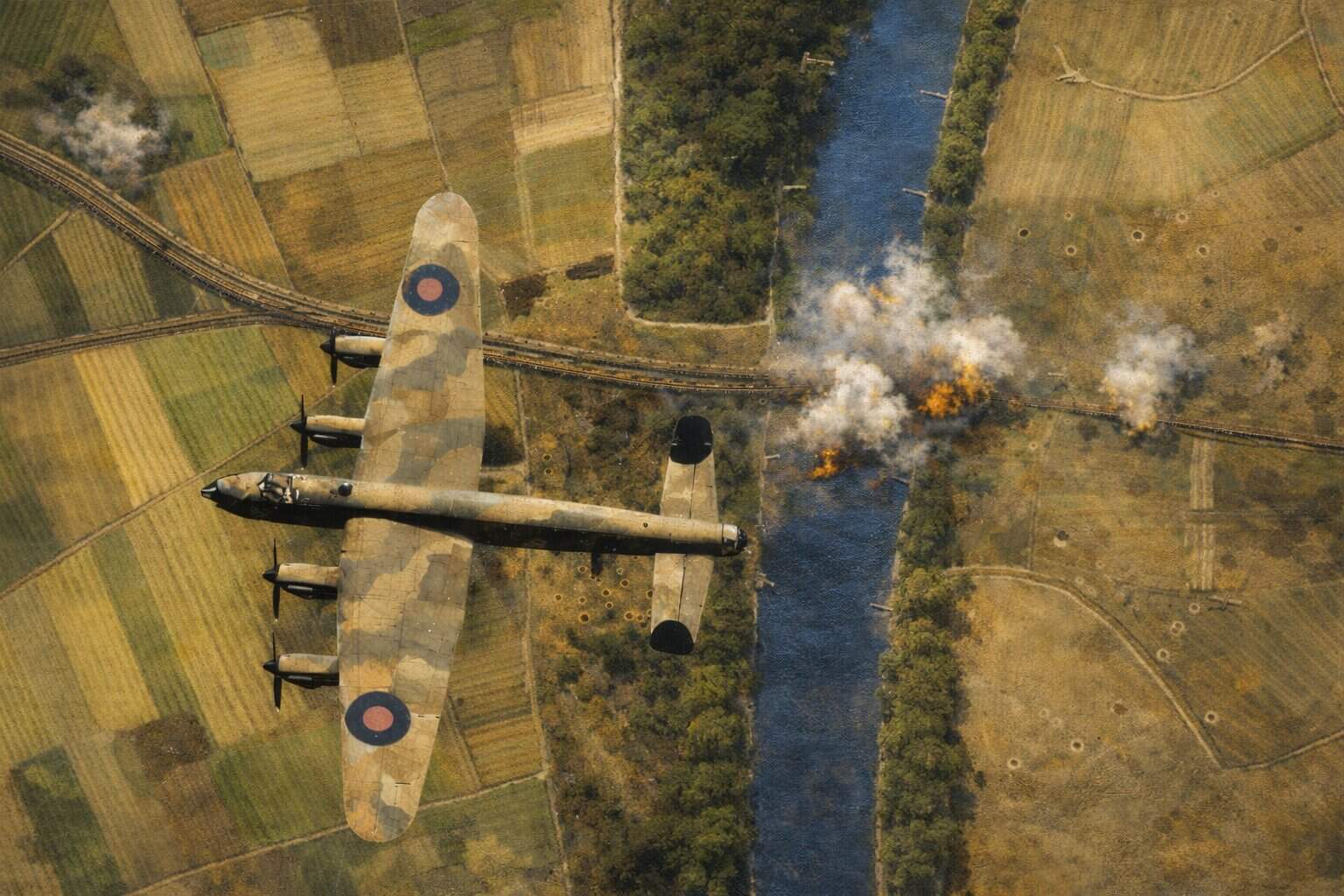
On 14 March 1945, Squadron Leader C. C. Calder of 617 Squadron dropped the 22,000-lb Grand Slam bomb from an Avro Lancaster on the Bielefeld railway viaduct, collapsing the structure. The attack marked the first operational use of the largest conventional bomb employed by the RAF during the Second World War, a weapon designed by Barnes Wallis.
Why did the RAF need the Grand Slam to destroy the Bielefeld viaduct?
The viaduct carried a vital rail line and had withstood 54 previous attacks without being permanently put out of action, because ordinary bombs either missed or did damage that was quickly repaired. The ten-ton Grand Slam was built to penetrate the ground beside a structure and shake its foundations apart, so a near miss could succeed where direct hits had failed.
What happened on the Bielefeld raid of 14 March 1945?
Calder’s aircraft joined 14 other Tallboy-carrying Lancasters of 617 Squadron and an escort of P-51 Mustangs for the daylight raid. The single Grand Slam brought down seven spans of the viaduct, validating both the new weapon and the specialised methods developed to deliver it.
What Made the Grand Slam Different
The Grand Slam grew out of the 12,000 lb Tallboy, the subject of Tallboy and the RAF shift to precision heavy bombing. Its immense weight is central to its story, but the bomb’s significance lies in its purpose: defeating hardened structures that ordinary bombing could damage only incompletely. Only specially modified Lancasters of 617 Squadron could carry it.
By March 1945, Britain’s bombing campaign had moved far beyond the improvisation of the early war years. Equipment, methods and target selection had all developed, and viaducts carrying German rail traffic had become targets of first importance as Allied armies closed in. The first use of the Grand Slam showed air power being applied with increasing precision against specific strategic infrastructure.
The Attack on Bielefeld Viaduct
Squadron Leader Calder’s attack achieved the intended result: the viaduct collapsed. Five days later, 617 Squadron used Grand Slams again to bring down the Arnsberg viaduct. The raid had both engineering and operational weight, showing that the RAF could now bring exceptional destructive force against carefully selected infrastructure.
Significance
The first Grand Slam raid belongs to the final phase of the bomber offensive, when RAF air power was increasingly directed against targets whose destruction could produce immediate disruption. It was an application of accumulated wartime experience in weapon design, target analysis and delivery technique rather than simply a larger bomb used for dramatic effect.
For that reason, the first operational use of the Grand Slam stands as an important moment in RAF history. It linked 617 Squadron, the Lancaster and the new bomb in a demonstration of how far the RAF’s heavy-bomber war had evolved by 1945.