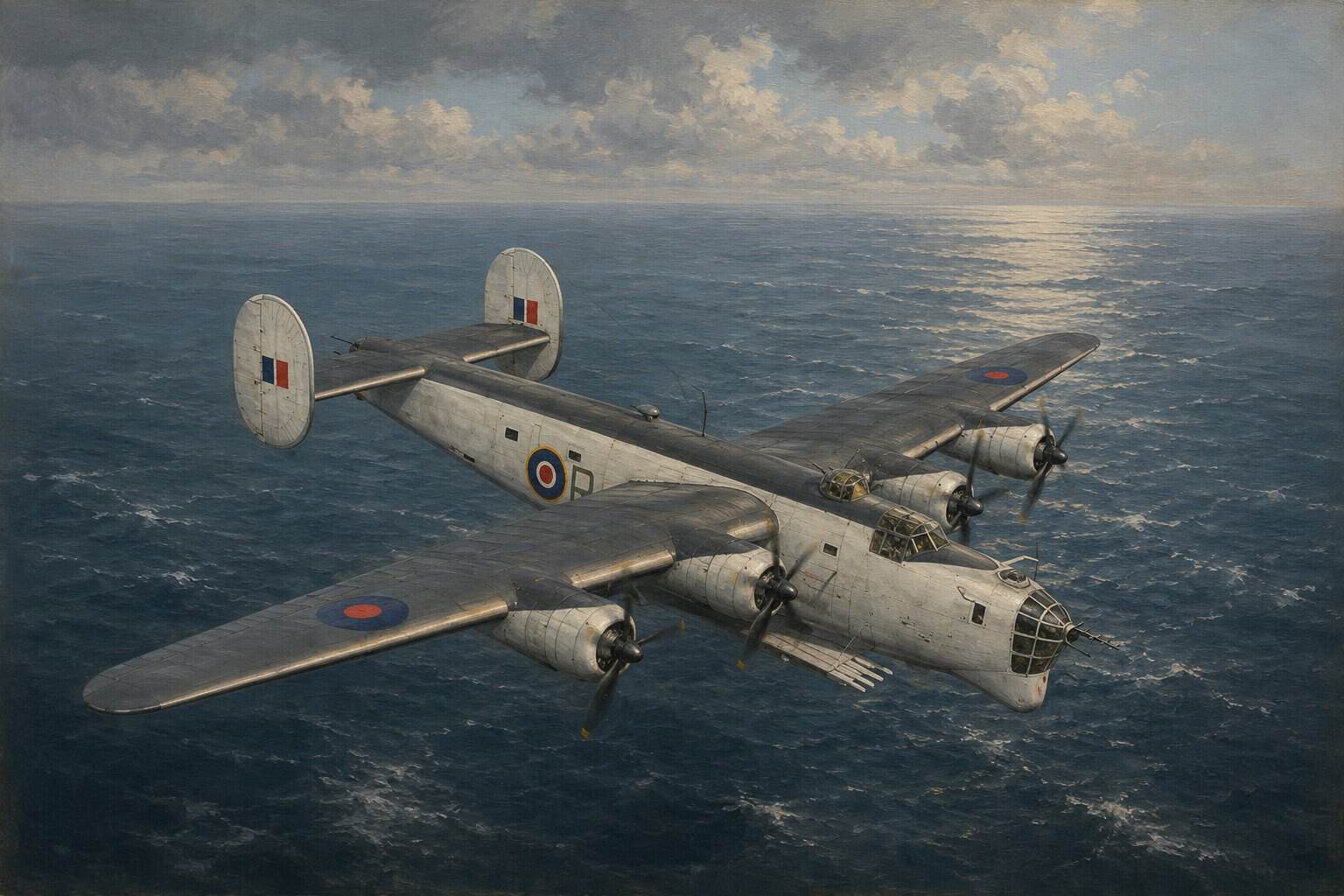
Coastal Command white camouflage was not a cosmetic change. On 10 August 1941, the RAF formally revised the finish used on key maritime aircraft, acknowledging that survival and success over the sea often depended on how quickly an aircraft could be seen from a U-boat conning tower or from the deck of a ship. In the long struggle of the Atlantic war, appearance had become an operational matter.
The new policy was aimed chiefly at general reconnaissance aircraft. These were the long-range machines searching vast stretches of ocean for submarines, shadowing enemy shipping and maintaining the aerial pressure on the sea routes that mattered so much to Britain’s survival. Experience had shown that standard finishes did not always suit the peculiar visual conditions of the maritime battle.
A Camouflage Policy Shaped by Experience
By mid-1941, Coastal Command had been fighting a demanding and fast-learning campaign for many months. Aircraft were operating over open water, under broad skies, against enemies that could disappear quickly into cloud, haze or sea clutter. In that environment, camouflage was judged not by parade-ground neatness but by whether it helped an aircraft approach, patrol and attack more effectively.
The revised policy made white the principal colour on the fuselage sides and undersurfaces of several important general reconnaissance types. The Consolidated Liberator, the Vickers Wellington and the Armstrong Whitworth Whitley were all covered by the change. White offered a practical answer to the light conditions often encountered at sea, where an aircraft seen from below or at distance could stand out sharply if its finish were too dark.
This did not mean every aircraft could be painted to one simple rule. The directive still allowed room for local variation according to area and duty. Coastal Command’s war ranged from Atlantic patrols to strike and convoy-support work, and aircraft serving in different conditions could require different treatment. The policy was therefore standardised in principle but flexible in application.
Different Duties, Different Finishes
The order also recognised that strike aircraft had a distinct role. Machines such as the Bristol Beaufort, Bristol Beaufighter, Bristol Blenheim and Lockheed Hudson were not simply ranging across the ocean on long reconnaissance sorties. Their work could involve lower-level attacks, coastal operations and a different tactical profile. For those aircraft, Sky remained the specified colour for the undersurfaces rather than white.
That distinction reveals much about the RAF’s growing maturity in maritime air warfare. Coastal Command was no longer relying on broad assumptions carried over from other theatres. Instead, it was refining the aircraft's finish to meet the demands of the mission. Camouflage, like radar, weapons, and patrol methods, was being adapted based on operational evidence.
A Small Change in a Hard Campaign
The 10 August 1941 revision did not win the Battle of the Atlantic on its own, but it illustrates how that battle was fought in countless practical adjustments. Coastal Command’s crews needed every possible advantage in the contest against U-boats, and even a change in paint could affect the moment of detection and the chance of a successful attack or shadowing report.
Seen in that light, the adoption of white on maritime patrol aircraft was part of a broader wartime pattern. The RAF learned, tested and altered its methods under pressure, often in response to the unforgiving realities of operations rather than theory. Coastal Command’s camouflage revision stands as a small but telling example of how the Service adapted to the maritime war: not through spectacle, but through hard-won experience turned into policy.