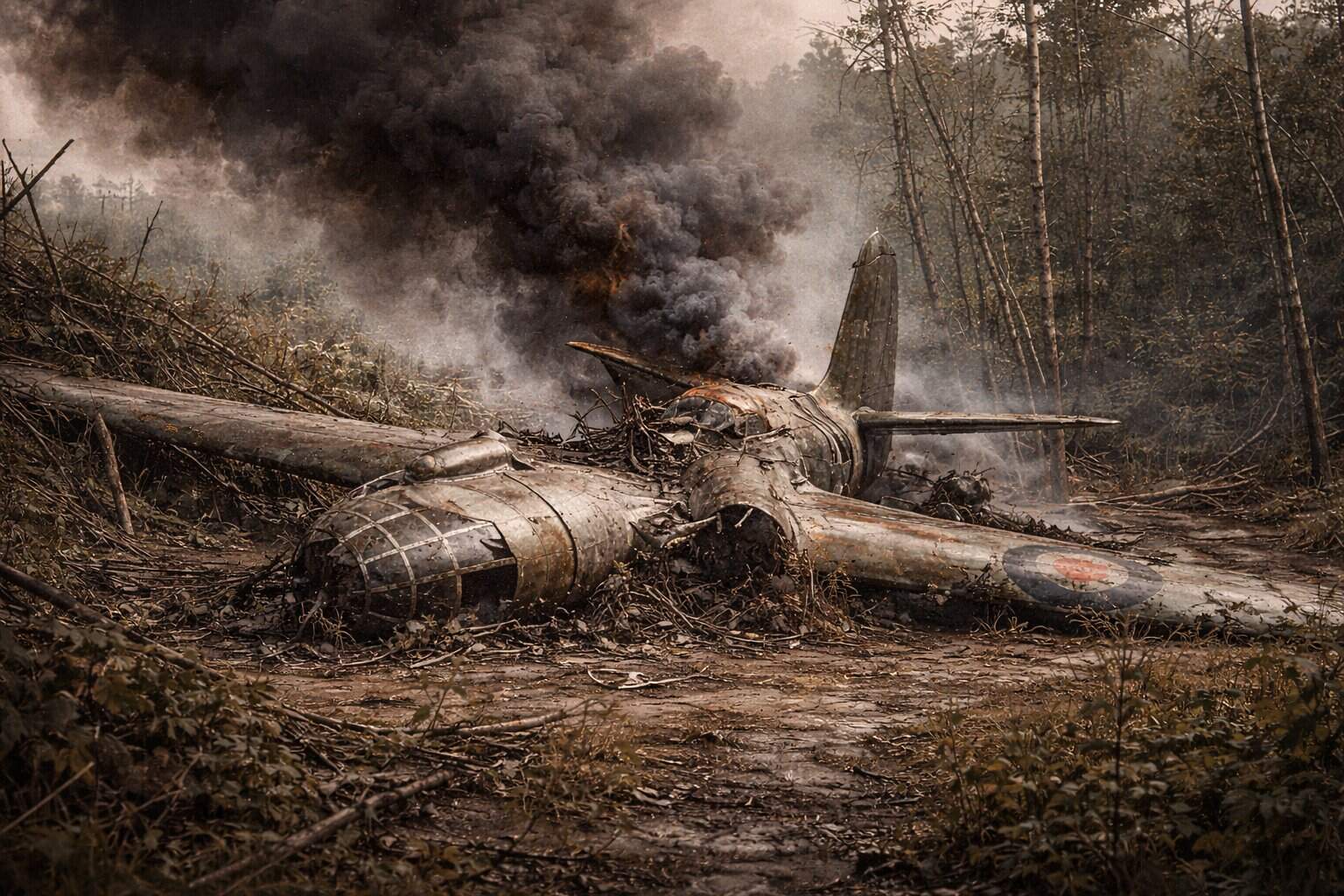
On 13 March 1941, RAF fighter ace Geoffrey “Sammy” Allard was killed in a flying accident near Wimbish, Essex, when a loose inspection panel jammed the rudder of his Douglas Havoc. Francis Walker-Smith and William Hodgson were also killed. It was a wartime loss that did not come in combat, but in operational flying, where mechanical failure could be just as fatal as enemy action.
Geoffrey “Sammy” Allard
Allard was one of the RAF’s recognised fighter aces, and by 1941 his name already carried weight within the service. Men such as Allard had become closely associated with the RAF’s reputation for skill, aggression and endurance in the air. Their standing made their deaths particularly visible, but that prominence should not obscure the fact that the same crash also killed Francis Walker-Smith and William Hodgson. The loss was shared, and it belonged to the wider wartime experience of RAF aircrew and personnel rather than to one famous name alone.
By March 1941, the RAF had passed through the Battle of Britain and entered a new phase of the air war. Operations continued at a heavy pace, and the dangers of service flying remained constant. Training flights, ferry flights, inspections and routine operational movements could all prove lethal, especially when aircraft were being worked hard under wartime pressure.
The Crash Near Wimbish
The reported cause of the crash was brutally specific: a loose inspection panel jammed the rudder of the Douglas Havoc. That detail explains why the incident deserves notice beyond the fact of Allard’s death alone. It was not simply an unfortunate accident in vague terms, but a reminder that a comparatively small technical failure could render an aircraft uncontrollable and leave little chance of recovery.
The Havoc itself was part of the RAF’s expanding use of specialised and adapted aircraft during the war. Yet regardless of type, wartime flying always depended on the integrity of machinery as much as on the judgment of those in the cockpit. In that respect, the loss near Wimbish stands as a harsh example of the narrow margin on which military aviation often operated.
Wartime Flying Risk
The crash is a reminder that RAF losses cannot be understood only through combat reports and enemy claims. Wartime air power demanded an enormous daily effort in which danger was present in every stage of flying. Mechanical defects, maintenance pressures, weather, fatigue and the tempo of operations all formed part of the same reality. Fatal accidents were therefore not separate from the history of the air war, but one of its constant underlying conditions.
That is one reason episodes such as this matter in RAF history. They restore a sense of proportion to wartime service by showing that the strain on men and machines extended far beyond the best-known battles. The RAF’s operational record was built not only through victories and raids, but also through repeated exposure to risk in routine and non-routine flying alike.
Significance
The deaths of Geoffrey “Sammy” Allard, Francis Walker-Smith and William Hodgson illustrate the wider cost of wartime aviation in 1941. Their loss did not alter the course of a campaign in the dramatic sense, but it speaks clearly to the conditions under which the RAF fought and served. In a service already carrying the burden of sustained war, such accidents were part of the daily attrition that shaped personnel strength, morale and operational continuity.
For that reason, the crash near Wimbish deserves to be remembered not simply as the death of a noted ace, but as a wartime RAF tragedy in which technical failure, operational pressure and human loss came together with unforgiving finality.