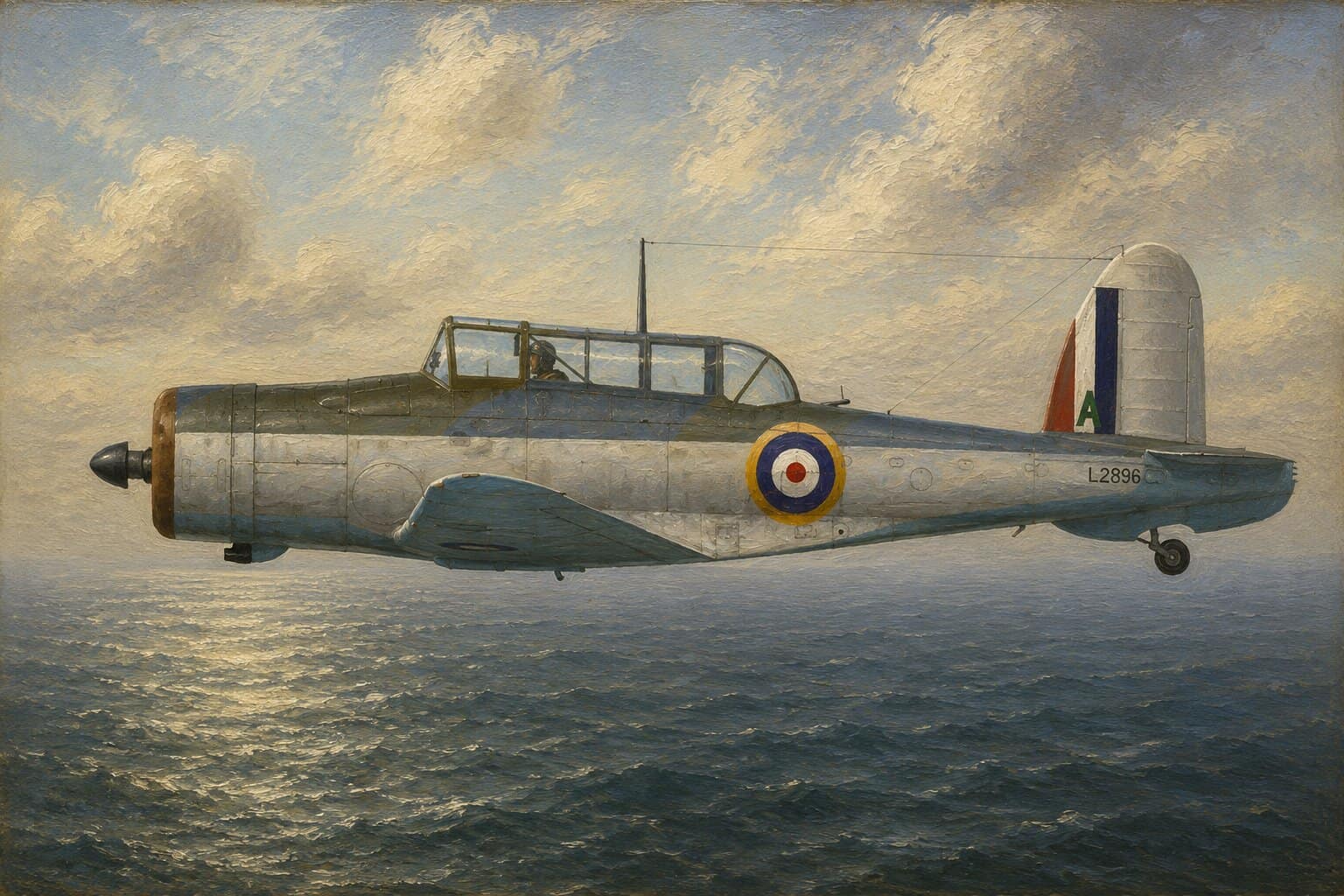
On 26 September 1939, a Dornier Do 18 flying boat was brought down by a Blackburn Skua from HMS Ark Royal in an incident commonly noted as the first Luftwaffe aircraft shot down in operations against the United Kingdom. Coming only weeks after the outbreak of the Second World War, the action belongs to the uncertain opening phase of Britain’s air and sea defence, when the immediate character of the conflict was still being defined. Although often treated as a minor episode, it illuminates the close relationship among maritime patrol, fighter response, and the defence of the British Isles at the very start of the war.
The Opening Weeks Of War
In September 1939, Britain had entered a conflict whose early air pattern differed markedly from the intense campaigns that would follow. There was no Battle of Britain yet, no strategic bombing offensive on the later scale, and no settled expectation of how quickly air operations might develop. Instead, the first weeks were shaped by reconnaissance flights, naval movements, maritime patrols and probing actions over the North Sea and its approaches.
This environment gave unusual importance to aircraft that operated between sea and air roles. The war at that stage was not neatly divided into separate fronts. Naval forces, coastal waters and air defence overlapped constantly, especially in the northern and eastern approaches to Britain. It was in that setting that the destruction of the Dornier Do 18 occurred.
Ark Royal And The Blackburn Skua
The Blackburn Skua belonged to the Fleet Air Arm rather than the Royal Air Force, but the episode still sits squarely within the wider story of Britain’s wartime air defence. Launched from HMS Ark Royal, the Skua represented the naval air arm’s contribution to protecting British waters and countering German activity close to the United Kingdom. In the autumn of 1939, such patrol and interception work formed part of the broader shield on which Britain relied.
The Dornier Do 18 was a long-range flying boat used for maritime reconnaissance. Aircraft of that type were valuable to Germany because they could observe naval activity, gather intelligence and extend the reach of Luftwaffe operations over northern waters. Bringing one down was therefore more than a tactical success against a single machine. It denied the enemy information and showed that German aircraft operating against Britain could be met and defeated at once.
Why The Incident Mattered
The importance of the action lies partly in chronology. As one of the earliest clear aerial successes against the Luftwaffe in operations directed at Britain, it marked the beginning of a longer defensive struggle that would become much larger in 1940. Early moments such as this helped establish a pattern of active response rather than passive endurance. They also showed that the defence of Britain would involve cooperation across services, not simply the RAF acting in isolation.
The incident is therefore best understood at the intersection of RAF and Fleet Air Arm history. The RAF’s role in home defence, reconnaissance and coastal support formed part of the same strategic picture as the Fleet Air Arm’s patrol and interception work. Later wartime narratives often separate those strands, but in September 1939, they were tightly connected by geography and necessity.
Air-Sea Defence In Context
On This Day, the event offers a useful reminder that Britain’s air war began at sea as well as over land. Before the dramatic mass raids of later years, the contest already included reconnaissance, maritime surveillance and the struggle to deny the enemy freedom of movement around the British coast. The loss of the Dornier Do 18 was an early sign that German aircraft approaching Britain would face resistance from the outset. Small in scale, the action was nevertheless significant in establishing the reality of Britain’s immediate wartime air and sea defence.